


![9-Ethyl-3-{(E)-[ethyl(2-methylphenyl)hydrazono]methyl}-9H-carbazole structure](https://cnstatic.chemtradehub.com/structs/127/1274948-12-7-301f.webp "9-Ethyl-3-{(E)-[ethyl(2-methylphenyl)hydrazono]methyl}-9H-carbazole structure")
Influence of indium doping on the morphology of ZnS nanostructures grown by a vapor–solid method
文献信息
发布日期
2013-07-03
DOI
10.1039/C3CE40920A
影响因子
3.545
作者
Belén Sotillo, Yanicet Ortega, Paloma Fernández, Javier Piqueras
查看原文
摘要
Pure and In-doped ZnS structures have been grown using a VS method. Thermal treatments have been performed at temperatures ranging from 1000 to 1200 °C, during 15 to 17 hours in a N2 overpressure environment. Nanowires and nanoribbons are the main kind of structures obtained for pure ZnS, depending on the deposition temperature. In the case of ZnS:In, nano- and microswords, nanoribbons, hierarchical structures and nanoplates are obtained, depending on the In content in the starting material and on the deposition temperature. Nanoplates are the dominant structures for the higher In content. The influence of the impurity incorporation on the morphology of the structures has been studied by transmission electron microscopy. While in pure ZnS wires and ribbons two main growth directions are observed ([0001] and [100]), indium doped structures show a greater variety of morphologies associated with different growth behavior.
相关文献
Spectacular enhancement of thermoelectric phenomena in chemically synthesized graphene nanoribbons with substitution atoms
K. Zberecki, R. Swirkowicz, M. Wierzbicki
2016-06-07
Paper
DOI: 10.1039/C6CP02877B
Structural phase transition in perovskite metal–formate frameworks: a Potts-type model with dipolar interactions
Mantas Šimėnas, Sergejus Balčiūnas, Mirosław Maçzka, Jūras Banys, Evaldas E. Tornau
2016-06-13
Paper
DOI: 10.1039/C6CP03414D
Determination of toluene hydrogenation kinetics with neutron diffraction
Sarayute Chansai, Haresh G. Manyar, Lynn F. Gladden, Daniel T. Bowron, Tristan G. A. Youngs, Christopher Hardacre
2016-03-29
Paper
DOI: 10.1039/C6CP01494A
Methanol diffusion in zeolite HY: a combined quasielastic neutron scattering and molecular dynamics simulation study
Victoria García Sakai, Ian P. Silverwood, Nikolaos Dimitratos
2016-05-16
Paper
DOI: 10.1039/C6CP01151A
Spectral mapping of 3D multi-cellular tumor spheroids: time-resolved confocal microscopy
Somen Nandi, Rajdeep Chowdhury, Gaurav Das, Kankan Bhattacharyya
2016-06-07
Paper
DOI: 10.1039/C6CP02748B
Study of the reactivity of silica supported tantalum catalysts with oxygen followed by in situ HEROS
Wojciech Błachucki, Yves Kayser, Jean-Claude Dousse, Joanna Hoszowska, Daniel L. A. Fernandes
2015-06-24
Communication
DOI: 10.1039/C5CP02950C
Highly efficient perturbative + variational strategy based on orthogonal valence bond theory for the evaluation of magnetic coupling constants. Application to the trinuclear Cu(ii) site of multicopper oxidases
Lorenzo Tenti, Daniel Maynau, Celestino Angeli, Carmen J. Calzado
2016-06-09
Paper
DOI: 10.1039/C6CP03234F
Heads or tails: how do chemically substituted fullerenes melt?
2016-04-12
Paper
DOI: 10.1039/C6CP01333C
An INS study of entrapped organic cations within the micropores of zeolite RTH
Tetiana Lemishko, Jorge Simancas, Manuel Hernández-Rodríguez, Mónica Jiménez-Ruiz, German Sastre, Fernando Rey
2016-04-11
Paper
DOI: 10.1039/C6CP00971A
Hydrothermal stability investigation of micro- and mesoporous silica containing long-range ordered cobalt oxide clusters by XAS
David K. Wang, Peter Kappen
2015-06-30
Paper
DOI: 10.1039/C5CP02309B
您可能还喜欢
化合物问答
奥美沙坦酯杂质4(CAS号:95579-71-8)的主要用途是什么?
奥美沙坦酯杂质4在药物工业中并无特定用途,主要作为生产和质量控制中的监控指标,以确保产品质量和符合相关规范。它具有一定的化学活性,因此在生产过程中需要严格控制其...
95579-71-84-Chloro-4-methyl-5-...
化合物问答
如何储存C3bot (154-182)(CAS号:1246280-79-4)?
C3bot (154-182)应储存在干燥、阴凉、通风良好的环境中,避免阳光直射。具体储存条件需要参考其相关安全数据表(SDS)中的储存信息。建议使用密闭容器存...
1246280-79-4C3bot (154-182)
化合物问答
在合成中是否有4-吡唑甲酸乙酯(CAS号:37622-90-5)的替代品?
在合成过程中,可以考虑使用类似结构的化合物作为替代品,例如4-吡唑甲酸甲酯或其他吡唑类化合物。这些替代品在性质上相似,可以用于相似的合成反应中,但需根据具体应用...
37622-90-5Ethyl 1H-pyrazole-4-...
化合物问答
(2-溴乙基)三甲基硅烷(CAS号:18156-67-7)的主要用途是什么?
(2-溴乙基)三甲基硅烷主要用作有机合成中的溴代试剂,特别是在硅化学领域中,用于制备硅烷衍生物和硅基功能材料。它也用于表面改性、催化剂合成、医药中间体合成以及分...
18156-67-7(2-Bromoethyl)(trime...
化合物问答
如何处理含有2-(4-broMophenyl)-1,1,1-trifluoropropan-2-ol(CAS号:122243-28-1)的废料?
含该化合物的废料需按照危险废物管理规定进行分类和处理。首先,应尽量减少废料的产生,通过改进生产工艺实现废物最小化。对于不可避免的废料,建议采用安全的收集方法,避...
122243-28-12-(4-bromophenyl)-1,...
化合物问答
什么是1,1,1-三氟-6-苯基-5-(e)-己烯-2,4-二酮(CAS号:18931-64-1)?
1,1,1-三氟-6-苯基-5-(e)-己烯-2,4-二酮是一种有机化合物,化学式为C14H8F3O2。它是一种具有特定立体结构的芳香族化合物,属于酮类。
18931-64-1(5E)-1,1,1-Trifluoro...
化合物问答
2-(2-甲基哌啶-1-基)-2-氧代-乙酸(CAS号:77654-61-6)的主要用途是什么?
2-(2-甲基哌啶-1-基)-2-氧代-乙酸主要用于药物合成、有机合成及作为化学试剂。它在医药领域有一定的应用,可用于合成某些药物中间体。此外,它还用于实验室研...
77654-61-6(2-Methyl-1-piperidi...
化合物问答
如何储存(R)-1-(3-Chlorophenyl)-2,2,2-trifluoroethanamine(CAS号:1213627-66-7)?
应将(R)-1-(3-氯苯基)-2,2,2-三氟乙胺储存在阴凉、干燥、通风良好的地方,远离火源和热源。应使用密封的容器储存,并避免光照。储存温度应控制在室温范围...
1213627-66-7(1R)-1-(3-Chlorophen...
化合物问答
N-亚硝基-N,N-二壬基胺(CAS号:84424-96-4)的市场或研究趋势如何?
N-亚硝基-N,N-二壬基胺目前主要应用于有机合成和药物化学领域。市场趋势显示,随着有机合成技术的进步,该化合物在新药研发中的应用将更加广泛。新兴研究领域包括其...
84424-96-4N-Nitroso-N-nonyl-1-...
化合物问答
5-Chloro-2-methoxy-3-(2,2,2-trifluoroethoxy)pyridine(CAS号:1280786-68-6)的市场或研究趋势如何?
该化合物在医药、农药等领域有潜在应用价值,但市场需求较小。目前研究趋势主要集中在探索其在特定领域的应用潜力,如作为药物合成中的中间体。随着研究的深入,预计未来市...
1280786-68-65-Chloro-2-methoxy-3...
来源期刊
CrystEngComm
CiteScore:
5.5
自引率:
7.7%
年发文量:
643
CrystEngComm is the forum for the design and understanding of crystalline materials. We welcome studies on the investigation of molecular behaviour within crystals, control of nucleation and crystal growth, engineering of crystal structures, and construction of crystalline materials with tuneable properties and functions. We publish hypothesis-driven research into… how crystal design affects thermodynamics, phase transitional behaviours, polymorphism, morphology control, solid state reactivity (crystal-crystal solution-crystal, and gas-crystal reactions), optoelectronics, ferroelectric materials, non-linear optics, molecular and bulk magnetism, conductivity and quantum computing, catalysis, absorption and desorption, and mechanical properties. Using Techniques and methods including… Single crystal and powder X-ray, electron, and neutron diffraction, solid-state spectroscopy, spectrometry, and microscopy, modelling and data mining, and empirical, semi-empirical and ab-initio theoretical evaluations. On crystalline and solid-state materials. We particularly welcome work on MOFs, coordination polymers, nanocrystals, host-guest and multi-component molecular materials. We also accept work on peptides and liquid crystals. All papers should involve the use or development of a design or optimisation strategy. Routine structural reports or crystal morphology descriptions, even when combined with an analysis of properties or potential applications, are generally considered to be outside the scope of the journal and are unlikely to be accepted.
推荐化合物
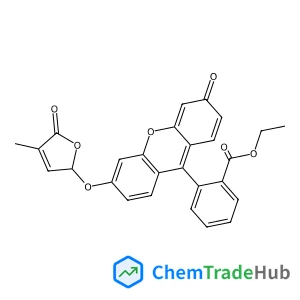
![4-[(2-Fluoro-4-methylphenyl)amino]-6-[4-(2-hydroxyethyl)-1-piperazinyl]-7-methoxy-3-cinnolinecarboxamide structure](https://cnstatic.chemtradehub.com/structs/104/1041852-85-0-fb1c.webp "4-[(2-Fluoro-4-methylphenyl)amino]-6-[4-(2-hydroxyethyl)-1-piperazinyl]-7-methoxy-3-cinnolinecarboxamide structure")
推荐供应商





免责声明
本页面提供的学术期刊信息仅供参考和研究使用。我们与任何期刊出版商均无关联,也不处理投稿事宜。如有投稿相关咨询,请直接联系相关期刊出版商。
如发现页面信息有误,请发送邮件至 support@chemtradehub.com 联系我们。我们将及时核实并处理您的问题。