




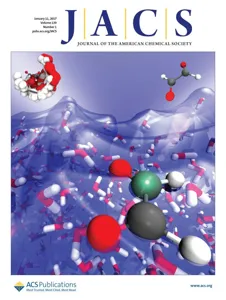
First principles investigation of zinc-anode dissolution in zinc–air batteries
文献信息
发布日期
2013-02-25
DOI
10.1039/C3CP50349F
影响因子
3.676
作者
Vladimir Tripković, Keld T. Lundgaard, Kristian E. Jensen, Heine A. Hansen, Jens S. Hummelshøj, Tejs Vegge, Jan Rossmeisl
查看原文
摘要
With surging interest in high energy density batteries, much attention has recently been devoted to metal–air batteries. The zinc–air battery has been known for more than a hundred years and is commercially available as a primary battery, but recharging has remained elusive, in part because the fundamental mechanisms still remain to be fully understood. Here, we present a density functional theory investigation of the zinc dissolution (oxidation) on the anode side in the zinc–air battery. Two models are envisaged, the most stable (0001) surface and a kink surface. The kink model proves to be more accurate as it brings about some important features of bulk dissolution and yields results in good agreement with experiments. From the adsorption energies of hydroxyl species and experimental values, we construct a free energy diagram and confirm that there is a small overpotential associated with the reaction. The applied methodology provides new insight into computational modelling and design of secondary metal–air batteries.
相关文献
High yield and greener C–H difluoromethylation reactions using copper iodide nanoparticles/boron nitride nanosheets as a versatile and recyclable heterogeneous catalyst
Gowsika Jaikumar, Fushen Lu
2021-07-29
Paper
DOI: 10.1039/D1RE00196E
A superamplification effect in the detection of explosives by a fluorescent hyperbranched poly(silylenephenylene) with aggregation-enhanced emission characteristics
Yongchun Zhong, Kam Sing Wong
2010-03-11
Communication
DOI: 10.1039/C0PY00046A
Reconfiguring workup steps in multi-cycle extractive bioconversion for sustainable fatty alcohol production: a process engineering approach
Supacha Buttranon, Juthamas Jaroensuk, Patchara Chaichol, Pimchai Chaiyen
2021-10-15
Paper
DOI: 10.1039/D1RE00394A
Polyolefin plastic waste hydroconversion to fuels, lubricants, and waxes: a comparative study
Pavel A. Kots
2021-12-01
Perspective
DOI: 10.1039/D1RE00447F
Electrocatalytic hydrogenation of furfural paired with photoelectrochemical oxidation of water and furfural in batch and flow cells
Ram Ji Dixit, Aditya Singh, Vijay K. Ramani
2021-10-11
Paper
DOI: 10.1039/D1RE00080B
Ionic liquid-derived polyelectrolyte promoting the biphasic condensation of immiscible reactants at moderate temperature
Yuki Kohno, Takashi Makino
2021-08-27
Communication
DOI: 10.1039/D1RE00304F
Poly(3-hexylthiophene) bearing pendant fullerenes: aggregation vs. self-organization
Bobak Gholamkhass, Timothy J. Peckham, Steven Holdcroft
2010-02-25
Paper
DOI: 10.1039/B9PY00384C
Surface engineering of a Cu-based heterogeneous catalyst for efficient azide–alkyne click cycloaddition
Gianvito Vilé, Jiaxu Liu, Zhenmei Zhang
2021-07-06
Paper
DOI: 10.1039/D1RE00199J
New approach to consecutive CO oxidation and CO2 chemisorption using Li2CuO2 ceramics modified with Na- and K-molten salts
Susana Hernández-Castillo, Héctor Martínez-Hernández, J. Arturo Mendoza-Nieto
2021-05-11
Paper
DOI: 10.1039/D1RE00087J
您可能还喜欢
化合物问答
6-氯-2H-1,4-苯并噁嗪-3(4H)-酮(CAS号:7652-29-1)应用于哪些行业?
6-氯-2H-1,4-苯并噁嗪-3(4H)-酮主要应用于医药、农药和聚合物等领域。在医药领域,该化合物可用于合成抗菌药物;在农药领域,可用作杀虫剂的中间体;在聚...
7652-29-16-Chloro-2H-1,4-benz...
化合物问答
活性氧化铝(CAS号:1302-74-5)应用于哪些行业?
活性氧化铝广泛应用于医药、聚合物、传感器、半导体和催化等领域。在医药行业,活性氧化铝用作吸附剂和干燥剂,有助于去除杂质和水分。在聚合物行业,它用作增白剂和抗结块...
1302-74-5aluminum;trihydrate
化合物问答
什么是硅胶(CAS号:112926-00-8)?
硅胶(Silica gel, pptd.,cryst.-free)是一种无定形、多孔的硅酸盐材料,主要成分为二氧化硅(SiO₂)。其结构由硅氧四面体构成,通过酸...
112926-00-8Silica gel, pptd.,cr...
化合物问答
二乙基甲基一氢硅烷(CAS号:760-32-7)的主要用途是什么?
二乙基甲基一氢硅烷主要用于有机合成、表面处理以及作为溶剂。它还被用作合成其他硅烷化合物的原料,以及在涂料、粘合剂和密封剂中的应用。
760-32-7Diethyl(methyl)silan...
化合物问答
在合成中是否有N-花生四烯酰基甘氨酸(CAS号:179113-91-8)的替代品?
在合成过程中,可以考虑使用类似结构的化合物作为替代品,例如N-亚油酰基甘氨酸或N-花生二烯酰基甘氨酸。这些替代品在结构上有类似的双键位置,但可能具有不同的物理化...
179113-91-8Glycine, N-[(5Z,8Z,1...
化合物问答
在合成中是否有1-(4-甲氧基苯基)丙烷-1,2-二酮(CAS号:10557-27-4)的替代品?
在合成过程中,可以考虑使用类似结构的化合物作为替代品,例如1-(3-甲氧基苯基)丙烷-1,2-二酮或1-(4-羟基苯基)丙烷-1,2-二酮。这些替代品具有相似的...
10557-27-41-(4-Methoxyphenyl)p...
化合物问答
N-(4-氨基-1-苄基-3-羟基-5-苯基戊基)-3-甲基-2-(2-氧代四氢嘧啶-1-基)-丁酰胺 5-氧代吡咯烷-2-甲酸(CAS号:192726-06-0)通常如何合成?
该化合物通常通过一系列复杂的有机合成步骤获得。首先,通过芳香族化合物的羟基化反应获得羟基化产物,然后通过酰化反应形成酰胺中间体,最后通过环化反应得到目标产物。常...
192726-06-05-Oxo-L-proline - (2...
化合物问答
(S)-2-氨基-3-喹啉-2-丙酸(CAS号:161513-46-8)的市场或研究趋势如何?
该化合物作为生物活性化合物,尤其是在药物化学领域表现出色。近年来,随着对新型抗炎、抗病毒和抗癌药物的研究增加,其市场和研究趋势持续增长。此外,其在神经科学领域的...
161513-46-8(S)-2-Amino-3-quinol...
化合物问答
核黄素磷酸钠(CAS号:130-40-5)安全吗?
核黄素磷酸钠在常规使用条件下安全,但高剂量可能引起刺激性反应。操作时需佩戴防护手套和护目镜,避免吸入粉尘。若接触皮肤或眼睛,应立即用大量清水冲洗。急救时需根据接...
130-40-5Sodium 1-deoxy-1-(7,...
化合物问答
盐酸丙胺卡因杂质A(EP) 标准品(CAS号:19281-31-3)通常如何合成?
盐酸丙胺卡因杂质A(EP) 标准品可通过重氮化反应和随后的酰胺化反应合成。首先,利用氯化反应将苯环上的氢原子转化为氯原子,然后通过芳香族重氮化反应引入氨基,最后...
19281-31-32-Chloro-N-(2-methyl...
来源期刊
Physical Chemistry Chemical Physics

CiteScore:
5.5
自引率:
10.3%
年发文量:
3036
Physical Chemistry Chemical Physics (PCCP) is an international journal co-owned by 19 physical chemistry and physics societies from around the world. This journal publishes original, cutting-edge research in physical chemistry, chemical physics and biophysical chemistry. To be suitable for publication in PCCP, articles must include significant innovation and/or insight into physical chemistry; this is the most important criterion that reviewers and Editors will judge against when evaluating submissions. The journal has a broad scope and welcomes contributions spanning experiment, theory, computation and data science. Topical coverage includes spectroscopy, dynamics, kinetics, statistical mechanics, thermodynamics, electrochemistry, catalysis, surface science, quantum mechanics, quantum computing and machine learning. Interdisciplinary research areas such as polymers and soft matter, materials, nanoscience, energy, surfaces/interfaces, and biophysical chemistry are welcomed if they demonstrate significant innovation and/or insight into physical chemistry. Joined experimental/theoretical studies are particularly appreciated when complementary and based on up-to-date approaches.
推荐化合物
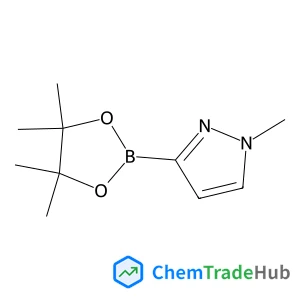
1-Methyl-3-(4,4,5,5-tetramethyl-1,3,2-dioxaborolan-2-yl)-1H-pyrazole
CAS号:
1020174-04-2
分子式:
C10H17BN2O2
推荐供应商




免责声明
本页面提供的学术期刊信息仅供参考和研究使用。我们与任何期刊出版商均无关联,也不处理投稿事宜。如有投稿相关咨询,请直接联系相关期刊出版商。
如发现页面信息有误,请发送邮件至 support@chemtradehub.com 联系我们。我们将及时核实并处理您的问题。