


Screening of transition and post-transition metals to incorporate into copper oxide and copper bismuth oxide for photoelectrochemical hydrogen evolution
文献信息
发布日期
2013-02-11
DOI
10.1039/C3CP50540E
影响因子
3.676
作者
Sean P. Berglund, Heung Chan Lee, Paul D. Núñez, Allen J. Bard
查看原文
摘要
A new dispenser and scanner system is used to create and screen Bi–M–Cu oxide arrays for cathodic photoactivity, where M represents 1 of 22 different transition and post-transition metals. Over 3000 unique Bi : M : Cu atomic ratios are screened. Of the 22 metals tested, 10 show a M–Cu oxide with higher photoactivity than CuO and 10 show a Bi–M–Cu oxide with higher photoactivity than CuBi2O4. Cd, Zn, Sn, and Co produce the most photoactive M–Cu oxides, all showing a 200–300% improvement in photocurrent over CuO. Ag, Cd, and Zn produce the highest photoactivity Bi–M–Cu oxides with a 200–400% improvement over CuBi2O4. Most notable is a Bi–Ag–Cu oxide (Bi : Ag : Cu atomic ratio of 22 : 3 : 11) which shows 4 times higher photocurrent than CuBi2O4. This material is capable of evolving hydrogen under illumination in neutral electrolyte solutions at 0.6 V vs. RHE when Pt is added to the surface as an electrocatalyst.
期刊推荐
Pure and Applied Chemistry
Organic Preparations and Procedures International
Nature

Planta Medica

Israel Journal of Chemistry
Journal of Heterocyclic Chemistry
Kinetics and Catalysis
Proceedings of the National Academy of Sciences of the United States of America
Journal of Physics and Chemistry of Solids
Russian Chemical Reviews
相关文献
Molecular composition of iron oxide nanoparticles, precursors for magnetic drug targeting, as characterized by confocal Raman microspectroscopy
Igor Chourpa, Laurence Douziech-Eyrolles, Lazare Ngaboni-Okassa, Jean-François Fouquenet, Simone Cohen-Jonathan, Martin Soucé, Hervé Marchais, Pierre Dubois
2005-08-24
Paper
DOI: 10.1039/B419004A
Determination of the origin of urinary norandrosterone traces by gas chromatography combustion isotope ratio mass spectrometry
Moritz Hebestreit, Ulrich Flenker, Gregor Fußhöller, Hans Geyer, Ute Güntner, Ute Mareck, Thomas Piper, Mario Thevis, Christiane Ayotte, Wilhelm Schänzer
2006-07-28
Paper
DOI: 10.1039/B603668F
NMR-based screening: a powerful tool in fragment-based drug discovery
Murray Coles
2006-05-05
Book Chapter
DOI: 10.1039/B709658P
Review of applications of high-field asymmetric waveform ion mobility spectrometry (FAIMS) and differential mobility spectrometry (DMS)
Beata M. Kolakowski, Zoltán Mester
2007-06-26
Tutorial Review
DOI: 10.1039/B706039D
Investigation of selenium-containing root exudates of Brassica juncea using HPLC-ICP-MS and ESI-qTOF-MS
Anne P. Vonderheide, Sandra Mounicou, Juris Meija, Heather F. Henry, Joseph A. Caruso, Jodi R. Shann
2005-11-22
Paper
DOI: 10.1039/B510712A
Composite sequence proteomic analysis of proteinbiomarkers of Campylobacter coli, C. lari and C. concisus for bacterial identification‡
Clifton K. Fagerquist, Emma Yee, William G. Miller
2007-07-20
Paper
DOI: 10.1039/B702859H
Nanoparticle-based immunoassays in the biomedical field
Dianping Tang, Yuling Cui, Guonan Chen
2012-12-12
Minireview
DOI: 10.1039/C2AN36500F
Measurement of dielectrophoretic mobility of single micro-particles in a flow channel
Ikuhiro Ikeda, Hideaki Monjushiro, Hitoshi Watarai
2005-09-02
Communication
DOI: 10.1039/B508498A
您可能还喜欢
化合物问答
什么是5-Fluoro-4-iodo-2-methylaniline(CAS号:307306-08-7)?
5-氟-4-碘-2-甲氨基苯属于芳香族化合物,其分子式为C8H7FN2I。该化合物具有一定的反应活性,在有机合成和药物化学领域有一定的应用。
307306-08-75-Fluoro-4-iodo-2-me...
化合物问答
4-氟-3-硝基三氟甲苯(CAS号:367-86-2)通常如何合成?
4-氟-3-硝基三氟甲苯通常通过将三氟甲基苯在酸性条件下催化氧化为三氟甲基硝基苯,然后进行氟化反应得到目标化合物。该过程需要使用催化剂,如三氟乙酸,反应产率较高...
367-86-21-Fluoro-2-nitro-4-(...
化合物问答
6-氯-9-(2,3,5-三苯甲酰氧基-2-C-甲基-beta-D-呋喃核糖基)-9H-嘌呤(CAS号:205171-05-7)的物理化学性质是什么?
该化合物为白色至类白色晶体,分子量约为1046.95。它在水中几乎不溶,在有机溶剂如乙腈和甲醇中具有一定的溶解性。该化合物具有良好的化学稳定性和生物活性。
205171-05-76-Chloro-9-(2-C-meth...
化合物问答
如何储存6-氟喹啉-4-羧酸(CAS号:220844-73-5)?
6-氟喹啉-4-羧酸应储存在阴凉、干燥、通风良好的地方,避免阳光直射。储存在密闭容器中,避免与空气中的水分接触。储存温度应控制在室温以下,避免高温。
220844-73-56-Fluoroquinoline-4-...
化合物问答
(2S,2'S,3S,3'S)-3,3'-di-tert-butyl-4,4'-bis(2,6-dimethoxyphenyl)-2,2',3,3'-tetrahydro-2,2'-bibenzo[d][1,3]oxaphosphole(CAS号:1435940-21-8)通常如何合成?
该化合物通常通过芳香族化合物的亲核取代反应合成,首先将2,6-二甲氧基苯基引入到双环结构中,然后通过特定条件下的还原或氧化反应引入二叔丁基。反应过程中使用了钯作...
1435940-21-8(2S,2'S,3S,3'S)-4,4'...
化合物问答
如何储存KY02111(CAS号:1118807-13-8)?
KY02111应储存于阴凉、干燥、通风良好的地方,避免阳光直射和高温环境。应使用合适的密闭容器储存,并确保容器密封良好,防止水分和潮气进入。在储存期间,应注意检...
1118807-13-8N-(6-chlorobenzo[d]t...
化合物问答
如何储存4-(4-氯苯氧基)丁酸乙酯(CAS号:59227-79-1)?
4-(4-氯苯氧基)丁酸乙酯应储存在阴凉、干燥、通风良好的地方,远离火源和热源。避免阳光直射,防止容器破裂导致泄漏。储存时应保持容器密封,避免与空气中的水蒸气接...
59227-79-1Ethyl 4-(4-chlorophe...
化合物问答
4-庚基苯乙酮(CAS号:37593-03-6)安全吗?
4-庚基苯乙酮相对安全,但在使用和储存时仍需注意。应避免吸入其蒸气,避免皮肤接触,使用时需佩戴防护眼镜和手套。储存时应远离火源和热源,保持容器密封,放置于阴凉、...
37593-03-61-(4-Heptylphenyl)et...
化合物问答
什么是乙基2-氨基-4-(3-溴苯基)噻吩-3-羧酸乙酯(CAS号:438218-48-5)?
乙基2-氨基-4-(3-溴苯基)噻吩-3-羧酸乙酯是一种有机化合物,分子式为C16H12BrN2O2S。它是一种含有噻吩环、氨基、溴苯基和羧酸酯结构的化合物。这...
438218-48-5ethyl 2-amino-4-(3-b...
化合物问答
什么是(9ci)-2-氨基-6-甲基-苯甲酰胺(CAS号:1885-31-0)?
(9ci)-2-氨基-6-甲基-苯甲酰胺是一种化学化合物,其英文名称为2-Amino-6-methylbenzamide,CAS号为1885-31-0。该化合物...
1885-31-02-Amino-6-methylbenz...
来源期刊
Physical Chemistry Chemical Physics

CiteScore:
5.5
自引率:
10.3%
年发文量:
3036
Physical Chemistry Chemical Physics (PCCP) is an international journal co-owned by 19 physical chemistry and physics societies from around the world. This journal publishes original, cutting-edge research in physical chemistry, chemical physics and biophysical chemistry. To be suitable for publication in PCCP, articles must include significant innovation and/or insight into physical chemistry; this is the most important criterion that reviewers and Editors will judge against when evaluating submissions. The journal has a broad scope and welcomes contributions spanning experiment, theory, computation and data science. Topical coverage includes spectroscopy, dynamics, kinetics, statistical mechanics, thermodynamics, electrochemistry, catalysis, surface science, quantum mechanics, quantum computing and machine learning. Interdisciplinary research areas such as polymers and soft matter, materials, nanoscience, energy, surfaces/interfaces, and biophysical chemistry are welcomed if they demonstrate significant innovation and/or insight into physical chemistry. Joined experimental/theoretical studies are particularly appreciated when complementary and based on up-to-date approaches.
推荐化合物
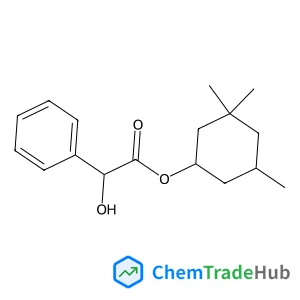
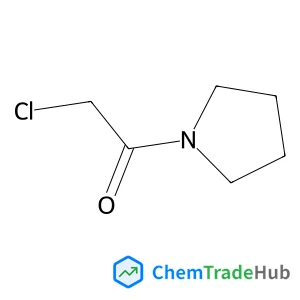
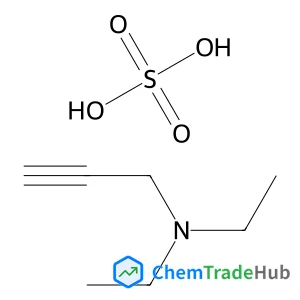

推荐供应商



免责声明
本页面提供的学术期刊信息仅供参考和研究使用。我们与任何期刊出版商均无关联,也不处理投稿事宜。如有投稿相关咨询,请直接联系相关期刊出版商。
如发现页面信息有误,请发送邮件至 support@chemtradehub.com 联系我们。我们将及时核实并处理您的问题。