


Marked enhancement in electron–hole separation achieved in the low bias region using electrochemically prepared Mo-doped BiVO4 photoanodes
文献信息
发布日期
2013-12-02
DOI
10.1039/C3CP53649A
影响因子
3.676
作者
Yiseul Park, Donghyeon Kang, Kyoung-Shin Choi
查看原文
摘要
Mo-doped BiVO4 electrodes were prepared by an electrochemical route for use as photoanodes in a photoelectrochemical cell. The purpose of Mo-doping was to improve the electron transport properties, which in turn can increase the electron–hole separation yield. The poor electron–hole separation yield was known to be one of the main limiting factors for BiVO4-based photoanodes. The electrochemical route provided an effective way of doping BiVO4, and the optimally doped sample, BiV0.97Mo0.03O4, increased the electron–hole separation yield from 0.23 to 0.57 at 0.6 V vs. RHE, which is a record high separation yield achieved for BiVO4-based photoanodes. As a result, BiV0.97Mo0.03O4 generated impressive photocurrents, for example, 2 mA cm−2 at a potential as low as 0.4 V vs. RHE for sulfite oxidation, which has fast oxidation kinetics and, therefore, the loss of holes by surface recombination is negligible. For photooxidation of water, BiV0.97Mo0.03O4 was paired with FeOOH as an oxygen evolution catalyst (OEC) to improve the poor catalytic ability of BiV0.97Mo0.03O4 for water oxidation. The resulting BiV0.97Mo0.03O4/FeOOH photoanodes generated a significantly improved photocurrent for water oxidation compared to previous reported results, but the photocurrent of BiV0.97Mo0.03O4/FeOOH for water oxidation could not reach the photocurrent of BiV0.97Mo0.03O4 for sulfite oxidation. In order to examine the cause, the effects of Mo-doping on the interaction between BiVO4 and FeOOH and the effects of FeOOH on the electron–hole separation yield of BiV0.97Mo0.03O4 were investigated in detail, which provided new insights into semiconductor–OEC interactions.
期刊推荐
Russian Journal of General Chemistry

New Journal of Chemistry

Current Opinion in Solid State & Materials Science
Crystallography Reports

Journal of Natural Medicines
Current Opinion in Colloid & Interface Science
Russian Journal of Applied Chemistry
Russian Chemical Bulletin

Journal of Saudi Chemical Society

Saudi Pharmaceutical Journal
相关文献
Solar reduced graphene oxide decorated with manganese dioxide nanostructures for brackish water desalination using asymmetric capacitive deionization
Shreerang D. Datar, Nitish Kumar, Vrushali Sawant, Noora Shaikh, Neetu Jha
2023-09-06
Paper
DOI: 10.1039/D3CP02984K
Kinetics of associative detachment of O− + N2 and dissociative attachment of e− + N2O up to 1300 K: chemistry relevant to modeling of transient luminous events
Nicholas S. Shuman, Thomas M. Miller, Shaun G. Ard, Albert A. Viggiano
2023-11-17
Paper
DOI: 10.1039/D3CP03856D
Understanding the charge transfer dynamics of the Cu2WS4–CNT–FeOOH ternary composite for photo-electrochemical studies
Preeti Dagar, Nandan Ghorai, Manisha Bungla
2023-10-30
Paper
DOI: 10.1039/D3CP03498D
Defect physics of intrinsic point defects in BiPO4 photocatalysts: a hybrid functional study
Hongchun Zheng, Jincheng Wang, Bo Kong, Xiang Xu, Min Zhang, Wentao Wang
2023-10-05
Paper
DOI: 10.1039/D3CP03636G
Effect of the oxygen vacancy electronic state on Ni migration in Li0.5(Ni0.8Mn0.1Co0.1)O2 cathode material
Ravanny W. M. Komalig, Afriyanti Sumboja, Ryo Maezono
2023-11-04
Paper
DOI: 10.1039/D3CP03396A
Impact of a rubrene buffer layer on the dynamic magnetic behavior of nickel layers on Si(100)
Ranganadha Gopalarao Tanguturi, Jian-Chen Tsai, You-Siang Li, Jyh-Shen Tsay
2023-11-03
Paper
DOI: 10.1039/D3CP04463G
Revealing the excited-state dynamics of cytidine and the role of excited-state proton transfer process
Li Zhao, Xuehui Geng, Guoxia Han, Yahui Guo, Runze Liu, Junsheng Chen
2023-11-06
Paper
DOI: 10.1039/D3CP03683A
Covalently bonded interface in polymer/boron nitride nanosheet composite toward enhanced mechanical and thermal behaviour
Ankur Chaurasia, Kaushlendra Kumar, S. P. Harsha, Avinash Parashar
2023-11-01
Paper
DOI: 10.1039/D3CP04497A
Enhancing the performance of aqueous zinc ion battery cathodes with a floral spherical V5O12·6H2O/V6O13/CNT nanocomposite
Yong Wang, Taotao Ai, Panya Wattanapaphawong, Koji Kajiyoshi
2023-10-31
Paper
DOI: 10.1039/D3CP05077G
A graphene/Janus B2P6 heterostructure with a controllable Schottky barrier via interlayer distance and electric field
Tian Xie, Youyou Guo, Gang Yuan, JiaJun Liao, Nan Ma, Chuyun Huang
2023-11-13
Paper
DOI: 10.1039/D3CP03732K
您可能还喜欢
化合物问答
N-2,2-丙烯基-2-丙烯酰胺(CAS号:2555-13-7)通常如何合成?
N-2,2-丙烯基-2-丙烯酰胺通常通过丙烯酰胺与丙烯基卤化物的缩合反应合成。该反应通常在温和的条件下进行,使用适量的碱如吡啶作为催化剂。反应的选择性良好,产率...
2555-13-7N-Allylacrylamide
化合物问答
什么是1,2-二碘四氟代乙烷(CAS号:354-65-4)?
1,2-二碘四氟代乙烷是一种有机化合物,化学式为C2F4I2,CAS号为354-65-4。它是一种无色透明液体,具有特殊的化学性质和物理性质,包括高沸点、低挥发...
354-65-41,1,2,2-Tetrafluoro-...
化合物问答
3-溴-1H-吡咯[3,2-c]吡啶-4-碳腈(CAS号:1000341-71-8)适用哪些法规指南?
根据GHS(全球化学品统一分类和标签制度),3-溴-1H-吡咯[3,2-c]吡啶-4-碳腈被归类为第2类易燃液体。在欧盟,该化合物需要符合REACH法规的要求,...
1000341-71-83-Bromo-1H-pyrrolo[3...
化合物问答
1-氯甲基萘磺酸(CAS号:87491-79-0)安全吗?
1-氯甲基萘磺酸在使用时需要谨慎,因为它具有一定的刺激性和腐蚀性。操作时应佩戴适当的防护装备,如防化服、手套、护目镜等,避免直接接触皮肤和吸入其蒸汽。
87491-79-01-((Chloromethyl)sul...
化合物问答
二氯(二环戊二烯)铂(CAS号:12083-92-0)的主要用途是什么?
该化合物主要用于催化剂领域,特别是在有机合成中的催化氧化反应以及作为某些药物合成的中间体。此外,它还被研究用于纳米材料的制备。
12083-92-0(1S,7R)-Tricyclo[5.2...
化合物问答
3-溴-7-氯噻吩并[3,2-b]吡啶-6-甲腈(CAS号:798574-82-0)安全吗?
3-溴-7-氯噻吩并[3,2-b]吡啶-6-甲腈在处理时需要谨慎,因其含有溴和氯等强卤素,可能具有一定的刺激性和腐蚀性。使用时应佩戴适当的个人防护装备,避免皮肤...
798574-82-03-Bromo-7-chlorothie...
化合物问答
(R)-1-((R)-2-(2’-二环己基膦苯基)三戊铁基]乙基(双-3,5-三氟甲基苯基)膦(CAS号:494227-32-6)的主要用途是什么?
该化合物主要用于有机合成领域,特别是作为催化剂或配体,在有机合成反应中发挥重要作用。此外,它还可能应用于催化加氢反应、偶联反应等。
494227-32-6Walphos SL-W008-1
化合物问答
3-[6-(Diphenylphosphoryl)-2-naphthyl]-1,10-phenanthroline(CAS号:1480371-38-7)安全吗?
3-[6-(Diphenylphosphoryl)-2-naphthyl]-1,10-phenanthroline在正常使用条件下相对安全,但在操作时应穿戴适当...
1480371-38-73-[6-(Diphenylphosph...
化合物问答
在合成中是否有ETHYL 2-(4-(4,4,5,5-TETRAMETHYL-1,3,2-DIOXABOROLAN-2-YL)CYCLOHEX-3-ENYL)ACETATE(CAS号:1166829-70-4)的替代品?
可以考虑使用类似结构的化合物作为替代品,如2-(4-环戊基环己烯基)乙酸酯,这种化合物在结构上相似,可能在某些合成路径中作为替代品。
1166829-70-4Ethyl [4-(4,4,5,5-te...
化合物问答
如何处理含有3-(3-氨基丙基)丙酮缩甘油(CAS号:131606-42-3)的废料?
处理含有3-(3-氨基丙基)丙酮缩甘油的废料时,首先应确保遵守当地的环保法规。对于危险废物,应进行分类收集,然后送至专业的废物处理设施进行焚烧或安全填埋。在处理...
131606-42-33-[(2,2-Dimethyl-1,3...
来源期刊
Physical Chemistry Chemical Physics

CiteScore:
5.5
自引率:
10.3%
年发文量:
3036
Physical Chemistry Chemical Physics (PCCP) is an international journal co-owned by 19 physical chemistry and physics societies from around the world. This journal publishes original, cutting-edge research in physical chemistry, chemical physics and biophysical chemistry. To be suitable for publication in PCCP, articles must include significant innovation and/or insight into physical chemistry; this is the most important criterion that reviewers and Editors will judge against when evaluating submissions. The journal has a broad scope and welcomes contributions spanning experiment, theory, computation and data science. Topical coverage includes spectroscopy, dynamics, kinetics, statistical mechanics, thermodynamics, electrochemistry, catalysis, surface science, quantum mechanics, quantum computing and machine learning. Interdisciplinary research areas such as polymers and soft matter, materials, nanoscience, energy, surfaces/interfaces, and biophysical chemistry are welcomed if they demonstrate significant innovation and/or insight into physical chemistry. Joined experimental/theoretical studies are particularly appreciated when complementary and based on up-to-date approaches.
推荐化合物
![trans-2-{[(Tert-butoxy)carbonyl]amino}cyclobutane-1-carboxylic acid structure](https://cnstatic.chemtradehub.com/structs/951/951173-25-4-27cd.webp "trans-2-{[(Tert-butoxy)carbonyl]amino}cyclobutane-1-carboxylic acid structure")
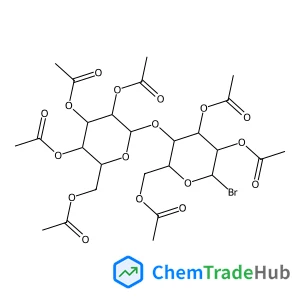
![1H-Imidazo[4,5-c]pyridine-7-carboxylic acid structure](https://cnstatic.chemtradehub.com/structs/123/1234616-39-7-1344.webp "1H-Imidazo[4,5-c]pyridine-7-carboxylic acid structure")
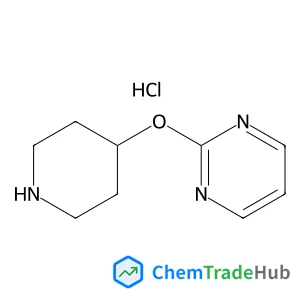
推荐供应商




免责声明
本页面提供的学术期刊信息仅供参考和研究使用。我们与任何期刊出版商均无关联,也不处理投稿事宜。如有投稿相关咨询,请直接联系相关期刊出版商。
如发现页面信息有误,请发送邮件至 support@chemtradehub.com 联系我们。我们将及时核实并处理您的问题。