


![3-[(3R,4R)-3-[(6-aminopyrimidin-4-yl)-methyl-amino]-4-methyl-1-piperidyl]-3-oxo-propanenitrile structure](https://cnstatic.chemtradehub.com/structs/164/1640971-60-3-83a4.webp "3-[(3R,4R)-3-[(6-aminopyrimidin-4-yl)-methyl-amino]-4-methyl-1-piperidyl]-3-oxo-propanenitrile structure")
Orientational relaxation in semiflexible dendrimers
文献信息
发布日期
2013-10-14
DOI
10.1039/C3CP53864H
影响因子
3.676
作者
Amit Kumar, Parbati Biswas
查看原文
摘要
The orientational relaxation dynamics of semiflexible dendrimers are theoretically calculated within the framework of optimized Rouse–Zimm formalism. Semiflexibility is modeled through appropriate restrictions in the direction and orientation of the respective bond vectors, while the hydrodynamic interactions are included via the preaveraged Oseen tensor. The time autocorrelation function M(i)1(t) and the second order orientational autocorrelation function P(i)2(t) are analyzed as a function of the branch-point functionality and the degree of semiflexibility. Our approach of calculating M(i)1(t) is completely different from that of the earlier studies (A. Perico and M. Guenza J. Chem. Phys., 1985, 83, 3103; J. Chem. Phys., 1986, 84, 510), where the expression of M(i)1(t) obtained from earlier studies does not demarcate the flexible dendrimers from the semiflexible ones. The component of global motion of the time autocorrelation function exhibits a strong dependence on both degree of semiflexibility and branch-point functionality, while the component of pulsation motion depends only on the degree of semiflexibility. But it is difficult to distinguish the difference in the extent of pulsation motion among the compressed (0 < ϕ < π/2) and expanded (π/2 < ϕ < π) conformations of semiflexible dendrimers. The qualitative behavior of P(i)2(t) obtained from our calculations closely matches with the expression for Pexact2(t) in the earlier studies. Theoretically calculated spectral density, J(ω), is found to depend on the degree of semiflexibility and the branch-point functionality for the compressed and expanded conformations of semiflexible dendrimers as a function of frequency, especially in the high frequency regime, where J(ω) decays with frequency for both compressed and expanded conformations of semiflexible dendrimers. This decay of the spectral density occurs after displaying a cross-over behavior with the variation in the degree of semiflexibility in the intermediate frequency regime. The characteristic area increases with the increase in the semiflexibility parameter, where the expanded conformations of semiflexible dendrimers record the maximum characteristic area. For the compressed conformations the relative increment of this area is considerably lower than that of the expanded conformations of semiflexible dendrimers.
期刊推荐
Chemistry Education Research and Practice

Saudi Pharmaceutical Journal
Current Opinion in Solid State & Materials Science

New Journal of Chemistry

Acta Materialia
Journal of Peptide Science
Russian Chemical Bulletin
Journal of Saudi Chemical Society
Russian Journal of General Chemistry
Organic Process Research & Development
相关文献
The nature of the electronic ground state of M2C (M = Ti, V, Cr, Zr, Nb, Mo, Hf, Ta, and W) MXenes
Néstor García-Romeral, Ángel Morales-García, Francesc Viñes, Ibério de P. R. Moreira, Francesc Illas
2023-11-06
Paper
DOI: 10.1039/D3CP04402E
Identifying the acidic or basic behavior of surface water: a QM/MM-MD study
Md Al Mamunur Rashid, Mofizur Rahman, Thamina Acter, Nizam Uddin
2023-11-02
Paper
DOI: 10.1039/D3CP02080K
Understanding the charge transfer dynamics of the Cu2WS4–CNT–FeOOH ternary composite for photo-electrochemical studies
Preeti Dagar, Nandan Ghorai, Manisha Bungla
2023-10-30
Paper
DOI: 10.1039/D3CP03498D
Janus 2H-MXTe (M = Zr, Hf; X = S, Se) monolayers with outstanding thermoelectric properties and low lattice thermal conductivities
Ying-Qin Lin, Qiu Yang, Zhao-Qi Wang, Hua-Yun Geng, Yan Cheng
2023-11-13
Paper
DOI: 10.1039/D3CP04118B
Regulating polystyrene glass transition temperature by varying the hydration levels of aromatic ring/Li+ interaction
Sze Yuet Chin, Yunpeng Lu, Weishuai Di, Kai Ye, Zihan Li, Chenlu He, Chun Tang
2023-09-27
Paper
DOI: 10.1039/D3CP02995F
The boson peak in silicate glasses: insight from molecular dynamics
Ahmed El Hamdaoui, El Mehdi Ghardi, Achraf Atila, Michael Badawi, Abdellatif Hasnaoui, Said Ouaskit
2023-11-13
Paper
DOI: 10.1039/D3CP02912C
Helical insertion of polyphenylene chains into confined cylindrical slits composed of two carbon nanotubes
Xueyin Yang, Xuemei Sun, Shuqiong Xu, Hongjin Fu, Yunfang Li
2023-10-31
Paper
DOI: 10.1039/D3CP02191B
Raman scattering and spectroscopic ellipsometry studies of Sb2S3 and Sb2Se3 bulk polycrystals
Elena Hajdeu-Chicarosh, Victoria Rotaru, Sergiu Levcenko, Rosalia Serna, Ivan A. Victorov, Maxim Guc, José Manuel Merino, Máximo León
2023-10-31
Paper
DOI: 10.1039/D3CP04490D
Molecular specificity in neutron imaging: the case of hydrogen adsorption in metal organic frameworks
Margherita Simoni, Triestino Minniti
2023-11-02
Perspective
DOI: 10.1039/D3CP04176J
The curvature effect on the distribution behavior of nonpolar atoms in nano-confined space
Mingqian Li, Dan Wang, Lifeng Wang
2023-11-06
Paper
DOI: 10.1039/D3CP04399A
您可能还喜欢
化合物问答
N-2,2-丙烯基-2-丙烯酰胺(CAS号:2555-13-7)通常如何合成?
N-2,2-丙烯基-2-丙烯酰胺通常通过丙烯酰胺与丙烯基卤化物的缩合反应合成。该反应通常在温和的条件下进行,使用适量的碱如吡啶作为催化剂。反应的选择性良好,产率...
2555-13-7N-Allylacrylamide
化合物问答
什么是1,2-二碘四氟代乙烷(CAS号:354-65-4)?
1,2-二碘四氟代乙烷是一种有机化合物,化学式为C2F4I2,CAS号为354-65-4。它是一种无色透明液体,具有特殊的化学性质和物理性质,包括高沸点、低挥发...
354-65-41,1,2,2-Tetrafluoro-...
化合物问答
3-溴-1H-吡咯[3,2-c]吡啶-4-碳腈(CAS号:1000341-71-8)适用哪些法规指南?
根据GHS(全球化学品统一分类和标签制度),3-溴-1H-吡咯[3,2-c]吡啶-4-碳腈被归类为第2类易燃液体。在欧盟,该化合物需要符合REACH法规的要求,...
1000341-71-83-Bromo-1H-pyrrolo[3...
化合物问答
1-氯甲基萘磺酸(CAS号:87491-79-0)安全吗?
1-氯甲基萘磺酸在使用时需要谨慎,因为它具有一定的刺激性和腐蚀性。操作时应佩戴适当的防护装备,如防化服、手套、护目镜等,避免直接接触皮肤和吸入其蒸汽。
87491-79-01-((Chloromethyl)sul...
化合物问答
二氯(二环戊二烯)铂(CAS号:12083-92-0)的主要用途是什么?
该化合物主要用于催化剂领域,特别是在有机合成中的催化氧化反应以及作为某些药物合成的中间体。此外,它还被研究用于纳米材料的制备。
12083-92-0(1S,7R)-Tricyclo[5.2...
化合物问答
3-溴-7-氯噻吩并[3,2-b]吡啶-6-甲腈(CAS号:798574-82-0)安全吗?
3-溴-7-氯噻吩并[3,2-b]吡啶-6-甲腈在处理时需要谨慎,因其含有溴和氯等强卤素,可能具有一定的刺激性和腐蚀性。使用时应佩戴适当的个人防护装备,避免皮肤...
798574-82-03-Bromo-7-chlorothie...
化合物问答
(R)-1-((R)-2-(2’-二环己基膦苯基)三戊铁基]乙基(双-3,5-三氟甲基苯基)膦(CAS号:494227-32-6)的主要用途是什么?
该化合物主要用于有机合成领域,特别是作为催化剂或配体,在有机合成反应中发挥重要作用。此外,它还可能应用于催化加氢反应、偶联反应等。
494227-32-6Walphos SL-W008-1
化合物问答
3-[6-(Diphenylphosphoryl)-2-naphthyl]-1,10-phenanthroline(CAS号:1480371-38-7)安全吗?
3-[6-(Diphenylphosphoryl)-2-naphthyl]-1,10-phenanthroline在正常使用条件下相对安全,但在操作时应穿戴适当...
1480371-38-73-[6-(Diphenylphosph...
化合物问答
在合成中是否有ETHYL 2-(4-(4,4,5,5-TETRAMETHYL-1,3,2-DIOXABOROLAN-2-YL)CYCLOHEX-3-ENYL)ACETATE(CAS号:1166829-70-4)的替代品?
可以考虑使用类似结构的化合物作为替代品,如2-(4-环戊基环己烯基)乙酸酯,这种化合物在结构上相似,可能在某些合成路径中作为替代品。
1166829-70-4Ethyl [4-(4,4,5,5-te...
化合物问答
如何处理含有3-(3-氨基丙基)丙酮缩甘油(CAS号:131606-42-3)的废料?
处理含有3-(3-氨基丙基)丙酮缩甘油的废料时,首先应确保遵守当地的环保法规。对于危险废物,应进行分类收集,然后送至专业的废物处理设施进行焚烧或安全填埋。在处理...
131606-42-33-[(2,2-Dimethyl-1,3...
来源期刊
Physical Chemistry Chemical Physics

CiteScore:
5.5
自引率:
10.3%
年发文量:
3036
Physical Chemistry Chemical Physics (PCCP) is an international journal co-owned by 19 physical chemistry and physics societies from around the world. This journal publishes original, cutting-edge research in physical chemistry, chemical physics and biophysical chemistry. To be suitable for publication in PCCP, articles must include significant innovation and/or insight into physical chemistry; this is the most important criterion that reviewers and Editors will judge against when evaluating submissions. The journal has a broad scope and welcomes contributions spanning experiment, theory, computation and data science. Topical coverage includes spectroscopy, dynamics, kinetics, statistical mechanics, thermodynamics, electrochemistry, catalysis, surface science, quantum mechanics, quantum computing and machine learning. Interdisciplinary research areas such as polymers and soft matter, materials, nanoscience, energy, surfaces/interfaces, and biophysical chemistry are welcomed if they demonstrate significant innovation and/or insight into physical chemistry. Joined experimental/theoretical studies are particularly appreciated when complementary and based on up-to-date approaches.
推荐化合物

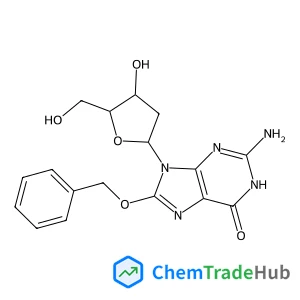
推荐供应商





免责声明
本页面提供的学术期刊信息仅供参考和研究使用。我们与任何期刊出版商均无关联,也不处理投稿事宜。如有投稿相关咨询,请直接联系相关期刊出版商。
如发现页面信息有误,请发送邮件至 support@chemtradehub.com 联系我们。我们将及时核实并处理您的问题。