





Cross-conjugation and quantum interference: a general correlation?
文献信息
发布日期
2013-11-01
DOI
10.1039/C3CP53866D
影响因子
3.676
作者
Hennie Valkenier, Constant M. Guédon, Troels Markussen, Kristian S. Thygesen, Sense J. van der Molen, Jan C. Hummelen
查看原文
摘要
We discuss the relationship between the π-conjugation pattern, molecular length, and charge transport properties of molecular wires, both from an experimental and a theoretical viewpoint. Specifically, we focus on the role of quantum interference in the conductance properties of cross-conjugated molecules. For this, we compare experiments on two series of dithiolated wires. The first set we synthesized consists of three dithiolated oligo(phenylene ethynylene) (OPE) benchmark compounds with increasing length. The second series synthesized comprises three molecules with different π-conjugation patterns, but identical lengths, i.e. an anthracene (linear conjugation), an anthraquinone (cross-conjugation), and a dihydroanthracene (broken conjugation) derivative. To benchmark reliable trends, conductance experiments on these series have been performed by various techniques. Here, we compare data obtained by conductive-probe atomic force microscopy (CP-AFM) for self-assembled monolayers (SAMs) with single-molecule break junction and multi-molecule EGaIn data from other groups. For the benchmark OPE-series, we consistently find an exponential decay of the conductance with molecular length characterized by β = 0.37 ± 0.03 Å−1 (CP-AFM). Remarkably, for the second series, we do not only find that the linearly conjugated anthracene-containing wire is the most conductive, but also that the cross-conjugated anthraquinone-containing wire is less conductive than the broken-conjugated derivative. We attribute the low conductance values for the cross-conjugated species to quantum interference effects. Moreover, by theoretical modeling, we show that destructive quantum interference is a robust feature for cross-conjugated structures and that the energy at which complete destructive interference occurs can be tuned by the choice of side group. The latter provides an outlook for future devices in this fascinating field connecting chemistry and physics.
相关文献
High rectification in organic diodes based on liquid crystalline phthalocyanines
Petru Apostol, Juliana Eccher, Marta Elisa Rosso Dotto, Cassiano Batesttin Costa, Thiago Cazati, Elizabeth A. Hillard, Harald Bock, Ivan H. Bechtold
2015-11-11
Paper
DOI: 10.1039/C5CP05582B
Resistive switching memory devices based on electrical conductance tuning in poly(4-vinyl phenol)–oxadiazole composites
Yanmei Sun, Fengjuan Miao, Rui Li, Dianzhong Wen
2015-10-08
Paper
DOI: 10.1039/C5CP05481H
Radiation-induced transformations of matrix-isolated formic acid: evidence for the HCOOH → HOCO + H channel
Sergey V. Ryazantsev, Vladimir I. Feldman
2015-10-23
Paper
DOI: 10.1039/C5CP05446J
Classical group theory adapted to the mechanism of Pt3Ni nanoparticle growth: the role of W(CO)6 as the “shape-controlling” agent
M. Radtke, A. Ignaszak
2015-11-16
Communication
DOI: 10.1039/C5CP05060J
Optimized multi-site local orbitals in the large-scale DFT program CONQUEST
Ayako Nakata
2015-03-27
Paper
DOI: 10.1039/C5CP00934K
Computational modeling of self-trapped electrons in rutile TiO2
Justin E. Elenewski, Wei Jiang, Hanning Chen
2015-10-05
Paper
DOI: 10.1039/C5CP05271H
Anharmonicities and coherent vibrational dynamics of phosphate ions in bulk H2O
Rene Costard, Tobias Tyborski, Benjamin P. Fingerhut
2015-10-01
Paper
DOI: 10.1039/C5CP04502A
Synthesis of α-MnO2 nanowires modified by Co3O4 nanoparticles as a high-performance catalyst for rechargeable Li–O2 batteries
Fan Wang, Zhaoyin Wen, Chen Shen, Xiangwei Wu, Jianjun Liu
2015-11-27
Paper
DOI: 10.1039/C5CP06815K
Competitive lithium solvation of linear and cyclic carbonates from quantum chemistry
Oleg Borodin, Marco Olguin, P. Ganesh, Joshua L. Allen, Wesley A. Henderson
2015-11-17
Paper
DOI: 10.1039/C5CP05121E
您可能还喜欢
化合物问答
什么是2-氨基戊烷(CAS号:63493-28-7)?
2-氨基戊烷,又名pentan-2-amine,是一种有机化合物,分子式为C5H11NH2。它是一种无色透明液体,有氨味。该化合物在工业和研究中有一定的应用。
63493-28-7pentan-2-amine
化合物问答
反式-4-[4-[[[5-[(3,4-二氟苯基)氨基]-1,3,4-恶二唑-2-基]羰基]氨基]苯基]环己烷乙酸(CAS号:892489-52-0)的物理化学性质是什么?
该化合物为白色固体,分子量为552.31 g/mol。它在水中溶解度较低,在有机溶剂如乙腈、乙酸乙酯中有较好的溶解性。该化合物具有较高的化学稳定性,对酸和碱具有...
892489-52-0Trans-4-[4-[[[5-[(3,...
化合物问答
如何处理含有Pyrotinib dimaleate(CAS号:1397922-61-0)的废料?
处理含有Pyrotinib dimaleate 的废料时,应遵循当地的法规要求。首先,收集废料并进行分类,确保没有与其他化学品混合。然后,采取适当的物理和化学处...
1397922-61-0(2E)-N-(4-{[3-Chloro...
化合物问答
在合成中是否有4-(5-5-乙基-1,2,4-噁二唑-3-基)苯甲酸乙酯(CAS号:1166756-79-1)的替代品?
在合成过程中,可以考虑使用其他结构类似的化合物作为替代品,例如苯甲酸酯类化合物,如2-乙基-5-甲基噁二唑基苯甲酸乙酯等。这些替代品可能具有相似的化学性质,但在...
1166756-79-1Ethyl 4-(5-ethyl-1,2...
化合物问答
如何处理含有1-((叔丁氧基羰基)氨基)环丁烷甲酸甲酯(CAS号:880166-10-9)的废料?
处理含有该化合物的废液时,应先确保其完全反应并转化为无害物质。对于未反应的化合物,建议采用中和处理后进行蒸馏回收,剩余物可使用化学氧化法或焚烧法进行无害化处理。...
880166-10-9Methyl 1-({[(2-methy...
化合物问答
2-({[3,5-二(三氟甲基)苯基]磺酰基}氨基)-4-(甲基硫代)丁酸甲酯(CAS号:175202-21-8)的市场或研究趋势如何?
目前该化合物主要应用于药物合成领域,尤其在开发新型抗癌药物方面具有潜在应用。随着制药行业的持续发展,对于高效、低毒的合成中间体需求增加,预计该化合物的研究和应用...
175202-21-8Methyl N-{[3,5-bis(t...
化合物问答
N,N-乙烯双(碘乙酰胺)(CAS号:7250-43-3)的物理化学性质是什么?
N,N-乙烯双(碘乙酰胺)是一种白色或类白色固体,易溶于乙醇、丙酮等有机溶剂,但在水中溶解度较低。该化合物具有较高的反应活性,可以与其他含有活性氢的化合物发生酰...
7250-43-3N,N'-1,2-Ethanediylb...
化合物问答
7-Fluoro-1H-spiro[furo[3,4-c]pyridine-3,4'-piperidine](CAS号:1283090-73-2)通常如何合成?
该化合物可以通过环合反应合成,首先合成吡啶和哌啶的衍生物,然后在合适的条件下进行环合反应得到目标化合物。常用的催化剂包括某些金属盐类,产率一般在70%-90%之...
1283090-73-27-Fluoro-1H-spiro[fu...
化合物问答
处理3-乙酰滇乌碱(CAS号:80787-51-5)时应注意哪些实验室安全事项?
在处理3-乙酰滇乌碱时,应穿戴适当的个人防护装备(PPE),如实验服、手套(丁腈手套或PVC手套)、护目镜和口罩。实验应在通风橱中进行,以减少吸入或皮肤接触的风...
80787-51-54-Methylaconitane-1,...
化合物问答
如何储存2-溴-5-硝基-4-羧酸(CAS号:1053655-82-5)?
2-溴-5-硝基-4-羧酸应存放在阴凉、干燥、通风良好的地方,远离火源和热源。避免与还原剂、碱性物质接触。储存容器应密封,防止吸湿。
1053655-82-52-Bromo-5-nitropyrid...
来源期刊
Physical Chemistry Chemical Physics

CiteScore:
5.5
自引率:
10.3%
年发文量:
3036
Physical Chemistry Chemical Physics (PCCP) is an international journal co-owned by 19 physical chemistry and physics societies from around the world. This journal publishes original, cutting-edge research in physical chemistry, chemical physics and biophysical chemistry. To be suitable for publication in PCCP, articles must include significant innovation and/or insight into physical chemistry; this is the most important criterion that reviewers and Editors will judge against when evaluating submissions. The journal has a broad scope and welcomes contributions spanning experiment, theory, computation and data science. Topical coverage includes spectroscopy, dynamics, kinetics, statistical mechanics, thermodynamics, electrochemistry, catalysis, surface science, quantum mechanics, quantum computing and machine learning. Interdisciplinary research areas such as polymers and soft matter, materials, nanoscience, energy, surfaces/interfaces, and biophysical chemistry are welcomed if they demonstrate significant innovation and/or insight into physical chemistry. Joined experimental/theoretical studies are particularly appreciated when complementary and based on up-to-date approaches.
推荐化合物
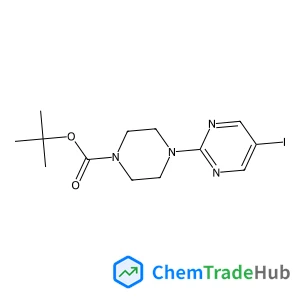
2-Methyl-2-propanyl 4-(5-iodo-2-pyrimidinyl)-1-piperazinecarboxylate
CAS号:
1027616-32-5
分子式:
C13H19IN4O2
推荐供应商






免责声明
本页面提供的学术期刊信息仅供参考和研究使用。我们与任何期刊出版商均无关联,也不处理投稿事宜。如有投稿相关咨询,请直接联系相关期刊出版商。
如发现页面信息有误,请发送邮件至 support@chemtradehub.com 联系我们。我们将及时核实并处理您的问题。