









![(2R,6S)-6-[(Benzyloxy)methyl]-4-{[(2-methyl-2-propanyl)oxy]carbonyl}-2-morpholinecarboxylic acid structure](https://cnstatic.chemtradehub.com/structs/109/1093085-91-6-3382.webp "(2R,6S)-6-[(Benzyloxy)methyl]-4-{[(2-methyl-2-propanyl)oxy]carbonyl}-2-morpholinecarboxylic acid structure")
Weak hydrogen bonding motifs of ethylamino neurotransmitter radical cations in a hydrophobic environment: infrared spectra of tryptamine+–(N2)n clusters (n ≤ 6)
文献信息
发布日期
2014-01-16
DOI
10.1039/C3CP54127D
影响因子
3.676
作者
Kenji Sakota, Markus Schütz, Matthias Schmies, Raphael Moritz, Aude Bouchet, Takamasa Ikeda, Yuuki Kouno, Hiroshi Sekiya, Otto Dopfer
查看原文
摘要
Size-selected clusters of the tryptamine cation with N2 ligands, TRA+–(N2)n with n = 1–6, are investigated by infrared photodissociation (IRPD) spectroscopy in the hydride stretch range and quantum chemical calculations at the ωB97X-D/cc-pVTZ level to characterize the microsolvation of this prototypical aromatic ethylamino neurotransmitter radical cation in a nonpolar solvent. Two types of structural isomers exhibiting different interaction motifs are identified for the TRA+–N2 dimer, namely the TRA+–N2(H) global minimum, in which N2 forms a linear hydrogen bond (H-bond) to the indolic NH group, and the less stable TRA+–N2(π) local minima, in which N2 binds to the aromatic π electron system of the indolic pyrrole ring. The IRPD spectrum of TRA+–(N2)2 is consistent with contributions from two structural H-bound isomers with similar calculated stabilization energies. The first isomer, denoted as TRA+–(N2)2(2H), exhibits an asymmetric bifurcated planar H-bonding motif, in which both N2 ligands are attached to the indolic NH group in the aromatic plane via H-bonding and charge–quadrupole interactions. The second isomer, denoted as TRA+–(N2)2(H/π), has a single and nearly linear H-bond of the first N2 ligand to the indolic NH group, whereas the second ligand is π-bonded to the pyrrole ring. The natural bond orbital analysis of TRA+–(N2)2 reveals that the total stability of these types of clusters is not only controlled by the local H-bond strengths between the indolic NH group and the N2 ligands but also by a subtle balance between various contributing intermolecular interactions, including local H-bonds, charge–quadrupole and induction interactions, dispersion, and exchange repulsion. The systematic spectral shifts as a function of cluster size suggest that the larger TRA+–(N2)n clusters with n = 3–6 are composed of the strongly bound TRA+–(N2)2(2H) core ion to which further N2 ligands are weakly attached to either the π electron system or the indolic NH proton by stacking and charge–quadrupole forces.
期刊推荐
相关文献
Isofagomine lactams, synthesis and enzyme inhibition
Vinni H. Lillelund, Huizhen Liu, Xifu Liang, Helmer Søhoel, Mikael Bols
2002-12-19
Paper
DOI: 10.1039/B208784G
From α-keto acids to nitrile oxides enabled by copper nitrate: a facile access to fused isoxazolines
Yuping Zhu, Tianqi Liu, Bingxin Liu, Houguang Shi, Qitao Tan
2021-12-10
Research Article
DOI: 10.1039/D1QO01574E
An alternative route for the synthesis of hydroxylated pillar[5]arene-based amphiphiles
Talal F. Al-Azemi, Mickey Vinodh, Fatemeh H. Alipour, Abdirahman A. Mohamod
2018-09-26
Paper
DOI: 10.1039/C8OB02074D
Synthesis and application of a new chiral monodentate spiro phosphoramidite ligand based on hexamethyl-1,1′-spirobiindane backbone in asymmetric hydroamination/arylation of alkenes
Huanyu Shan, Rihuang Pan, Xufeng Lin
2018-08-16
Communication
DOI: 10.1039/C8OB01785A
Ni(ii)-Catalyzed intermolecular selective Heck-type arylation of unactivated alkenes with arylboronic acids
Cong Lin, Sai Chen, Yihua Wang, Fei Gao, Liang Shen
2021-12-01
Research Article
DOI: 10.1039/D1QO01579F
Differential effects of bromination on substrates and inhibitors of kynureninase from Pseudomonas fluorescens
Christian Heiss, Jay Anderson
2002-12-09
Paper
DOI: 10.1039/B208910F
Synthesis of protectin D1 analogs: novel pro-resolution and radiotracer agents
J. E. Tungen, M. Aursnes, S. Ramon, R. A. Colas, C. N. Serhan, S. Nuruddin, F. Willoch, T. V. Hansen
2018-08-31
Paper
DOI: 10.1039/C8OB01232F
Promoting laccase activity towards non-phenolic substrates: a mechanistic investigation with some laccase–mediator systems
Paola Baiocco, Anna Maria Barreca, Maura Fabbrini, Carlo Galli, Patrizia Gentili
2002-11-29
Paper
DOI: 10.1039/B208951C
Correction: Synthesis of highly substituted 2-spiropiperidines
Samuel D. Griggs, Nathan Thompson, Daniel T. Tape, Marie Fabre, Paul A. Clarke
2018-08-10
Correction
DOI: 10.1039/C8OB90117A
您可能还喜欢
化合物问答
(5-氨基吡唑-3-基)乙酸(CAS号:174891-10-2)的物理化学性质是什么?
(5-氨基吡唑-3-基)乙酸是一种无色至白色固体,分子量为174.15 g/mol。它在水中具有较好的溶解性,在有机溶剂中的溶解度较低。该化合物具有较好的反应活...
174891-10-2(3-Amino-1H-pyrazol-...
化合物问答
3-氟-4,5-二氯苯胺(CAS号:35754-38-2)适用哪些法规指南?
3-氟-4,5-二氯苯胺受到多项法规指南的约束,包括但不限于GHS(全球化学品统一分类和标签制度)的危险分类标准、欧盟的REACH法规(注册、评估、授权和限制)...
35754-38-23,4-Dichloro-5-fluor...
化合物问答
什么是(R)-(+)-2,2',6,6'-四甲氧基-4,4'-联(二(3,5-二甲苯基基)膦基)-3,3'-二联吡啶(CAS号:442905-33-1)?
这是一种有机化合物,化学名为(R)-(+)-2,2',6,6'-四甲氧基-4,4'-联(二(3,5-二甲苯基基)膦基)-3,3'-二联吡啶,CAS号为44290...
442905-33-14,4'-Bis[bis(3,5-dim...
化合物问答
1-氨基-2-氰基萘(CAS号:3100-67-2)应用于哪些行业?
1-氨基-2-氰基萘在医药、聚合物、传感器和半导体等行业中有应用。在医药领域,它可用作中间体合成某些药物。在聚合物行业,它可以用于制备具有特定性能的聚合物。此外...
3100-67-21-Amino-2-naphthonit...
化合物问答
如何处理含有1-溴-4-(异丙氧基甲基)苯(CAS号:98446-84-5)的废料?
处理含1-溴-4-(异丙氧基甲基)苯的废料时,首先应确保废液收集在防渗漏的容器中,避免泄露。然后,可以考虑采用化学降解法或物理吸附法进行处理。在特定条件下,可通...
98446-84-51-Bromo-4-(isopropox...
化合物问答
6-Chloro-8-(trifluoromethyl)chroman-4-one(CAS号:1344889-75-3)的主要用途是什么?
6-氯-8-三氟甲基-2,3-二氢-4H-色喃-4-酮主要用于有机合成中的中间体,也可作为研究试剂使用。
1344889-75-36-Chloro-8-(trifluor...
化合物问答
7-乙氧基-2-萘酚(CAS号:57944-44-2)通常如何合成?
7-乙氧基-2-萘酚通常通过N-乙氧基化反应合成,首先将2-萘酚与乙醇钠在乙醇中反应生成7-乙氧基-2-萘酚钠盐,再通过酸化进一步得到7-乙氧基-2-萘酚。该合...
57944-44-27-Ethoxy-2-naphthol
化合物问答
4-(1,1-二氧硫代吗啉)丁醇(CAS号:59801-41-1)适用哪些法规指南?
该化合物需遵循一系列的法规指南,包括但不限于GHS全球统一分类和标签制度,其分类可能包括易燃液体和可能危害水生环境。在欧洲,还需遵循REACH法规,确保物质和混...
59801-41-14-(4-Hydroxybutyl)th...
化合物问答
4-甲氧基苄基叠氮甲酸酯(CAS号:25474-85-5)的物理化学性质是什么?
4-甲氧基苄基叠氮甲酸酯是一种无色液体,具有一定的挥发性。其分子量为198.16,熔点为-69°C,沸点为105°C。该化合物在水中溶解度较低,在有机溶剂如乙醇...
25474-85-54-Methoxybenzyl carb...
化合物问答
如何处理含有4-氯-2-氟嘧啶(CAS号:51422-00-5)的废料?
含有4-氯-2-氟嘧啶的废料应按照危险废物处理。首先,应收集并分类这些废料,避免与其他废物混合。然后,可以采用焚烧处理或者交由专业机构进行处置。在处理过程中,需...
51422-00-54-Chloro-2-fluoropyr...
来源期刊
Physical Chemistry Chemical Physics

CiteScore:
5.5
自引率:
10.3%
年发文量:
3036
Physical Chemistry Chemical Physics (PCCP) is an international journal co-owned by 19 physical chemistry and physics societies from around the world. This journal publishes original, cutting-edge research in physical chemistry, chemical physics and biophysical chemistry. To be suitable for publication in PCCP, articles must include significant innovation and/or insight into physical chemistry; this is the most important criterion that reviewers and Editors will judge against when evaluating submissions. The journal has a broad scope and welcomes contributions spanning experiment, theory, computation and data science. Topical coverage includes spectroscopy, dynamics, kinetics, statistical mechanics, thermodynamics, electrochemistry, catalysis, surface science, quantum mechanics, quantum computing and machine learning. Interdisciplinary research areas such as polymers and soft matter, materials, nanoscience, energy, surfaces/interfaces, and biophysical chemistry are welcomed if they demonstrate significant innovation and/or insight into physical chemistry. Joined experimental/theoretical studies are particularly appreciated when complementary and based on up-to-date approaches.
推荐化合物
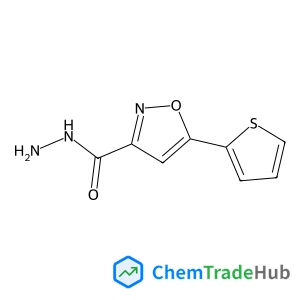
![1-[6-(1H-Imidazol-1-yl)-3-pyridinyl]methanamine structure](https://cnstatic.chemtradehub.com/structs/914/914637-08-4-8825.webp "1-[6-(1H-Imidazol-1-yl)-3-pyridinyl]methanamine structure")
![1-oxaspiro[4.4]nonan-6-one structure](https://cnstatic.chemtradehub.com/structs/134/134179-01-4-e051.webp "1-oxaspiro[4.4]nonan-6-one structure")
推荐供应商






免责声明
本页面提供的学术期刊信息仅供参考和研究使用。我们与任何期刊出版商均无关联,也不处理投稿事宜。如有投稿相关咨询,请直接联系相关期刊出版商。
如发现页面信息有误,请发送邮件至 support@chemtradehub.com 联系我们。我们将及时核实并处理您的问题。