










Polymerization of methyl methacrylate by latent pre-catalysts based on CO2-protected N-heterocyclic carbenes
文献信息
发布日期
2013-02-19
DOI
10.1039/C3PY00073G
影响因子
5.582
作者
Stefan Naumann, Friedrich Georg Schmidt, Roman Schowner, Wolfgang Frey
查看原文
摘要
Various carbon dioxide-protected N-heterocyclic carbenes (NHCs) have been investigated with regard to their ability to act as thermally latent initiators for the polymerization of methyl methacrylate (MMA). Such CO2-protected NHCs, while completely inactive at room temperature, deliver poly(methyl methacrylate) (PMMA) in high yields upon heating and thus represent truly latent pre-catalysts. Polymerizations were conducted in the bulk, semi-bulk and in solution. Especially tetrahydropyrimidinium-2-carboxylates as well as 1,3-di(tert-butyl)imidazolium-2-carboxylate, both in combination with dimethylsulfoxide (DMSO), were identified as suitable pre-catalysts for the polymerization of MMA. With 1,3-di(tert-butyl)imidazolium-2-carboxylate in toluene, polydispersity indices (PDIs) as low as 1.3 and number-average molecular weights (Mn) of 500 000 g mol−1 could be realized. Tetrahydropyrimidinium-2-carboxylates in conjunction with DMSO resulted in lower molecular weights. Notably, isolated polymer yields up to 96% were possible in some cases, though yields proved to be sensitive to the structure of the initiators used. In principle, at least two different polymerization mechanisms are active. In the presence of DMF or DMSO, the formation of a solvent anion (e.g., DMSO−), which then reacts with the monomer, is proposed. What follows is that only highly basic NHCs work well under these conditions. In contrast, the polymerization of MMA in toluene or in the bulk is probably governed by the nucleophilicity of the NHC, rendering unsaturated, less basic NHCs more applicable. Both mechanisms are discussed.
相关文献
First principles study of oxygen molecule interaction with the graphitic active sites of a boron-doped pyrolyzed Fe–N–C catalyst
Febdian Rusydi
2017-08-15
Paper
DOI: 10.1039/C7CP02390A
Probing RbBr solvation in freestanding sub-2 nm water clusters
Lauri Hautala, Kari Jänkälä, Mikko-Heikki Mikkelä, Paavo Turunen, Nønne L. Prisle, Minna Patanen, Maxim Tchaplyguine, Marko Huttula
2017-09-04
Paper
DOI: 10.1039/C7CP04398H
First principles study of the Mn-doping effect on the physical and chemical properties of mullite-family Al2SiO5
Chaoping Liang, Yongping Zheng, Nickolas Ashburn, Young Jun Oh, Fantai Kong, Chenxi Zhang, Yifan Nie, Jian Sun, Kaihua He, Yu Ye, Rong Chen, Kyeongjae Cho
2017-08-29
Paper
DOI: 10.1039/C7CP04611A
Ultrafast exciton dynamics in 2D in-plane hetero-nanostructures: delocalization and charge transfer
E. Cassette, S. Pedetti, B. Mahler, S. Ithurria, B. Dubertret, G. D. Scholes
2017-02-24
Paper
DOI: 10.1039/C6CP08689F
Improving the capacity of lithium–sulfur batteries by tailoring the polysulfide adsorption efficiency of hierarchical oxygen/nitrogen-functionalized carbon host materials
Artur Schneider, Torsten Brezesinski
2017-02-23
Paper
DOI: 10.1039/C6CP08865A
Photoinduced dimerization of a photosensory DNA-binding protein EL222 and its LOV domain
Akira Takakado, Yusuke Nakasone, Masahide Terazima
2017-08-18
Paper
DOI: 10.1039/C7CP03686H
Determinants of the efficiency of photon upconversion by triplet–triplet annihilation in the solid state: zinc porphyrin derivatives in PVA
Ranjana Rautela, Neeraj K. Joshi, Sacha Novakovic, Wallace W. H. Wong, Jonathan M. White, Kenneth P. Ghiggino, Matthew F. Paige, Ronald P. Steer
2017-08-15
Paper
DOI: 10.1039/C7CP04746K
Pd-P nanoparticles supported on PxOy-incorporated carbon nanotubes for enhanced methanol oxidation in an alkaline medium
Yanan Xie, Weizhen Yu, Juan Wang, Yifei Wu, Shuo Niu, Wenyao Guo, Tsungwu Lin, Lidong Shao
2017-08-18
Paper
DOI: 10.1039/C7CP04540A
Tunable phenol remediation from wastewater using SWCNT-based, sub-nanometer porous membranes: reactive molecular dynamics simulations and DFT calculations
F. Moradi, M. Darvish Ganji, Y. Sarrafi
2017-02-23
Paper
DOI: 10.1039/C6CP08525C
A modeling study of methane hydrate decomposition in contact with the external surface of zeolites
2017-07-21
Paper
DOI: 10.1039/C7CP01985H
您可能还喜欢
化合物问答
(3-氨苯基)环丙基甲酮(CAS号:162174-75-6)的主要用途是什么?
(3-氨苯基)环丙基甲酮主要用于合成化学中间体,特别是在药物化学领域作为原料。它还可以用于有机合成反应中,作为催化剂或反应物。
162174-75-6(3-Aminophenyl)(cycl...
化合物问答
如何储存亚胺菌(CAS号:136470-79-6)?
亚胺菌应储存在干燥、阴凉处,避免直接暴露于光线下。建议使用密封容器储存,防止吸潮和污染。具体的储存条件应参考产品的安全数据表(MSDS)或药品说明书。
136470-79-6Abacavir EP Impurity...
化合物问答
2-氯-2,2-二氟乙酰胺(CAS号:354-28-9)应用于哪些行业?
2-氯-2,2-二氟乙酰胺在医药、聚合物、传感器、半导体等领域有广泛应用。在医药领域,它作为中间体用于合成其他药物;在聚合物领域,用作聚合引发剂或稳定剂;在传感...
354-28-92-Chloro-2,2-difluor...
化合物问答
处理4-甲基-3-硝基-1,1-联苯(CAS号:53812-68-3)时应注意哪些实验室安全事项?
在处理4-甲基-3-硝基-1,1-联苯时,应佩戴手套、护目镜和实验室外套等个人防护装备(PPE),确保在通风橱中操作以减少吸入风险。若发生泄露,应立即使用沙子或...
53812-68-34'-Methyl-3-nitro-1,...
化合物问答
(2S)-羟基(苯基)乙酸 (2R)-N-苄基-1-(4-甲氧基苯基)丙-2-胺盐(CAS号:188690-84-8)应用于哪些行业?
该化合物广泛应用于医药、聚合物和半导体行业。在医药领域,它是某些药物中间体的重要组成部分;在聚合物领域,可用作增塑剂;在半导体行业,可用于制造光刻胶。
188690-84-8Benzeneacetic acid, ...
化合物问答
在合成中是否有芬苯哒唑砜-D3标准品(CAS号:1228182-49-7)的替代品?
芬苯哒唑砜-D3标准品的替代品可能包括类似的苯并咪唑类化合物,如芬苯哒唑本身或其非同位素标记版本。这些替代品在结构上与芬苯哒唑砜-D3相似,但在具体应用中需进行...
1228182-49-7(~2~H_3_)Methyl [5-(...
化合物问答
2-氟-4-硝基苯乙酸(CAS号:315228-19-4)通常如何合成?
2-氟-4-硝基苯乙酸可以通过一系列化学反应合成,通常是从4-氟苯胺开始,首先进行硝化反应生成4-氟-2-硝基苯胺,然后进行乙酰化反应得到目标产物。具体的合成步...
315228-19-42-(2-fluoro-4-nitrop...
化合物问答
2-氟-4-甲氧基苯乙酸(CAS号:883531-28-0)通常如何合成?
2-氟-4-甲氧基苯乙酸通常通过将4-甲氧基苯乙酸与氟化试剂(如氟化氰)反应来合成。反应通常在无水条件下进行,使用催化剂如六氟磷酸锂或四氟硼酸锂以提高选择性和产...
883531-28-02-Fluoro-4-methoxyph...
化合物问答
什么是4SC 202;4SC202(CAS号:1186222-89-8)?
4SC 202;4SC202是一种化学化合物,其化学名称为(2E)-N-(2-氨基苯基)-3-(1-{[4-(1-甲基-1H-吡唑-4-基)苯基]磺酰基}-1H...
1186222-89-8(2E)-N-(2-Aminopheny...
132980-99-53,5-Difluorobenzamid...
来源期刊
Polymer Chemistry

CiteScore:
8.6
自引率:
7.3%
年发文量:
457
Polymer Chemistry welcomes submissions in all areas of polymer science that have a strong focus on macromolecular chemistry. Manuscripts may cover a broad range of fields, yet no direct application focus is required.
推荐化合物

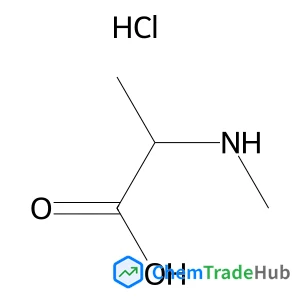
![Benzyl spiro[indole-3,4'-piperidine]-1(2H)-carboxylate hydrochloride (1:1) structure](https://cnstatic.chemtradehub.com/structs/159/159635-46-8-8de0.webp "Benzyl spiro[indole-3,4'-piperidine]-1(2H)-carboxylate hydrochloride (1:1) structure")
Benzyl spiro[indole-3,4'-piperidine]-1(2H)-carboxylate hydrochloride (1:1)
CAS号:
159635-46-8
分子式:
C20H23ClN2O2
推荐供应商




免责声明
本页面提供的学术期刊信息仅供参考和研究使用。我们与任何期刊出版商均无关联,也不处理投稿事宜。如有投稿相关咨询,请直接联系相关期刊出版商。
如发现页面信息有误,请发送邮件至 support@chemtradehub.com 联系我们。我们将及时核实并处理您的问题。