


Native fluorescence spectroscopic characterization of DMBA induced carcinogenesis in mice skin for the early detection of tissue transformation
文献信息
发布日期
2015-04-13
DOI
10.1039/C4AN00650J
影响因子
4.616
作者
Jeyasingh Ebenezar, Prakasa Rao Aruna, Singaravelu Ganesan
查看原文
摘要
The objective of the study is to characterize the endogenous porphyrin fluorescence in a dimethylbenz(a)anthracene (DMBA) induced mouse skin tumor model using native fluorescence emission and excitation spectroscopy. Two intensity ratio parameters I580/I635 and I420/I515 were selected to represent the key fluorophore of endogenous porphyrins from emission and excitation spectra recorded in vivo from 31 DMBA treated animals and 5 control animals. In the emission spectrum, the endogenous porphyrin was elevated at 635 nm in different transformation lesions such as hyperplasia, papilloma, dysplasia, ESCC and WDSCC. This is corroborated by the endogenous porphyrin elevation at 420, 515, 550 and 588 nm in the WDSCC lesions from the excitation spectra. The elevation of endogenous porphyrin, probably protoporphyrin IX (PpIX), is due to biochemical and metabolic alterations in epithelial cells during tissue transformation. The loss of ferrochelatase activity might be responsible for enhanced PpIX in the transformed tissues. The sensitivity and specificity were determined for different lesion pairs from the scatter plot based on the discrimination value by validation with histopathological results. The emission intensity ratio I580/I635 at 405 nm excitation was selected to discriminate normal from hyperplasia, hyperplasia from papilloma, papilloma from dysplasia, dysplasia from early squamous cell carcinoma (ESCC), and ESCC from well differentiated squamous cell carcinoma (WDSCC) with specificities of 100%, 88%, 100%, 86%, and 100% and sensitivities of 100%, 80%, 100%, 100% and 100% respectively. Similarly, the excitation intensity ratio I420/I515 for 635 nm emission used to discriminate between WDSCC lesions and normal tissue gives 100% specificity and 100% sensitivity.
期刊推荐
Journal of Asian Natural Products Research
Main Group Chemistry
Herald of the Russian Academy of Sciences
Acta Metallurgica Sinica-English Letters
Journal of Chemical Sciences
Electroanalysis
Polycyclic Aromatic Compounds
Topics in Catalysis
Bioorganic & Medicinal Chemistry Letters
Medicinal Chemistry Research
相关文献
Directed electron transfer in Langmuir–Schäfer layers of porphyrin–fullerene and phthalocyanine–fullerene dyads in inverted organic solar cells
A. Tolkki, K. Kaunisto, A. Efimov, H. Kivistö, L. Storbacka, R. Savikoski, K. Huttunen, S. Lehtimäki, H. Lemmetyinen
2012-01-16
Paper
DOI: 10.1039/C2CP24022J
Ruthenium sulphide thin layers as catalysts for the electrooxidation of water
Peter Bogdanoff, Carolin Zachäus, Stephan Brunken, Andreas Kratzig, Klaus Ellmer, Sebastian Fiechter
2012-11-29
Paper
DOI: 10.1039/C2CP42348K
Photoinduced ultrafast dynamics of the triphenylamine-based organic sensitizer D35 on TiO2, ZrO2 and in acetonitrile
Kawon Oum, Peter W. Lohse, Johannes R. Klein, Oliver Flender, Mirko Scholz, Anders Hagfeldt, Gerrit Boschloo, Thomas Lenzer
2013-02-12
Paper
DOI: 10.1039/C3CP44095H
Enhanced electronic contacts in SnO2–dye–P3HT based solid state dye sensitized solar cells
Golnaz Sadoughi, Varun Sivaram, Robbert Gunning, Pablo Docampo, Ingmar Bruder, Neil Pschirer, Azam Irajizad, Henry J. Snaith
2013-01-03
Paper
DOI: 10.1039/C2CP43434B
Visualization of clusters in polymer electrolyte membranes by electron microscopy
Sergey Yakovlev, Kenneth H. Downing
2012-11-01
Perspective
DOI: 10.1039/C2CP42969A
The nature of phase separation in a Ru–Sn–O ternary oxide electrocatalyst
Xin Wang, Fenyong Deng, Zhongzhi Tang, Bo Wu
2013-01-16
Paper
DOI: 10.1039/C3CP44528C
Understanding the different activities of highly promiscuous MbtI by computational methods
Silvia Ferrer, Sergio Martí, Vicent Moliner, Iñaki Tuñón, Juan Bertrán
2012-01-17
Paper
DOI: 10.1039/C2CP23149B
The whole process of phase transition and relaxation of poly(N-isopropylacrylamide) aqueous solution
Hayato Inoue, Shota Kuwahara, Kenji Katayama
2013-01-21
Paper
DOI: 10.1039/C3CP43309A
Desorption of alkali atoms from 4He nanodroplets
Alberto Hernando, Manuel Barranco, Martí Pi, Evgeniy Loginov, Marina Langlet, Marcel Drabbels
2012-01-13
Paper
DOI: 10.1039/C2CP23526A
您可能还喜欢
化合物问答
4-((4-甲基哌嗪-1-基)甲基)苯硼酸(CAS号:763120-62-3)的市场或研究趋势如何?
随着有机硼化学的发展,该化合物在催化、药物合成、材料科学等领域展现出潜在的应用价值。近年来,其在药物前体合成中的应用越来越受到关注。市场趋势显示,随着科研投入的...
763120-62-3{4-[(4-Methyl-1-pipe...
化合物问答
如何储存2,4,5-三甲基-1-硝基苯(CAS号:610-91-3)?
2,4,5-三甲基-1-硝基苯应储存在阴凉、干燥且通风良好的地方,避免阳光直射。储存在密封的金属容器中,远离火源和热源。储存温度应控制在25°C以下,湿度不宜过...
610-91-31,2,4-Trimethyl-5-ni...
化合物问答
处理2,5-二碘噻吩(CAS号:625-88-7)时应注意哪些实验室安全事项?
在处理2,5-二碘噻吩时,应穿戴适当的个人防护装备(PPE),包括实验室外套、手套和防护眼镜。在通风橱中进行操作以避免吸入蒸气。如果发生泄漏,应立即疏散人员并使...
625-88-72,5-Diiodothiophene
化合物问答
在合成中是否有6-bromo-3-chloro-1H-indole(CAS号:57916-08-2)的替代品?
在合成6-溴-3-氯-1H-吲哚(CAS号:57916-08-2)时,可以考虑使用一些类似的化合物作为替代品,如6-氯-3-氯-1H-吲哚或3-氯-1H-吲哚,...
57916-08-26-bromo-3-chloro-1H-...
化合物问答
在合成中是否有(R)-(-)-1-(1-萘基)乙基异氰酸酯(CAS号:42340-98-7)的替代品?
可以考虑使用类似结构的化合物,如1-[(1R)-1-(2-氨基乙基)萘-1-基]乙基异氰酸酯作为替代品。此外,还可以寻找其他类型的异氰酸酯衍生物,如苯基异氰酸酯...
42340-98-71-[(1R)-1-Isocyanato...
化合物问答
3-氨基苯甲酰苯胺(CAS号:14315-16-3)适用哪些法规指南?
3-氨基苯甲酰苯胺适用于多项法规指南,包括但不限于GHS(全球化学品统一分类和标签制度)分类为皮肤腐蚀/刺激类别2,以及潜在的皮肤过敏性类别1。在欧盟地区,它受...
14315-16-33-Amino-N-phenylbenz...
化合物问答
β-环柠檬醛-D5(CAS号:26309-95-5)通常如何合成?
β-环柠檬醛-D5可通过不对称合成方法获得。常见的合成路线包括以环己酮为原料,经过选择性氧化、还原、保护基引入等步骤,最终得到目标化合物。该合成过程中通常使用多...
26309-95-5[(2,2-Dimethylpropan...
34915-68-9Bunitrolol
化合物问答
如何处理含有BIO-1211(CAS号:187735-94-0)的废料?
对于含有BIO-1211(CAS号:187735-94-0)的废料,首先应进行分类收集,确保符合环保要求。然后,可以考虑通过焚烧或其他专业处理方法进行处置。在处...
187735-94-0BIO-1211
化合物问答
如何处理含有4-氯-2-氟-3-甲基苯酚(CAS号:1351668-24-0)的废料?
含有该化合物的废液应收集至专用容器中,避免与其他化学品混合。可采用焚烧或送交专业废弃物处理公司处理。处理过程中需遵守当地环保法规,确保不产生二次污染。处理前应进...
1351668-24-04-Chloro-2-fluoro-3-...
来源期刊
Analyst

CiteScore:
7.8
自引率:
5.6%
年发文量:
653
Analyst publishes analytical and bioanalytical research that reports premier fundamental discoveries and inventions, and the applications of those discoveries, unconfined by traditional discipline barriers.
推荐化合物
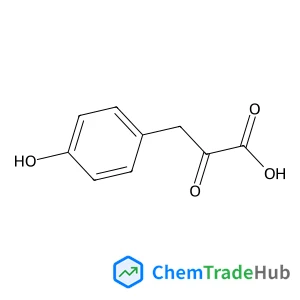
![Sodium 4-{[(2R,3R)-2-[(dichloroacetyl)amino]-3-hydroxy-3-(4-nitrophenyl)propyl]oxy}-4-oxobutanoate structure](https://cnstatic.chemtradehub.com/structs/982/982-57-0-e747.webp "Sodium 4-{[(2R,3R)-2-[(dichloroacetyl)amino]-3-hydroxy-3-(4-nitrophenyl)propyl]oxy}-4-oxobutanoate structure")
![[4-(Hydroxymethyl)phenyl]acetic acid structure](https://cnstatic.chemtradehub.com/structs/734/73401-74-8-5a54.webp "[4-(Hydroxymethyl)phenyl]acetic acid structure")
推荐供应商




免责声明
本页面提供的学术期刊信息仅供参考和研究使用。我们与任何期刊出版商均无关联,也不处理投稿事宜。如有投稿相关咨询,请直接联系相关期刊出版商。
如发现页面信息有误,请发送邮件至 support@chemtradehub.com 联系我们。我们将及时核实并处理您的问题。