




Calibration diagnostic and updating strategy based on quantitative modeling of near-infrared spectral residuals
文献信息
发布日期
2014-12-04
DOI
10.1039/C4AN01849D
影响因子
4.616
作者
Hua Yu, Gary W. Small
查看原文
摘要
A diagnostic and updating strategy is explored for multivariate calibrations based on near-infrared spectroscopy. For use with calibration models derived from spectral fitting or decomposition techniques, the proposed method constructs models that relate the residual concentrations remaining after a prediction to the residual spectra remaining after the information associated with the calibration model has been extracted. This residual modeling approach is evaluated for use with partial least-squares (PLS) models for predicting physiological levels of glucose in a simulated biological matrix. Residual models are constructed with both PLS and a hybrid technique based on the use of PLS scores as inputs to support vector regression. Calibration and residual models are built with both absorbance and single-beam data collected over 416 days. Effective models for the spectral residuals are built with both types of data and demonstrate the ability to diagnose and correct deviations in performance of the calibration model with time.
相关文献
Stability of hydrolytic arsenic species in aqueous solutions: As3+vs. As5+
Giuseppe Cassone, Donatella Chillé, Claudia Foti, Ottavia Giuffré, Rosina Celeste Ponterio, Jiri Sponer, Franz Saija
2018-08-27
Paper
DOI: 10.1039/C8CP04320E
Shape dependence of thermodynamics of adsorption on nanoparticles: a theoretical and experimental study
Zi-xiang Cui, Ya-nan Feng, Yong-qiang Xue, Juan Zhang, Rong Zhang, Jie Hao, Jia-yi Liu
2018-11-27
Paper
DOI: 10.1039/C8CP04895A
A theoretical insight into a feasible strategy for the fabrication of borophane
Gangqiang Qin, Aijun Du, Qiao Sun
2018-05-17
Paper
DOI: 10.1039/C8CP01407H
The dependence of the β-to-α phase transition behavior of poly(1,4-butylene adipate) on phase separated morphology in its blends with poly(vinylidene fluoride)
Chunyue Hou, Huihui Li, Xiaoli Sun, Yanfang Wang, Shangtao Chen
2018-06-01
Paper
DOI: 10.1039/C8CP02464B
From in silica to in silico: retention thermodynamics at solid–liquid interfaces
Krystel El Hage, Raymond J. Bemish, Markus Meuwly
2018-06-15
Paper
DOI: 10.1039/C8CP02899K
Supramolecular multicompartment gels formed by ABC graft copolymers: high toughness and recovery properties
Pengxiang Xu, Jiaping Lin, Liangshun Zhang
2018-05-08
Paper
DOI: 10.1039/C8CP02062K
First-principles study of rocksalt early transition-metal carbides as potential catalysts for Li–O2 batteries
Yingying Yang, Yuelin Wang, Man Yao, Xudong Wang, Hao Huang
2018-11-19
Paper
DOI: 10.1039/C8CP06745G
Theoretical investigation of M@Pb122− and M@Sn122− Zintl clusters (M = Lrn+, Lun+, La3+, Ac3+ and n = 0, 1, 2, 3)
2018-05-01
Paper
DOI: 10.1039/C8CP01056K
Magnetic properties of nanoparticles as a function of their spatial distribution on liposomes and cells
Maria Eugenia Fortes Brollo, Patricia Hernández Flores, Lucía Gutiérrez, Christer Johansson, Domingo Francisco Barber, María del Puerto Morales
2018-06-05
Paper
DOI: 10.1039/C8CP03016B
A vacuum ultraviolet photoionization study on the formation of methanimine (CH2NH) and ethylenediamine (NH2CH2CH2NH2) in low temperature interstellar model ices exposed to ionizing radiation
Bing-Jian Sun, Yue-Lin Chen, Agnes H. H. Chang
2018-12-20
Paper
DOI: 10.1039/C8CP06002A
您可能还喜欢
化合物问答
什么是3-表南美楝属二醇(CAS号:19942-04-2)?
3-表南美楝属二醇是一种具有特定立体化学结构的化合物,其分子式为C31H52O2,属于甾醇类化合物。它具有光学活性,是一种复杂的有机分子,主要存在于一些植物中。
19942-04-2(3S,5R,8R,9R,10R,13R...
化合物问答
3-羧基-5-碘苯甲酸甲酯(CAS号:50765-22-5)应用于哪些行业?
3-羧基-5-碘苯甲酸甲酯主要应用于医药行业,作为合成某些药物中间体的重要原料。此外,它还可能用于聚合物的改性、传感器的制备以及半导体材料的制备等领域。
50765-22-5Methyl 3-hydroxy-5-i...
化合物问答
什么是3-Bromoindolin-2-one(CAS号:22942-87-6)?
3-Bromoindolin-2-one是一种含有溴代基团的吲哚酮衍生物,分子式为C9H7BrNO。它是一种无色固体,具有一定的挥发性,熔点为158-159°C...
22942-87-63-Bromoindolin-2-one
化合物问答
如何处理含有L-Lysyl-L-phenylalanyl-L-isoleucylglycyl-L-leucyl-L-methioninamide(CAS号:2990-43-4)的废料?
对于含有该化合物的废液,应先进行中和处理,然后根据其毒性和活性选择合适的处置方法。可以考虑焚烧处理或由专业的化学品废物处理公司进行无害化处理。处理过程中需注意环...
2990-43-4L-Lysyl-L-phenylalan...
化合物问答
ANGIOTENSIN 1/2 + A (2 - 8)(CAS号:51833-76-2)的物理化学性质是什么?
ANGIOTENSIN 1/2 + A (2 - 8)是一种蛋白质类化合物,具有典型的蛋白质性质。它的分子量约为5900 Da。该化合物在水中具有一定的溶解性,...
51833-76-2ANGIOTENSIN 1/2 + A ...
化合物问答
如何储存2-甲基硫代嘧啶-5-硼酸频那酯(CAS号:940284-18-4)?
应将该化合物存放在阴凉干燥、通风良好的地方,避免阳光直射。建议将化合物密封保存在避光的、干燥的容器中,远离火源和高温环境。
940284-18-42-(Methylthio)-5-(4,...
化合物问答
什么是苏丹红IV氘代物 标准品(CAS号:1014689-18-9)?
苏丹红IV氘代物 标准品是一种含有氘代标记的苏丹红IV化合物,是一种用于化合物分析、结构确证以及代谢研究的标准物质。
1014689-18-91-[(E)-{2-Methyl-4-[...
化合物问答
(+)-2-Amino-6-propionamido-d3-tetrahydrobenzothiazole(CAS号:1217680-69-7)适用哪些法规指南?
该化合物需要遵循《全球化学品统一分类和标签制度》(GHS)中的分类和标签要求,具体分类需依据其毒性和物理化学性质。此外,还需要符合《欧盟化学品注册、评估、授权和...
1217680-69-7(+)-2-Amino-6-propio...
化合物问答
如何储存2-氨基-2-(2-吡啶)乙酸乙酯(CAS号:55243-15-7)?
2-氨基-2-(2-吡啶)乙酸乙酯应储存于阴凉、干燥、通风良好的环境中,避免高温和光照。应使用密封容器储存,并远离易燃物、氧化剂和其他危险化学品。
55243-15-7Ethyl 2-amino-2-(pyr...
化合物问答
3-羟基-4-甲氧基吡啶-2-羧酸(CAS号:210300-09-7)的主要用途是什么?
3-羟基-4-甲氧基吡啶-2-羧酸主要用于合成其他有机化合物,如药物合成、农药合成和染料合成等。此外,它还可用作中间体和试剂,在化学研究领域也有一定的应用。
210300-09-73-Hydroxy-4-methoxy-...
来源期刊
Analyst

CiteScore:
7.8
自引率:
5.6%
年发文量:
653
Analyst publishes analytical and bioanalytical research that reports premier fundamental discoveries and inventions, and the applications of those discoveries, unconfined by traditional discipline barriers.
推荐化合物
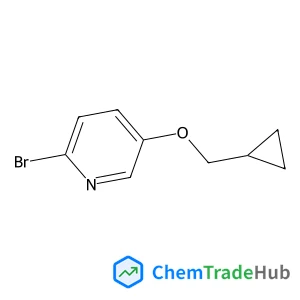
推荐供应商





免责声明
本页面提供的学术期刊信息仅供参考和研究使用。我们与任何期刊出版商均无关联,也不处理投稿事宜。如有投稿相关咨询,请直接联系相关期刊出版商。
如发现页面信息有误,请发送邮件至 support@chemtradehub.com 联系我们。我们将及时核实并处理您的问题。