





Analysis of different Flos Chrysanthemum tea samples with the use of two-dimensional chromatographic fingerprints, which were interpreted by different multivariate methods
文献信息
发布日期
2014-12-02
DOI
10.1039/C4AY02115K
影响因子
2.896
作者
Serge Kokot
查看原文
摘要
Flos Chrysanthemum tea contains flavonoids, essential oils and caffeoylquinic acids. These substances are pharmacologically active but this activity is cultivar dependent. Seventy-six Flos Chrysanthemum samples collected from four cultivars (Hangju, Taiju, Gongju and Boju) were discriminated with the use of results from high performance liquid chromatography (HPLC) and gas chromatography-mass spectrometry (GC-MS). A two-dimensional chromatographic fingerprint dataset of the four kinds of Flos Chrysanthemum cultivar was built from the combined GC/HPLC profiles and thirty variables were selected. Principal component analysis (PCA) and kernel – PCA (KPCA) were used for feature extraction. The score mapping graph indicated that these two PCA methods effectively extracted most information from the samples, and the four Flos Chrysanthemum cultivars were qualitatively differentiated. Furthermore, four supervised pattern recognition techniques, radial basis function-neural network analysis (RBF-NN), least squares support vector machines (LS-SVM), linear discriminant analysis (LDA) and K-nearest neighbors (KNN), successfully predicted the validation of the samples.
相关文献
Electronic structure and high-temperature thermochemistry of BaZrO3−δ perovskite from first-principles calculations
Krishna K. Ghose, Alicia Bayon, Alister J. Page
2019-05-22
Paper
DOI: 10.1039/C9CP02505G
Alkali carbonates promote CO2 capture by sodium orthosilicate
Jia Liu, Zhen Wang, Zirui Wang, Jinwan Song, Guangshi Li, Qian Xu, Jinglin You, Hongwei Cheng, Xionggang Lu
2019-05-23
Paper
DOI: 10.1039/C9CP01306G
An elevated concentration of MoS2 lowers the efficacy of liquid-phase exfoliation and triggers the production of MoOx nanoparticles
Michal Bodík, Jakub Hagara, Matej Mičušík, Mária Omastová, Mário Kotlár, Juraj Chlpík, Július Cirák, Helena Švajdlenková, Michal Anguš, Alicia Marín Roldán, Pavel Veis, Matej Jergel
2019-05-20
Paper
DOI: 10.1039/C9CP01951K
Block copolymers as bile salt sequestrants: intriguing structures formed in a mixture of an oppositely charged amphiphilic block copolymer and bile salt
Karin Schillén, Luciano Galantini, Guanqun Du, Alessandra Del Giudice, Viveka Alfredsson, Anna M. Carnerup, Nicolae V. Pavel, Giancarlo Masci, Bo Nyström
2019-05-20
Paper
DOI: 10.1039/C9CP01744E
Spectroscopic diagnostic for the ring-size of carbohydrates in the gas phase: furanose and pyranose forms of GalNAc
Baptiste Schindler, Laurent Legentil, Abdul-Rhaman Allouche, Vincent Ferrières
2019-05-23
Paper
DOI: 10.1039/C8CP04082F
Tuning the liquid-phase exfoliation of arsenic nanosheets by interaction with various solvents
Zheng-Hang Qi, Yi Hu, Zhong Jin, Jing Ma
2019-05-17
Communication
DOI: 10.1039/C9CP01052A
Triplet–triplet annihilation based photon up-conversion in hybrid molecule–semiconductor nanocrystal systems
Alessandra Ronchi, Paolo Brazzo, Mauro Sassi, Luca Beverina, Jacopo Pedrini, Francesco Meinardi, Angelo Monguzzi
2019-05-13
Paper
DOI: 10.1039/C9CP01692A
In situ, operando studies on the size and structure of supported Pt catalysts under supercritical conditions by simultaneous synchrotron-based X-ray techniques
Sungwon Lee, Sungsik Lee, Duygu Gerceker, Mrunmayi D. Kumbhalkar, Kamila M. Wiaderek, Madelyn R. Ball, Manos Mavrikakis, James A. Dumesic, Randall E. Winans
2019-05-15
Paper
DOI: 10.1039/C9CP00347A
Energy storage properties of a two-dimensional TiB4 monolayer
Erdong Wu, Shi Liu
2019-05-25
Paper
DOI: 10.1039/C9CP01864F
您可能还喜欢
化合物问答
硅烷偶联剂ZQ-172(CAS号:1067-53-4)的主要用途是什么?
硅烷偶联剂ZQ-172主要用于增强无机填料与有机高分子材料之间的相容性,常见于橡胶、塑料、涂料和胶黏剂等复合体系中。其硅氧烷基团可与玻璃纤维、二氧化硅等无机物表...
1067-53-46-(2-Methoxyethoxy)-...
化合物问答
如何处理含有6-(2,4-二甲氧基苯基)-2-吡啶甲醇(CAS号:887981-31-9)的废料?
对于含有该化合物的废料,首先应收集并分类存放,避免与其它化学品混合。在处理前,需进行必要的检测,确定其含量和性质。随后,可以采用化学氧化、生物降解或物理吸附等方...
887981-31-9[6-(2,4-Dimethoxyphe...
化合物问答
甲砜霉素甘氨酸酯盐酸盐(CAS号:2611-61-2)的物理化学性质是什么?
该化合物为白色或类白色结晶性粉末,不溶于水,溶于乙醇和氯仿。分子量为403.03 g/mol。它具有手性,含有三个手性中心,分别为2S,3R构型。该化合物在酸性...
2611-61-2(2S,3R)-2-[(Dichloro...
化合物问答
如何储存反式-环丙烷-1,2-二胺双盐酸盐(CAS号:3187-76-6)?
反式-环丙烷-1,2-二胺双盐酸盐应存放在阴凉、干燥且通风良好的地方,避免阳光直射。储存容器应密封,以防挥发和受潮。同时,应远离火源和热源,确保储存环境温度不超...
3187-76-6trans-1,2-Diaminocyc...
化合物问答
什么是吩嗪硫酸甲酯(CAS号:299-11-6)?
吩嗪硫酸甲酯是一种有机化合物,化学结构由吩嗪环与甲酯基团构成,分子式为C10H9N2SO4。其为吩嗪类衍生物,具有典型的芳香环结构和酯基官能团,常作为氧化剂或染...
299-11-65-Methylphenazin-5-i...
化合物问答
N1-异丙基二乙烯三胺(CAS号:207399-20-0)的市场或研究趋势如何?
随着绿色化学和环保意识的提高,N1-异丙基二乙烯三胺的研究趋势正向低毒、环保的方向发展。市场趋势方面,由于其在功能性材料、药物合成等领域的需求,预计其市场需求将...
207399-20-0N-(2-Aminoethyl)-N'-...
化合物问答
4,4-Dimethyl-5,6-dihydro-4H-cyclopenta[d][1,3]thiazol-2-amine(CAS号:1182284-47-4)应用于哪些行业?
该化合物在医药、聚合物、传感器和半导体领域有潜在的应用。在医药领域,作为一种新型的噻唑类化合物,它可能具有抗炎、抗病毒等生物活性。在聚合物领域,该化合物可用作增...
1182284-47-44,4-Dimethyl-5,6-dih...
化合物问答
处理5-(PYRIDIN-4-YL)-OXAZOL-2-YLAMINE(CAS号:1014629-83-4)时应注意哪些实验室安全事项?
在处理5-(吡啶-4-基)-2-氧代-1-氧杂环己烷-3-胺时,应佩戴防护眼镜、手套和防护服。实验应在通风橱中进行,以避免吸入有害气体。如果发生泄露,应立即用大...
1014629-83-45-(4-Pyridinyl)-1,3-...
化合物问答
什么是伊托必利N-氧化物(CAS号:141996-98-7)?
伊托必利N-氧化物是一种化学化合物,其分子结构是伊托必利的N位进行氧化处理后的产物。它具有一定的生物活性,主要用于药物研究和开发。
141996-98-7Itopride N-Oxide
化合物问答
氟氯烟酸(CAS号:82671-06-5)安全吗?
氟氯烟酸属于有机氯化物,具有一定的毒性,需谨慎处理。在操作过程中,应佩戴防护手套、护目镜和实验服,避免吸入其粉尘或蒸汽。接触皮肤或眼睛可能导致刺激,应采取适当的...
82671-06-52,6-Dichloro-5-fluor...
来源期刊
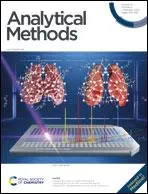
Analytical Methods
CiteScore:
5.1
自引率:
3.7%
年发文量:
655
Analytical Methods welcomes early applications of new analytical and bioanalytical methods and technology demonstrating the potential for societal impact. We require that methods and technology reported in the journal are sufficiently innovative, robust, accurate, and compared to other available methods for the intended application. Developments with interdisciplinary approaches are particularly welcome. Systems should be proven with suitably complex and analytically challenging samples. We encourage developments within, but not limited to, the following technologies and applications: global health, point-of-care and molecular diagnostics biosensors and bioengineering drug development and pharmaceutical analysis applied microfluidics and nanotechnology omics studies, such as proteomics, metabolomics or glycomics environmental, agricultural and food science neuroscience biochemical and clinical analysis forensic analysis industrial process and method development
推荐化合物
推荐供应商




免责声明
本页面提供的学术期刊信息仅供参考和研究使用。我们与任何期刊出版商均无关联,也不处理投稿事宜。如有投稿相关咨询,请直接联系相关期刊出版商。
如发现页面信息有误,请发送邮件至 support@chemtradehub.com 联系我们。我们将及时核实并处理您的问题。