





The angular overlap model extended for two-open-shell f and d electrons
文献信息
发布日期
2014-05-01
DOI
10.1039/C4CP01193G
影响因子
3.676
作者
Harry Ramanantoanina, Fanica Cimpoesu, Claude Daul
查看原文
摘要
We discuss the applicability of the Angular Overlap Model (AOM) to evaluate the electronic structure of lanthanide compounds, which are currently the subject of incredible interest in the field of luminescent materials. The functioning of phosphors is well established by the f–d transitions, which requires the investigation of both the ground 4fn and excited 4fn−15d1 electron configurations of the lanthanides. The computational approach to the problem is based on the effective Hamiltonian adjusted from ligand field theory, but not restricted to it. The AOM parameterization implies the chemical bonding concept. Focusing our interest on this interaction, we take the advantages offered by modern computational tools to extract AOM parameters, which ensure the transparency of the theoretical determination and convey chemical intuitiveness of the non-empirical results. The given model contributes to the understanding of lanthanides in modern phosphors with high or low site symmetry and presents a non-empirical approach using a less sophisticated computational procedure for the rather complex problem of the ligand field of both 4f and 5d open shells.
相关文献
Excimer formation and evolution of excited state properties in discrete dimeric stacking of an anthracene derivative: a computational investigation
Yu Gao, Haichao Liu, Shitong Zhang, Qiang Gu, Yue Shen, Yunpeng Ge, Bing Yang
2018-04-06
Paper
DOI: 10.1039/C8CP00834E
Theoretical determination of adsorption and ionisation energies of polycyclic aromatic hydrocarbons on water ice
Nadia Ben Amor, Mathias Rapacioli, Jennifer A. Noble, Joëlle Mascetti, Céline Toubin, Aude Simon
2018-04-11
Paper
DOI: 10.1039/C8CP01175C
An Sn-induced resonant level in β-As2Te3
Bartlomiej Wiendlocha, Jean-Baptiste Vaney, Christophe Candolfi, Anne Dauscher, Bertrand Lenoir, Janusz Tobola
2018-04-27
Paper
DOI: 10.1039/C8CP00431E
Pronounced exciton and coherent phonon dynamics in BiI3
Mirko Scholz, Kawon Oum, Thomas Lenzer
2017-12-20
Paper
DOI: 10.1039/C7CP07729G
Electron-density distributions in selected ferrocenyl-pyrazolyl late transition-metal complexes
M. A. Peck, G. R. Hearne, C. Obuah, J. Darkwa
2018-03-27
Paper
DOI: 10.1039/C8CP01135D
Structural signature and transition dynamics of Sb2Te3 melt upon fast cooling
Y. R. Guo, F. Dong, C. Qiao, J. J. Wang, Ming Xu, Y. X. Zheng, R. J. Zhang, L. Y. Chen, C. Z. Wang, K. M. Ho
2018-03-27
Paper
DOI: 10.1039/C8CP00142A
The fate of plasma-generated oxygen atoms in aqueous solutions: non-equilibrium atmospheric pressure plasmas as an efficient source of atomic O(aq)
J. Benedikt, A. Shaw, B. R. Buckley, F. Iza, S. Schäkermann, J. E. Bandow
2018-04-19
Paper
DOI: 10.1039/C8CP00197A
Shock-tube study of the decomposition of tetramethylsilane using gas chromatography and high-repetition-rate time-of-flight mass spectrometry
P. Sela, S. Peukert, J. Herzler, M. Fikri, C. Schulz
2018-01-05
Paper
DOI: 10.1039/C7CP06827A
Electronic and optical properties of boron phosphide/blue phosphorus heterostructures
Yesim Mogulkoc, Aybey Mogulkoc, Bora Alkan
2018-04-20
Paper
DOI: 10.1039/C8CP00994E
Kinetics of the a-C3H5 + O2 reaction, investigated by photoionization using synchrotron radiation
D. Schleier, P. Constantinidis, N. Faßheber, I. Fischer, G. Friedrichs, P. Hemberger, E. Reusch, B. Sztáray, K. Voronova
2018-01-11
Paper
DOI: 10.1039/C7CP07893E
您可能还喜欢
化合物问答
3 - (二氟甲基)-1 -氟苯(CAS号:26029-52-7)适用哪些法规指南?
3 - (二氟甲基)-1 -氟苯需遵循联合国全球化学品统一分类和标签制度(GHS),包括急性毒性、皮肤腐蚀/刺激、严重眼损伤/眼刺激等分类。同时,该化合物还需符...
26029-52-71-(Difluoromethyl)-3...
化合物问答
3,5-二甲基苯胺(CAS号:108-69-0)通常如何合成?
3,5-二甲基苯胺通常通过乙苯的氨解反应合成。反应中使用硫酸作为催化剂,反应温度为120-130°C。乙苯在硫酸存在下与氨反应,生成3,5-二甲基苯胺和苯胺副产...
108-69-03,5-Dimethylaniline
化合物问答
3-甲基异噻唑-5-胺(CAS号:24340-76-9)安全吗?
3-甲基异噻唑-5-胺在适当使用和储存条件下是相对安全的,但在操作时应注意防护措施。应避免吸入粉尘,避免与皮肤和眼睛直接接触。在操作过程中,应穿戴适当的防护装备...
24340-76-93-Methyl-1,2-thiazol...
化合物问答
3-(1,3-Thiazol-2-yl)-1H-indole(CAS号:135531-86-1)通常如何合成?
3-(1,3-噻唑-2-基)-1H-吲哚通常通过多步合成方法制备。首先,由噻唑-2-基溴化物和吲哚进行偶联反应,得到中间体。然后,通过还原反应将中间体转化为所需...
135531-86-13-(1,3-Thiazol-2-yl)...
化合物问答
4-溴-2-氟苯甲基氯(CAS号:85510-82-3)的主要用途是什么?
4-溴-2-氟苯甲基氯主要用于有机合成中间体,特别是在医药、农药和染料等领域。作为一种具有特定结构的化合物,它在合成复杂有机分子时扮演重要角色。
85510-82-34-Bromo-1-(chloromet...
化合物问答
处理Fmoc-β-(3-噻吩基)-D-Ala-OH(CAS号:220497-90-5)时应注意哪些实验室安全事项?
处理Fmoc-β-(3-噻吩基)-D-Ala-OH时,应佩戴防护手套、护目镜和实验服。操作应在通风橱内进行。如发生泄露,应立即用大量水冲洗,并通知实验室管理人员...
220497-90-5N-[(9H-Fluoren-9-ylm...
化合物问答
氮化硅(CAS号:12033-89-5)通常如何合成?
氮化硅通常通过氮化硅的直接反应合成,即在高温下将四氯化硅与氨气反应。具体步骤是将四氯化硅和氨气混合并加热至1300-1700℃,在该条件下,四氯化硅与氨气反应生...
12033-89-5Trisilicon tetranitr...
化合物问答
Cetirizine EP Impurity B DiHCl(CAS号:1000690-91-4)通常如何合成?
Cetirizine EP Impurity B DiHCl通常通过一锅法合成,首先将4-氯苯基-苯甲基氯甲酸酯与1-哌嗪乙酸反应,生成相应的酸,然后与盐酸反应...
1000690-91-4{4-[(4-Chlorophenyl)...
化合物问答
如何储存1-哌啶-4-基丁-1-酮(CAS号:3509-15-7)?
1-哌啶-4-基丁-1-酮应储存在阴凉、干燥的地方,避免阳光直射。存储容器应密封,并确保通风良好。建议储存温度不超过25℃,湿度保持在相对较低的水平。
3509-15-71-Piperidin-4-ylbuta...
化合物问答
如何处理含有VORUCICLIB(CAS号:1000023-04-0)的废料?
含有VORUCICLIB的废料应进行专业的收集和处理,包括使用适当的容器进行隔离,避免与其他化学品接触。处理方法通常包括化学中和、沉淀反应或吸附过程,随后进行焚...
1000023-04-02-[2-Chloro-4-(trifl...
来源期刊
Physical Chemistry Chemical Physics

CiteScore:
5.5
自引率:
10.3%
年发文量:
3036
Physical Chemistry Chemical Physics (PCCP) is an international journal co-owned by 19 physical chemistry and physics societies from around the world. This journal publishes original, cutting-edge research in physical chemistry, chemical physics and biophysical chemistry. To be suitable for publication in PCCP, articles must include significant innovation and/or insight into physical chemistry; this is the most important criterion that reviewers and Editors will judge against when evaluating submissions. The journal has a broad scope and welcomes contributions spanning experiment, theory, computation and data science. Topical coverage includes spectroscopy, dynamics, kinetics, statistical mechanics, thermodynamics, electrochemistry, catalysis, surface science, quantum mechanics, quantum computing and machine learning. Interdisciplinary research areas such as polymers and soft matter, materials, nanoscience, energy, surfaces/interfaces, and biophysical chemistry are welcomed if they demonstrate significant innovation and/or insight into physical chemistry. Joined experimental/theoretical studies are particularly appreciated when complementary and based on up-to-date approaches.
推荐化合物
![Methyl 4-({[(2-methyl-2-propanyl)oxy]carbonyl}amino)bicyclo[2.2.2]octane-1-carboxylate structure](https://cnstatic.chemtradehub.com/structs/943/943845-74-7-b7e5.webp "Methyl 4-({[(2-methyl-2-propanyl)oxy]carbonyl}amino)bicyclo[2.2.2]octane-1-carboxylate structure")
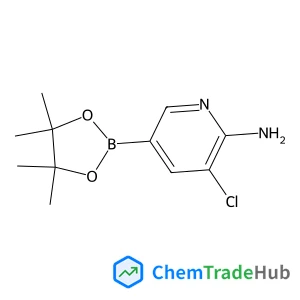
3-Chloro-5-(4,4,5,5-tetramethyl-1,3,2-dioxaborolan-2-yl)-2-pyridinamine
CAS号:
1032758-99-8
分子式:
C11H16BClN2O2
![5-Methyl-4,5,6,7-tetrahydropyrazolo[1,5-a]pyrazin-2-amine structure](https://cnstatic.chemtradehub.com/structs/122/1227210-33-4-8d64.webp "5-Methyl-4,5,6,7-tetrahydropyrazolo[1,5-a]pyrazin-2-amine structure")
推荐供应商




免责声明
本页面提供的学术期刊信息仅供参考和研究使用。我们与任何期刊出版商均无关联,也不处理投稿事宜。如有投稿相关咨询,请直接联系相关期刊出版商。
如发现页面信息有误,请发送邮件至 support@chemtradehub.com 联系我们。我们将及时核实并处理您的问题。