


Optimization of thermoelectric efficiency in SnTe: the case for the light band
文献信息
发布日期
2014-08-14
DOI
10.1039/C4CP02091J
影响因子
3.676
作者
Zachary M. Gibbs, Heng Wang, Yemao Han, Caini Xin, Laifeng Li
查看原文
摘要
p-Type PbTe is an outstanding high temperature thermoelectric material with zT of 2 at high temperatures due to its complex band structure which leads to high valley degeneracy. Lead-free SnTe has a similar electronic band structure, which suggests that it may also be a good thermoelectric material. However, stoichiometric SnTe is a strongly p-type semiconductor with a carrier concentration of about 1 × 1020 cm−3, which corresponds to a minimum Seebeck coefficient and zT. While in the case of p-PbTe (and n-type La3Te4) one would normally achieve higher zT by using high carrier density in order to populate the secondary band with higher valley degeneracy, SnTe behaves differently. It has a very light, upper valence band which is shown in this work to provide higher zT than doping towards the heavier second band. Therefore, decreasing the hole concentration to maximize the performance of the light band results in higher zT than doping into the high degeneracy heavy band. Here we tune the electrical transport properties of SnTe by decreasing the carrier concentration with iodine doping, and increasing the carrier concentration with Gd doping or by making the samples Te deficient. A peak zT value of 0.6 at 700 K was obtained for SnTe0.985I0.015 which optimizes the light, upper valence band, which is about 50% higher than the other peak zT value of 0.4 for GdzSn1−zTe and SnTe1+y which utilize the high valley degeneracy secondary valence band.
期刊推荐
Acta Metallurgica Sinica-English Letters

Topics in Catalysis
Cellulose

Critical Reviews in Solid State and Materials Sciences
Colloid Journal

NDT & E International

Polycyclic Aromatic Compounds
Biocatalysis and Biotransformation
Herald of the Russian Academy of Sciences
Journal of Asian Natural Products Research
相关文献
Rapid detection of Clostridium difficile via magnetic bead aggregation in cost-effective polyester microdevices with cell phone image analysis
Jacquelyn A. DuVall, Scott T. Cabaniss, Morgan L. Angotti, John H. Moore, Mayuresh Abhyankar, Nishant Shukla, Daniel L. Mills, Bryan G. Kessel, Gavin T. Garner, Nathan S. Swami
2016-07-20
Paper
DOI: 10.1039/C6AN00674D
A novel microscale preparative gel electrophoresis system
Feiran Hao, Jiabin Li, Rui Zhai, Fenglong Jiao, Yangjun Zhang, Xiaohong Qian
2016-05-31
Paper
DOI: 10.1039/C6AN00780E
Fluorescence recognition of double-stranded DNA based on the quenching of gold nanoparticles to a fluorophore labeled DNA probe
Xiangmin Miao, Zongbing Li, Liansheng Ling
2016-08-01
Paper
DOI: 10.1039/C6AN01145D
Reliable SERS detection of nitrite based on pH and laser irradiance-dependent diazotization through a convenient sampling micro-chamber
Mengyue Gao, Wei Fang, Jiaqiang Ren, Aiguo Shen, Jiming Hu
2016-07-05
Paper
DOI: 10.1039/C6AN00880A
Label-free, ITO-based immunosensor for the detection of a cancer biomarker: Receptor for Activated C Kinase 1
E. B. Bahadır, M. K. Sezgintürk
2016-07-13
Paper
DOI: 10.1039/C6AN00694A
Integrated on-chip mass spectrometry reaction monitoring in microfluidic devices containing porous polymer monolithic columns
C. Dietze, S. Schulze, S. Ohla, K. Gilmore, P. H. Seeberger, D. Belder
2016-06-29
Paper
DOI: 10.1039/C6AN01467D
MIR-biospectroscopy coupled with chemometrics in cancer studies
Laurinda F. S. Siqueira, Kássio M. G. Lima
2016-07-07
Critical Review
DOI: 10.1039/C6AN01247G
SERS speciation of the electrochemical oxidation–reduction of riboflavin
Matthew R. Bailey, Zachary D. Schultz
2016-06-08
Paper
DOI: 10.1039/C6AN01054G
Use of electrospinning and dynamic air focusing to create three-dimensional cell culture scaffolds in microfluidic devices
Chengpeng Chen, Benjamin T. Mehl, Scott A. Sell, R. Scott Martin
2016-07-04
Paper
DOI: 10.1039/C6AN01282E
您可能还喜欢
化合物问答
十二烷基磺酸钠(CAS号:2386-53-0)的主要用途是什么?
十二烷基磺酸钠主要用作表面活性剂,广泛应用于洗涤剂、肥皂、化妆品和工业清洁产品中。它能有效去除油脂和污垢,常用于制造洗发水、沐浴露、洗衣粉和金属清洗剂。此外,它...
2386-53-01-Dodecanesulfonic a...
化合物问答
5-羟基异喹啉(CAS号:2439-04-5)适用哪些法规指南?
5-羟基异喹啉作为化学品,主要适用的法规包括GHS全球化学品统一分类和标签制度,REACH法规等。GHS将5-羟基异喹啉分类为皮肤腐蚀/刺激类别2,严重眼损伤/...
2439-04-55-Isoquinolinol
化合物问答
在合成中是否有FIDAS-5 | Wnt(CAS号:1391934-98-7)的替代品?
合成中可以考虑使用类似结构的化合物,如4-[(E)-2-(2-氯-6-氟苯基)乙烯基]-N-甲基苯胺的类似物或衍生物作为替代品。这类化合物可能具有相似的生物活性...
1391934-98-74-[(E)-2-(2-Chloro-6...
化合物问答
(R)-tert-Butyl 2-(5-bromo-1H-imidazol-2-yl)pyrrolidine-1-carboxylate(CAS号:1370600-56-8)通常如何合成?
该化合物通常通过如下步骤合成:首先,将4-溴-1H-咪唑与对甲苯磺酸在乙酸乙酯中反应,得到中间体5-溴-1H-咪唑-2-甲酸乙酯。然后,该中间体与2-甲基-2-...
1370600-56-82-Methyl-2-propanyl ...
化合物问答
处理4-(吡咯烷-1-基)环己酮(CAS号:10421-18-8)时应注意哪些实验室安全事项?
处理4-(吡咯烷-1-基)环己酮时,应佩戴手套、护目镜和实验室外套,以防止直接接触或吸入。在通风橱中操作,确保良好的通风条件。一旦发生泄漏,应立即清理并使用适当...
10421-18-84-(Pyrrolidin-1-yl)c...
化合物问答
如何处理含有异麦芽糖醇(CAS号:534-73-6)的废料?
含有异麦芽糖醇的废液应首先进行分类收集,避免与其他化学品混合。对于小规模的废液,可以通过焚烧或加入特定的化学试剂进行无害化处理。对于大规模的废液,建议联系专业的...
534-73-66-O-alpha-D-Glucopyr...
化合物问答
7-甲基壬酸(CAS号:41653-89-8)的主要用途是什么?
7-甲基壬酸主要用于有机合成领域,作为合成其他化合物的原料。此外,它还可能作为一种中间体用于药品制造和香料合成,但具体用途需要根据其具体的化学结构和反应特性来确...
41653-89-87-Methylnonanoic aci...
化合物问答
N-甲氧基-N-甲基甲基吡啶羧酰胺(CAS号:148493-07-6)应用于哪些行业?
N-甲氧基-N-甲基甲基吡啶羧酰胺在医药领域有一定的应用,作为一种潜在的药物前体或中间体。此外,该化合物也可能应用于聚合物改性剂、传感器材料等。由于其独特的化学...
148493-07-6N-Methoxy-N-methylpi...
化合物问答
什么是惕各酸香叶酯(CAS号:7785-33-3)?
惕各酸香叶酯是一种化合物,化学名称为(2E)-3,7-二甲基-2,6-辛二烯-1-基(2E)-2-甲基-2-丁烯酸酯。它是一种具有香叶香气的化合物,分子式为C1...
7785-33-3(2E)-3,7-Dimethyl-2,...
化合物问答
1-环丁基哌嗪(CAS号:132800-13-6)安全吗?
1-环丁基哌嗪在适当的操作条件下是相对安全的,但如遇明火或高热会释放有毒气体。操作时应佩戴防护眼镜和手套,避免吸入或接触皮肤、眼睛。
132800-13-61-Cyclobutylpiperazi...
来源期刊
Physical Chemistry Chemical Physics

CiteScore:
5.5
自引率:
10.3%
年发文量:
3036
Physical Chemistry Chemical Physics (PCCP) is an international journal co-owned by 19 physical chemistry and physics societies from around the world. This journal publishes original, cutting-edge research in physical chemistry, chemical physics and biophysical chemistry. To be suitable for publication in PCCP, articles must include significant innovation and/or insight into physical chemistry; this is the most important criterion that reviewers and Editors will judge against when evaluating submissions. The journal has a broad scope and welcomes contributions spanning experiment, theory, computation and data science. Topical coverage includes spectroscopy, dynamics, kinetics, statistical mechanics, thermodynamics, electrochemistry, catalysis, surface science, quantum mechanics, quantum computing and machine learning. Interdisciplinary research areas such as polymers and soft matter, materials, nanoscience, energy, surfaces/interfaces, and biophysical chemistry are welcomed if they demonstrate significant innovation and/or insight into physical chemistry. Joined experimental/theoretical studies are particularly appreciated when complementary and based on up-to-date approaches.
推荐化合物
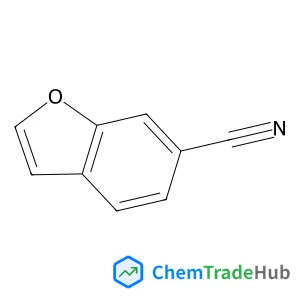
![Ethyl 2-[(3-bromo-4-pyridinyl)sulfanyl]-2-methylpropanoate structure](https://cnstatic.chemtradehub.com/structs/135/1352794-86-5-a8aa.webp "Ethyl 2-[(3-bromo-4-pyridinyl)sulfanyl]-2-methylpropanoate structure")
![Methyl 5-iodo-3-({[(2-methyl-2-propanyl)oxy]carbonyl}amino)-2-thiophenecarboxylate structure](https://cnstatic.chemtradehub.com/structs/100/1007171-35-8-177e.webp "Methyl 5-iodo-3-({[(2-methyl-2-propanyl)oxy]carbonyl}amino)-2-thiophenecarboxylate structure")
推荐供应商




免责声明
本页面提供的学术期刊信息仅供参考和研究使用。我们与任何期刊出版商均无关联,也不处理投稿事宜。如有投稿相关咨询,请直接联系相关期刊出版商。
如发现页面信息有误,请发送邮件至 support@chemtradehub.com 联系我们。我们将及时核实并处理您的问题。