





Influence of magnetic field on the orientation of anisotropic magnetic particles at liquid interfaces
文献信息
发布日期
2014-10-28
DOI
10.1039/C4CP04270K
影响因子
3.676
作者
Bethany J. Newton, Kenneth A. Brakke, D. Martin A. Buzza
查看原文
摘要
We study theoretically the influence of an external magnetic field on the orientation of an ellipsoidal magnetic particle adsorbed at a liquid interface. Using the finite element program Surface Evolver, we calculate the equilibrium meniscus shape around the ellipsoidal particle and its equilibrium tilt angle with respect to the undeformed interface θt when a magnetic field B is applied perpendicular to the interface. We find that as we increase field strength, θt increases and at a critical magnetic field Bc1 and tilt angle θc1, the particle undergoes a discontinuous transition to the ‘perpendicular’ orientation (θt = 90°). Our results agree qualitatively with the simplified theory of Bresme and Faraudo [F. Bresme and J. Faraudo, J. Phys.: Condens. Matter, 2007, 19, 375110] which assumes that the liquid interface is flat, while they agree quantitatively with recent lattice-Boltzmann simulations of Davies et al. [G. Davies et al., Soft Matter, 2014, 10, 6742] which account for the deformation of the liquid meniscus. We also show for the first time that upon reducing the external magnetic field, at a critical magnetic field Bc2 < Bc1, the particle undergoes a second discontinuous transition from the perpendicular orientation to a finite tilt angle θc2 < θc1. In other words, for micron-sized particles where the thermal energy kBT is negligible compared to the interfacial energy, the tilt angle vs. magnetic field curve exhibits hysteresis behaviour. Due to the higher degree of accuracy of the Surface Evolver method, we are able to analyse the behaviour of the particles near these orientational transitions accurately and study how the critical quantities Bc1, Bc2, θc1 and θc2 vary with particle aspect ratio and contact angle.
相关文献
Structural and electronic properties of defects at grain boundaries in CuInSe2
D. Lamoen
2017-05-12
Paper
DOI: 10.1039/C7CP02033C
The A-center defect in diamond: quantum mechanical characterization through the infrared spectrum
Simone Salustro, Giuseppe Sansone, Claudio M. Zicovich-Wilson, Yves Noël, Lorenzo Maschio, Roberto Dovesi
2017-05-23
Paper
DOI: 10.1039/C7CP00093F
Reaction of H + HONO in solid para-hydrogen: infrared spectrum of ˙ONH(OH)
Karolina Anna Haupa, Alexander Godfried Gerardus Maria Tielens
2017-06-05
Paper
DOI: 10.1039/C7CP02621H
Growth of BiFeO3 thin films by chemical solution deposition: the role of electrodes
Monika Tomczyk, Daniel G. Stroppa, Ian M. Reaney, Paula M. Vilarinho
2017-05-05
Paper
DOI: 10.1039/C7CP01842H
Light-induced antibiotic release from a coumarin-caged compound on the ultrafast timescale
L.-M. Herzig, I. Elamri, H. Schwalbe, J. Wachtveitl
2017-05-19
Paper
DOI: 10.1039/C7CP02030A
Rydberg states of alkali atoms on superfluid helium nanodroplets: inside or outside?
Johann V. Pototschnig, Florian Lackner, Andreas W. Hauser, Wolfgang E. Ernst
2017-05-16
Paper
DOI: 10.1039/C7CP02332D
Effects of temperature, concentration, and isomer on the hydration structure in monosaccharide solutions
Katsufumi Tomobe, Eiji Yamamoto, Masato Yasui, Kenji Yasuoka
2017-05-12
Paper
DOI: 10.1039/C7CP02392H
Investigation of the relationship between the cycle performance and the electronic structure in LiAlxMn2−xO4 (x = 0 and 0.2) using soft X-ray spectroscopy
Daisuke Asakura, Yusuke Nanba, Yuki Makinose, Hirofumi Matsuda, Eiji Hosono
2017-05-25
Paper
DOI: 10.1039/C7CP02070H
Direct folding simulation of helical proteins using an effective polarizable bond force field
Tong Zhu, Qinggang Zhang
2017-05-16
Paper
DOI: 10.1039/C7CP02101A
Isomer-dependent fragmentation dynamics of inner-shell photoionized difluoroiodobenzene
Cédric Bomme, Evgeny Savelyev, Hui Xiong, Rajesh Kushawaha, Rebecca Boll, Kasra Amini, Timur Osipov, David Kilcoyne, Artem Rudenko, Nora Berrah, Daniel Rolles
2017-05-11
Communication
DOI: 10.1039/C7CP01379E
您可能还喜欢
化合物问答
3 - (二氟甲基)-1 -氟苯(CAS号:26029-52-7)适用哪些法规指南?
3 - (二氟甲基)-1 -氟苯需遵循联合国全球化学品统一分类和标签制度(GHS),包括急性毒性、皮肤腐蚀/刺激、严重眼损伤/眼刺激等分类。同时,该化合物还需符...
26029-52-71-(Difluoromethyl)-3...
化合物问答
3,5-二甲基苯胺(CAS号:108-69-0)通常如何合成?
3,5-二甲基苯胺通常通过乙苯的氨解反应合成。反应中使用硫酸作为催化剂,反应温度为120-130°C。乙苯在硫酸存在下与氨反应,生成3,5-二甲基苯胺和苯胺副产...
108-69-03,5-Dimethylaniline
化合物问答
3-甲基异噻唑-5-胺(CAS号:24340-76-9)安全吗?
3-甲基异噻唑-5-胺在适当使用和储存条件下是相对安全的,但在操作时应注意防护措施。应避免吸入粉尘,避免与皮肤和眼睛直接接触。在操作过程中,应穿戴适当的防护装备...
24340-76-93-Methyl-1,2-thiazol...
化合物问答
3-(1,3-Thiazol-2-yl)-1H-indole(CAS号:135531-86-1)通常如何合成?
3-(1,3-噻唑-2-基)-1H-吲哚通常通过多步合成方法制备。首先,由噻唑-2-基溴化物和吲哚进行偶联反应,得到中间体。然后,通过还原反应将中间体转化为所需...
135531-86-13-(1,3-Thiazol-2-yl)...
化合物问答
4-溴-2-氟苯甲基氯(CAS号:85510-82-3)的主要用途是什么?
4-溴-2-氟苯甲基氯主要用于有机合成中间体,特别是在医药、农药和染料等领域。作为一种具有特定结构的化合物,它在合成复杂有机分子时扮演重要角色。
85510-82-34-Bromo-1-(chloromet...
化合物问答
处理Fmoc-β-(3-噻吩基)-D-Ala-OH(CAS号:220497-90-5)时应注意哪些实验室安全事项?
处理Fmoc-β-(3-噻吩基)-D-Ala-OH时,应佩戴防护手套、护目镜和实验服。操作应在通风橱内进行。如发生泄露,应立即用大量水冲洗,并通知实验室管理人员...
220497-90-5N-[(9H-Fluoren-9-ylm...
化合物问答
氮化硅(CAS号:12033-89-5)通常如何合成?
氮化硅通常通过氮化硅的直接反应合成,即在高温下将四氯化硅与氨气反应。具体步骤是将四氯化硅和氨气混合并加热至1300-1700℃,在该条件下,四氯化硅与氨气反应生...
12033-89-5Trisilicon tetranitr...
化合物问答
Cetirizine EP Impurity B DiHCl(CAS号:1000690-91-4)通常如何合成?
Cetirizine EP Impurity B DiHCl通常通过一锅法合成,首先将4-氯苯基-苯甲基氯甲酸酯与1-哌嗪乙酸反应,生成相应的酸,然后与盐酸反应...
1000690-91-4{4-[(4-Chlorophenyl)...
化合物问答
如何储存1-哌啶-4-基丁-1-酮(CAS号:3509-15-7)?
1-哌啶-4-基丁-1-酮应储存在阴凉、干燥的地方,避免阳光直射。存储容器应密封,并确保通风良好。建议储存温度不超过25℃,湿度保持在相对较低的水平。
3509-15-71-Piperidin-4-ylbuta...
化合物问答
如何处理含有VORUCICLIB(CAS号:1000023-04-0)的废料?
含有VORUCICLIB的废料应进行专业的收集和处理,包括使用适当的容器进行隔离,避免与其他化学品接触。处理方法通常包括化学中和、沉淀反应或吸附过程,随后进行焚...
1000023-04-02-[2-Chloro-4-(trifl...
来源期刊
Physical Chemistry Chemical Physics

CiteScore:
5.5
自引率:
10.3%
年发文量:
3036
Physical Chemistry Chemical Physics (PCCP) is an international journal co-owned by 19 physical chemistry and physics societies from around the world. This journal publishes original, cutting-edge research in physical chemistry, chemical physics and biophysical chemistry. To be suitable for publication in PCCP, articles must include significant innovation and/or insight into physical chemistry; this is the most important criterion that reviewers and Editors will judge against when evaluating submissions. The journal has a broad scope and welcomes contributions spanning experiment, theory, computation and data science. Topical coverage includes spectroscopy, dynamics, kinetics, statistical mechanics, thermodynamics, electrochemistry, catalysis, surface science, quantum mechanics, quantum computing and machine learning. Interdisciplinary research areas such as polymers and soft matter, materials, nanoscience, energy, surfaces/interfaces, and biophysical chemistry are welcomed if they demonstrate significant innovation and/or insight into physical chemistry. Joined experimental/theoretical studies are particularly appreciated when complementary and based on up-to-date approaches.
推荐化合物
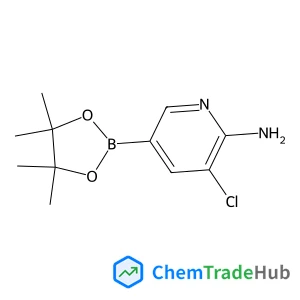
3-Chloro-5-(4,4,5,5-tetramethyl-1,3,2-dioxaborolan-2-yl)-2-pyridinamine
CAS号:
1032758-99-8
分子式:
C11H16BClN2O2
![1-[3-(4-Morpholinylsulfonyl)phenyl]methanamine structure](https://cnstatic.chemtradehub.com/structs/933/933989-32-3-51af.webp "1-[3-(4-Morpholinylsulfonyl)phenyl]methanamine structure")
推荐供应商



免责声明
本页面提供的学术期刊信息仅供参考和研究使用。我们与任何期刊出版商均无关联,也不处理投稿事宜。如有投稿相关咨询,请直接联系相关期刊出版商。
如发现页面信息有误,请发送邮件至 support@chemtradehub.com 联系我们。我们将及时核实并处理您的问题。