


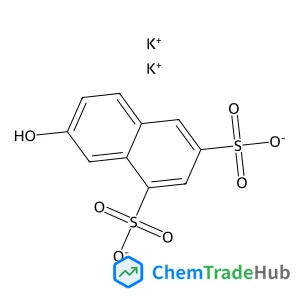
Buffers more than buffering agent: introducing a new class of stabilizers for the protein BSA
文献信息
发布日期
2014-11-06
DOI
10.1039/C4CP04663C
影响因子
3.676
作者
Bhupender S. Gupta, Mohamed Taha, Ming-Jer Lee
查看原文
摘要
In this study, we have analyzed the influence of four biological buffers on the thermal stability of bovine serum albumin (BSA) using dynamic light scattering (DLS). The investigated buffers include 4-(2-hydroxyethyl)piperazine-1-ethanesulfonic acid (HEPES), 4-(2-hydroxyethyl)-1-piperazine-propanesulfonic acid (EPPS), 4-(2-hydroxyethyl)piperazine-1-ethanesulfonic acid sodium salt (HEPES–Na), and 4-morpholinepropanesulfonic acid sodium salt (MOPS–Na). These buffers behave as a potential stabilizer for the native structure of BSA against thermal denaturation. The stabilization tendency follows the order of MOPS–Na > HEPES–Na > HEPES ≫ EPPS. To obtain an insight into the role of hydration layers and peptide backbone in the stabilization of BSA by these buffers, we have also explored the phase transition of a thermoresponsive polymer, poly(N-isopropylacrylamide (PNIPAM)), a model compound for protein, in aqueous solutions of HEPES, EPPS, HEPES–Na, and MOPS–Na buffers at different concentrations. It was found that the lower critical solution temperatures (LCST) of PNIPAM in the aqueous buffer solutions substantially decrease with increase in buffer concentration. The mechanism of interactions between these buffers and protein BSA was probed by various techniques, including UV-visible, fluorescence, and FTIR. The results of this series of studies reveal that the interactions are mainly governed by the influence of the buffers on the hydration layers surrounding the protein. We have also explored the possible binding sites of BSA with these buffers using a molecular docking technique. Moreover, the activities of an industrially important enzyme α-chymotrypsin (α-CT) in 0.05 M, 0.5 M, and 1.0 M of HEPES, EPPS, HEPES–Na, and MOPS–Na buffer solutions were analyzed at pH = 8.0 and T = 25 °C. Interestingly, the activities of α-CT were found to be enhanced in the aqueous solutions of these investigated buffers. Based upon the Jones–Dole viscosity parameters, the kosmotropic or chaotropic behaviors of the investigated buffers at 25 °C have been examined.
期刊推荐
Current Pharmaceutical Biotechnology
Journal of Enzyme inhibition and Medicinal Chemistry

Photochemical & Photobiological Sciences

CrystEngComm

Environmental Toxicology and Pharmacology
Mini-Reviews in Medicinal Chemistry
Lab on a Chip
Molecular Diversity
Journal of Medical Biochemistry

Contact Lens & Anterior Eye
相关文献
Supramolecular chemistry on water – towards self-assembling molecular electronic circuitry
Kasper Nørgaard, Thomas Bjørnholm
2005-03-01
Feature Article
DOI: 10.1039/B417526N
Fabrication of reusable sensor for detection of Cu2+ in an aqueous solution using a self-assembled monolayer with surface plasmon resonance spectroscopy
Taewook Kang, Surin Hong, Jungwoo Moon, Seogil Oh, Jongheop Yi
2005-06-15
Communication
DOI: 10.1039/B504064G
Dibenzothiophene-S,S-dioxide–fluorene co-oligomers. Stable, highly-efficient blue emitters with improved electron affinity
Irene I. Perepichka, Martin R. Bryce, Lars-Olof Pålsson
2005-06-09
Communication
DOI: 10.1039/B417717G
Enantioselective total synthesis of bioactive natural product (+)-Sch 642305: a structurally novel inhibitor of bacterial DNA primase and HIV-1 Tat transactivation
Goverdhan Mehta, Harish M. Shinde
2005-06-10
Communication
DOI: 10.1039/B505264E
Selective oxidation of CO in the presence of H2, H2O and CO2via gold for use in fuel cells
Philip Landon, Jonathan Ferguson, Benjamin E. Solsona, Tomas Garcia, Albert F. Carley, Andrew A. Herzing, Christopher J. Kiely, Stanislaw E. Golunski, Graham J. Hutchings
2005-05-17
Communication
DOI: 10.1039/B505295P
New generation ionic liquids: cations derived from amino acids
Guo-hong Tao, Ling He, Ning Sun, Yuan Kou
2005-06-09
Communication
DOI: 10.1039/B504256A
您可能还喜欢
化合物问答
4-[4-三氟甲基苯基]恶唑(CAS号:1126636-40-5)通常如何合成?
4-[4-三氟甲基苯基]恶唑通常通过将4-三氟甲基苯酚与异硫氰酸苯酯在有机溶剂中进行酯化反应合成。该反应可在无水条件下,使用适当的催化剂,如四丁基氢氧化铵,以提...
1126636-40-54-(4-(Trifluoromethy...
59729-32-71-[3-(Dimethylamino)...
化合物问答
RockPhos Pd G3(CAS号:2009020-38-4)通常如何合成?
RockPhos Pd G3 通常通过钯催化偶联反应合成,使用配体 (2'-Amino-2-biphenylyl)(methanesulfonato-kappa...
2009020-38-4(2'-Amino-2-biphenyl...
化合物问答
1-哌啶甲酰胺(CAS号:2158-03-4)的市场或研究趋势如何?
1-哌啶甲酰胺作为有机合成中的重要中间体,其市场需求主要受医药、农药、染料等行业推动。近年来,随着新药开发和绿色化学的发展,该化合物的研究趋势集中在开发更高效、...
2158-03-41-Piperidinecarboxam...
化合物问答
2-(二苯基膦基)乙胺(CAS号:4848-43-5)适用哪些法规指南?
2-(二苯基膦基)乙胺适用于多种法规指南,包括但不限于《全球化学品统一分类和标签制度》(GHS),欧盟《化学品注册、评估、授权和限制》法规(REACH),以及美...
4848-43-52-(Diphenylphosphino...
化合物问答
如何储存间苯二甲酸二烯丙酯(CAS号:1087-21-4)?
间苯二甲酸二烯丙酯应储存在阴凉、干燥、通风良好的地方,远离火源和热源。储存容器应密封,避免光照和高温。储存温度应控制在25℃以下,相对湿度应低于80%。避免与其...
1087-21-4Diallyl isophthalate
化合物问答
什么是间甲苯异硫代异氰酸酯(CAS号:621-30-7)?
间甲苯异硫代异氰酸酯是一种有机化合物,分子式为C7H7NO2S,具有刺激性气味。它是一种重要的有机合成中间体,在合成其他化合物时广泛应用。
621-30-71-Isothiocyanato-3-m...
化合物问答
在合成中是否有N-Boc-D-苯丙氨醇(CAS号:106454-69-7)的替代品?
在合成中,可以考虑使用N-Cbz-D-苯丙氨醇或N-Fmoc-D-苯丙氨醇作为替代品。这些化合物同样具有保护氨基的功能,且在合成过程中表现出良好的反应性能。
106454-69-72-Methyl-2-propanyl ...
化合物问答
3-羟甲基-2-氧异丙基吡啶(CAS号:954240-50-7)的主要用途是什么?
3-羟甲基-2-氧异丙基吡啶主要用于有机合成领域,可以作为合成其他药物、农药或精细化学品的中间体。此外,它还可能在实验室研究中作为特定反应的前体或溶剂。
954240-50-7(2-Isopropoxy-3-pyri...
化合物问答
6-氨基-9-甲基嘌呤(CAS号:700-00-5)应用于哪些行业?
6-氨基-9-甲基嘌呤目前主要应用于医药行业,作为某些药物的中间体。此外,它还可能用于聚合物、传感器和半导体的某些领域,作为功能性单体或掺杂剂。
700-00-59-Methyl-9H-purin-6-...
来源期刊
Physical Chemistry Chemical Physics

CiteScore:
5.5
自引率:
10.3%
年发文量:
3036
Physical Chemistry Chemical Physics (PCCP) is an international journal co-owned by 19 physical chemistry and physics societies from around the world. This journal publishes original, cutting-edge research in physical chemistry, chemical physics and biophysical chemistry. To be suitable for publication in PCCP, articles must include significant innovation and/or insight into physical chemistry; this is the most important criterion that reviewers and Editors will judge against when evaluating submissions. The journal has a broad scope and welcomes contributions spanning experiment, theory, computation and data science. Topical coverage includes spectroscopy, dynamics, kinetics, statistical mechanics, thermodynamics, electrochemistry, catalysis, surface science, quantum mechanics, quantum computing and machine learning. Interdisciplinary research areas such as polymers and soft matter, materials, nanoscience, energy, surfaces/interfaces, and biophysical chemistry are welcomed if they demonstrate significant innovation and/or insight into physical chemistry. Joined experimental/theoretical studies are particularly appreciated when complementary and based on up-to-date approaches.
推荐化合物
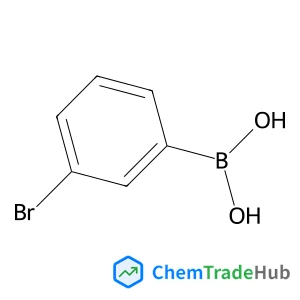
推荐供应商






免责声明
本页面提供的学术期刊信息仅供参考和研究使用。我们与任何期刊出版商均无关联,也不处理投稿事宜。如有投稿相关咨询,请直接联系相关期刊出版商。
如发现页面信息有误,请发送邮件至 support@chemtradehub.com 联系我们。我们将及时核实并处理您的问题。