


Droplet based microfluidics: spectroscopic characterization of levofloxacin and its SERS detection
文献信息
发布日期
2015-01-16
DOI
10.1039/C4CP04970E
影响因子
3.676
作者
I. J. Hidi, M. Jahn
查看原文
摘要
Levofloxacin (Levo), a second generation fluoroquinolone, has both clinical and environmental relevance. Therefore, the implementation of fast, robust and cost effective techniques for its monitoring is required. Here, its spectroscopic characterization and its detection in aqueous environment were carried out using surface enhanced Raman spectroscopy combined with droplet based microfluidics. The Levo molecule interacts with the silver nanoparticles via the carboxylate group and it adopts an upright or slightly tilted orientation. Furthermore, it is shown that the presence of Cl− ions has a strong influence on the enhancement efficiency of the Raman signal of the target molecule. Thus, for the determination of the limit of detection (LOD) the measurements were carried out in the absence of any electrolytes. The estimated LOD is ∼0.8 μM and the linear dynamic window ranges between 1–15 μM. These results were achieved after the normalization of the SERS signal to the Raman mode at 230 cm−1. This band was attributed to the ν(Ag–O) stretching and it accounts for the Levo molecules in the first layer on the Ag nanoparticles.
期刊推荐
Nature
Kinetics and Catalysis
Pure and Applied Chemistry
Journal of Physics and Chemistry of Solids
Israel Journal of Chemistry
Russian Chemical Reviews
European Journal of Wood and Wood Products
Proceedings of the National Academy of Sciences of the United States of America
Molecular Pharmacology
Pharmacological Reviews
相关文献
Kinetics and dynamics of the C(3P) + H2O reaction on a full-dimensional accurate triplet state potential energy surface
Jun Li, Changjian Xie, Hua Guo
2017-08-10
Paper
DOI: 10.1039/C7CP04578F
Developing force fields when experimental data is sparse: AMBER/GAFF-compatible parameters for inorganic and alkyl oxoanions
Sadra Kashefolgheta, Ana Vila Verde
2017-07-17
Paper
DOI: 10.1039/C7CP02557B
Spin dynamics of light-induced charge separation in composites of semiconducting polymers and PC60BM revealed using Q-band pulse EPR
E. Suturina, E. Reijerse, W. Lubitz
2017-07-26
Paper
DOI: 10.1039/C7CP03680A
Investigating the evolving microstructure of lithium metal electrodes in 3D using X-ray computed tomography
O. O. Taiwo, D. P. Finegan, J. M. Paz-Garcia, A. J. Bodey, C. Rau, S. A. Hall, D. J. L. Brett, P. R. Shearing
2017-07-25
Paper
DOI: 10.1039/C7CP02872E
A comparative VUV absorption mass-spectroscopy study on protonated peptides of different size
D. Egorov, R. Hoekstra, T. Schlathölter
2017-07-13
Paper
DOI: 10.1039/C7CP03203J
Geobacter sulfurreducens pili support ohmic electronic conduction in aqueous solution
Nicole L. Ing, Tyler D. Nusca
2017-07-31
Paper
DOI: 10.1039/C7CP03651E
Density functional theory study on the metal–support interaction between a Au9 cluster and an anatase TiO2(001) surface
Zong-You Jiang, Zong-Yan Zhao
2017-07-25
Paper
DOI: 10.1039/C7CP03796A
The opening/closure of the P-loop and hinge of BCR-ABL1 decodes the low/high bioactivities of dasatinib and axitinib
Jianyi Wang, Qing Chen, Cheng Zhong
2017-08-07
Paper
DOI: 10.1039/C7CP03443A
A molecular dynamics study of conformations of beta-cyclodextrin and its eight derivatives in four different solvents
Mikko Karttunen
2017-08-14
Paper
DOI: 10.1039/C7CP04009A
您可能还喜欢
化合物问答
(3-氨苯基)环丙基甲酮(CAS号:162174-75-6)的主要用途是什么?
(3-氨苯基)环丙基甲酮主要用于合成化学中间体,特别是在药物化学领域作为原料。它还可以用于有机合成反应中,作为催化剂或反应物。
162174-75-6(3-Aminophenyl)(cycl...
化合物问答
如何储存亚胺菌(CAS号:136470-79-6)?
亚胺菌应储存在干燥、阴凉处,避免直接暴露于光线下。建议使用密封容器储存,防止吸潮和污染。具体的储存条件应参考产品的安全数据表(MSDS)或药品说明书。
136470-79-6Abacavir EP Impurity...
化合物问答
2-氯-2,2-二氟乙酰胺(CAS号:354-28-9)应用于哪些行业?
2-氯-2,2-二氟乙酰胺在医药、聚合物、传感器、半导体等领域有广泛应用。在医药领域,它作为中间体用于合成其他药物;在聚合物领域,用作聚合引发剂或稳定剂;在传感...
354-28-92-Chloro-2,2-difluor...
化合物问答
处理4-甲基-3-硝基-1,1-联苯(CAS号:53812-68-3)时应注意哪些实验室安全事项?
在处理4-甲基-3-硝基-1,1-联苯时,应佩戴手套、护目镜和实验室外套等个人防护装备(PPE),确保在通风橱中操作以减少吸入风险。若发生泄露,应立即使用沙子或...
53812-68-34'-Methyl-3-nitro-1,...
化合物问答
(2S)-羟基(苯基)乙酸 (2R)-N-苄基-1-(4-甲氧基苯基)丙-2-胺盐(CAS号:188690-84-8)应用于哪些行业?
该化合物广泛应用于医药、聚合物和半导体行业。在医药领域,它是某些药物中间体的重要组成部分;在聚合物领域,可用作增塑剂;在半导体行业,可用于制造光刻胶。
188690-84-8Benzeneacetic acid, ...
化合物问答
在合成中是否有芬苯哒唑砜-D3标准品(CAS号:1228182-49-7)的替代品?
芬苯哒唑砜-D3标准品的替代品可能包括类似的苯并咪唑类化合物,如芬苯哒唑本身或其非同位素标记版本。这些替代品在结构上与芬苯哒唑砜-D3相似,但在具体应用中需进行...
1228182-49-7(~2~H_3_)Methyl [5-(...
化合物问答
2-氟-4-硝基苯乙酸(CAS号:315228-19-4)通常如何合成?
2-氟-4-硝基苯乙酸可以通过一系列化学反应合成,通常是从4-氟苯胺开始,首先进行硝化反应生成4-氟-2-硝基苯胺,然后进行乙酰化反应得到目标产物。具体的合成步...
315228-19-42-(2-fluoro-4-nitrop...
化合物问答
2-氟-4-甲氧基苯乙酸(CAS号:883531-28-0)通常如何合成?
2-氟-4-甲氧基苯乙酸通常通过将4-甲氧基苯乙酸与氟化试剂(如氟化氰)反应来合成。反应通常在无水条件下进行,使用催化剂如六氟磷酸锂或四氟硼酸锂以提高选择性和产...
883531-28-02-Fluoro-4-methoxyph...
化合物问答
什么是4SC 202;4SC202(CAS号:1186222-89-8)?
4SC 202;4SC202是一种化学化合物,其化学名称为(2E)-N-(2-氨基苯基)-3-(1-{[4-(1-甲基-1H-吡唑-4-基)苯基]磺酰基}-1H...
1186222-89-8(2E)-N-(2-Aminopheny...
132980-99-53,5-Difluorobenzamid...
来源期刊
Physical Chemistry Chemical Physics

CiteScore:
5.5
自引率:
10.3%
年发文量:
3036
Physical Chemistry Chemical Physics (PCCP) is an international journal co-owned by 19 physical chemistry and physics societies from around the world. This journal publishes original, cutting-edge research in physical chemistry, chemical physics and biophysical chemistry. To be suitable for publication in PCCP, articles must include significant innovation and/or insight into physical chemistry; this is the most important criterion that reviewers and Editors will judge against when evaluating submissions. The journal has a broad scope and welcomes contributions spanning experiment, theory, computation and data science. Topical coverage includes spectroscopy, dynamics, kinetics, statistical mechanics, thermodynamics, electrochemistry, catalysis, surface science, quantum mechanics, quantum computing and machine learning. Interdisciplinary research areas such as polymers and soft matter, materials, nanoscience, energy, surfaces/interfaces, and biophysical chemistry are welcomed if they demonstrate significant innovation and/or insight into physical chemistry. Joined experimental/theoretical studies are particularly appreciated when complementary and based on up-to-date approaches.
推荐化合物
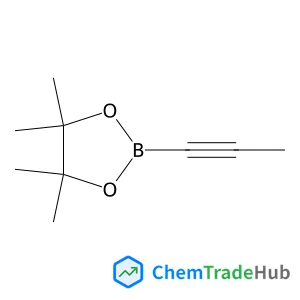
![trans-2-{[(Tert-butoxy)carbonyl]amino}cyclobutane-1-carboxylic acid structure](https://cnstatic.chemtradehub.com/structs/951/951173-25-4-27cd.webp "trans-2-{[(Tert-butoxy)carbonyl]amino}cyclobutane-1-carboxylic acid structure")
推荐供应商





免责声明
本页面提供的学术期刊信息仅供参考和研究使用。我们与任何期刊出版商均无关联,也不处理投稿事宜。如有投稿相关咨询,请直接联系相关期刊出版商。
如发现页面信息有误,请发送邮件至 support@chemtradehub.com 联系我们。我们将及时核实并处理您的问题。