


Mechanism of visible light photocatalytic NOx oxidation with plasmonic Bi cocatalyst-enhanced (BiO)2CO3 hierarchical microspheres
文献信息
发布日期
2015-02-27
DOI
10.1039/C4CP06045H
影响因子
3.676
作者
Yanjuan Sun, Zaiwang Zhao, Fan Dong, Wei Zhang
查看原文
摘要
Semimetal bismuth (Bi), as an emerging non-noble metal-based cocatalyst and plasmonic photocatalyst, has attracted significant attention. In this work, a one-pot solvent-controlled synthesis strategy was utilized for the in situ-deposition of plasmonic Bi nanoparticles onto the surfaces of (BiO)2CO3 microspheres (BOC-WE) using bismuth citrate, sodium carbonate, and ethylene glycol as precursors. The introduction of the Bi nanoparticles has a pivotal effect on the morphology, optical and photocatalytic performance of the pristine (BiO)2CO3. The results indicated that the Bi nanoparticles were generated on the surface of (BiO)2CO3 microspheres via the in situ reduction of Bi3+ by ethylene glycol. The Bi-deposited (BiO)2CO3 microspheres were used for the photocatalytic purification of NOx in air under visible light irradiation. Significantly, the BOC-WE samples exhibited a drastically promoted photocatalytic performance with a NOx removal ratio (η) of 37.2%, superior to pristine (BiO)2CO3 (η = 19.1%), outperforming other well-known visible light photocatalysts, such as C-doped TiO2 (η = 21.8%), BiOBr (η = 21.3%), BiOI (η = 14.9%) and C3N4 (η = 25.5%). The conspicuously enhanced photocatalytic capability can be attributed to the synergistic effects of the surface plasmon resonance (SPR) effect, increased visible light absorption and the efficient separation of electron–hole pairs induced by the Bi nanoparticles. The Bi nanoparticles can act as a non-noble metal-based cocatalyst for strengthening photocatalytic performance, which is similar to the behavior of noble metals (Au, Ag) in enhancing photocatalysis. The mechanism of visible light photocatalytic NOx oxidation was investigated. DMPO-ESR spin-trapping results demonstrated that hydroxyl radicals were confirmed to be the main active species for NOx photo-oxidation. Due to the SPR effect of Bi, the BOC-WE could produce more hydroxyl radicals than BOC, which was responsible for the enhanced NO photo-oxidation ability. Moreover, the BOC-WE photocatalysts showed high photochemical stability under repeated irradiation. This work demonstrates the feasibility of utilizing low cost Bi cocatalysts as a substitute for noble metals to enhance the performance of other photocatalysts. This work could not only provide new insights into the in situ fabrication of Bi/semiconductor nanocomposites, but also pave a new way for the modification of photocatalysts with non-noble metals as cocatalysts to achieve an enhanced performance for environmental and energetic applications.
期刊推荐
Russian Journal of Coordination Chemistry

Acta Materialia

Chemical Communications
Organic Process Research & Development
Russian Journal of Applied Chemistry
Russian Chemical Bulletin
Chemistry Education Research and Practice
Russian Journal of Bioorganic Chemistry
New Journal of Chemistry
Journal of Natural Medicines
相关文献
Tuning the thermal conductivity of methylammonium lead halide by the molecular substructure
Claudia Caddeo, Claudio Melis, Maria Ilenia Saba, Alessio Filippetti, Luciano Colombo, Alessandro Mattoni
2016-07-29
Paper
DOI: 10.1039/C6CP04246E
First hyperpolarizability of para-aminoaniline induced by a variety of gold nano particles
Stine T. Olsen, Kurt V. Mikkelsen
2016-08-18
Paper
DOI: 10.1039/C6CP01078D
Probing protein adsorption on a nanoparticle surface using second harmonic light scattering
A. Das, A. Chakrabarti, P. K. Das
2016-08-03
Paper
DOI: 10.1039/C6CP02196D
Toward an absolute NMR shielding scale using the spin-rotation tensor within a relativistic framework
I. Agustín Aucar, Sergio S. Gomez, Claudia G. Giribet, Gustavo A. Aucar
2016-07-19
Paper
DOI: 10.1039/C6CP03355E
Binary and ternary recombination of H2D+ and HD2+ ions with electrons at 80 K
Petr Dohnal, Ábel Kálosi, Radek Plašil, Štěpán Roučka, Artem Kovalenko, Serhiy Rednyk, Rainer Johnsen, Juraj Glosík
2016-08-03
Paper
DOI: 10.1039/C6CP04152C
New insight into probe-location dependent polarity and hydration at lipid/water interfaces: comparison between gel- and fluid-phases of lipid bilayers
Moirangthem Kiran Singh, Him Shweta, Mohammad Firoz Khan, Sobhan Sen
2016-04-22
Paper
DOI: 10.1039/C6CP01201A
Peptides@mica: from affinity to adhesion mechanism
T. Gladytz, R. Hassert, M. Pagel, H. J. Risselada, S. Naumov, A. G. Beck-Sickinger
2016-07-22
Paper
DOI: 10.1039/C6CP03325C
Microscopic mechanistic study on the multiferroic of R2CoMnO6/La2CoMnO6 (R = Ce, Pr, Nd, Pm, Sm, Gd, Tb, Dy, Ho, Er, Tm) by chemical and hydrostatic pressures: a first-principles calculation
Xiaojuan Liu, Xianfeng Hao, Jian Meng, Hongjie Zhang
2016-07-22
Paper
DOI: 10.1039/C6CP03145E
Is the manifestation of the local dynamics in the spin–lattice NMR relaxation in dendrimers sensitive to excluded volume interactions?
2016-08-17
Paper
DOI: 10.1039/C6CP01520D
Photoionization-induced π ↔ H site switching dynamics in phenol+–Rg (Rg = Ar, Kr) dimers probed by picosecond time-resolved infrared spectroscopy
Mitsuhiko Miyazaki, Yuri Sakata, Markus Schütz, Otto Dopfer, Masaaki Fujii
2016-08-15
Paper
DOI: 10.1039/C6CP05016F
您可能还喜欢
化合物问答
什么是3-表南美楝属二醇(CAS号:19942-04-2)?
3-表南美楝属二醇是一种具有特定立体化学结构的化合物,其分子式为C31H52O2,属于甾醇类化合物。它具有光学活性,是一种复杂的有机分子,主要存在于一些植物中。
19942-04-2(3S,5R,8R,9R,10R,13R...
化合物问答
3-羧基-5-碘苯甲酸甲酯(CAS号:50765-22-5)应用于哪些行业?
3-羧基-5-碘苯甲酸甲酯主要应用于医药行业,作为合成某些药物中间体的重要原料。此外,它还可能用于聚合物的改性、传感器的制备以及半导体材料的制备等领域。
50765-22-5Methyl 3-hydroxy-5-i...
化合物问答
什么是3-Bromoindolin-2-one(CAS号:22942-87-6)?
3-Bromoindolin-2-one是一种含有溴代基团的吲哚酮衍生物,分子式为C9H7BrNO。它是一种无色固体,具有一定的挥发性,熔点为158-159°C...
22942-87-63-Bromoindolin-2-one
化合物问答
如何处理含有L-Lysyl-L-phenylalanyl-L-isoleucylglycyl-L-leucyl-L-methioninamide(CAS号:2990-43-4)的废料?
对于含有该化合物的废液,应先进行中和处理,然后根据其毒性和活性选择合适的处置方法。可以考虑焚烧处理或由专业的化学品废物处理公司进行无害化处理。处理过程中需注意环...
2990-43-4L-Lysyl-L-phenylalan...
化合物问答
ANGIOTENSIN 1/2 + A (2 - 8)(CAS号:51833-76-2)的物理化学性质是什么?
ANGIOTENSIN 1/2 + A (2 - 8)是一种蛋白质类化合物,具有典型的蛋白质性质。它的分子量约为5900 Da。该化合物在水中具有一定的溶解性,...
51833-76-2ANGIOTENSIN 1/2 + A ...
化合物问答
如何储存2-甲基硫代嘧啶-5-硼酸频那酯(CAS号:940284-18-4)?
应将该化合物存放在阴凉干燥、通风良好的地方,避免阳光直射。建议将化合物密封保存在避光的、干燥的容器中,远离火源和高温环境。
940284-18-42-(Methylthio)-5-(4,...
化合物问答
什么是苏丹红IV氘代物 标准品(CAS号:1014689-18-9)?
苏丹红IV氘代物 标准品是一种含有氘代标记的苏丹红IV化合物,是一种用于化合物分析、结构确证以及代谢研究的标准物质。
1014689-18-91-[(E)-{2-Methyl-4-[...
化合物问答
(+)-2-Amino-6-propionamido-d3-tetrahydrobenzothiazole(CAS号:1217680-69-7)适用哪些法规指南?
该化合物需要遵循《全球化学品统一分类和标签制度》(GHS)中的分类和标签要求,具体分类需依据其毒性和物理化学性质。此外,还需要符合《欧盟化学品注册、评估、授权和...
1217680-69-7(+)-2-Amino-6-propio...
化合物问答
如何储存2-氨基-2-(2-吡啶)乙酸乙酯(CAS号:55243-15-7)?
2-氨基-2-(2-吡啶)乙酸乙酯应储存于阴凉、干燥、通风良好的环境中,避免高温和光照。应使用密封容器储存,并远离易燃物、氧化剂和其他危险化学品。
55243-15-7Ethyl 2-amino-2-(pyr...
化合物问答
3-羟基-4-甲氧基吡啶-2-羧酸(CAS号:210300-09-7)的主要用途是什么?
3-羟基-4-甲氧基吡啶-2-羧酸主要用于合成其他有机化合物,如药物合成、农药合成和染料合成等。此外,它还可用作中间体和试剂,在化学研究领域也有一定的应用。
210300-09-73-Hydroxy-4-methoxy-...
来源期刊
Physical Chemistry Chemical Physics

CiteScore:
5.5
自引率:
10.3%
年发文量:
3036
Physical Chemistry Chemical Physics (PCCP) is an international journal co-owned by 19 physical chemistry and physics societies from around the world. This journal publishes original, cutting-edge research in physical chemistry, chemical physics and biophysical chemistry. To be suitable for publication in PCCP, articles must include significant innovation and/or insight into physical chemistry; this is the most important criterion that reviewers and Editors will judge against when evaluating submissions. The journal has a broad scope and welcomes contributions spanning experiment, theory, computation and data science. Topical coverage includes spectroscopy, dynamics, kinetics, statistical mechanics, thermodynamics, electrochemistry, catalysis, surface science, quantum mechanics, quantum computing and machine learning. Interdisciplinary research areas such as polymers and soft matter, materials, nanoscience, energy, surfaces/interfaces, and biophysical chemistry are welcomed if they demonstrate significant innovation and/or insight into physical chemistry. Joined experimental/theoretical studies are particularly appreciated when complementary and based on up-to-date approaches.
推荐化合物
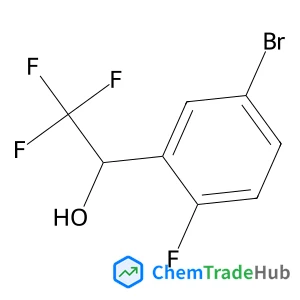
![3,7-Di(1,1':3',1''-terphenyl-5'-yl)-10,11,12,13-tetrahydrodiindeno[7,1-de:1',7'-fg][1,3,2]dioxaphosphocin-5-ol 5-oxide structure](https://cnstatic.chemtradehub.com/structs/135/1352810-38-8-3f10.webp "3,7-Di(1,1':3',1''-terphenyl-5'-yl)-10,11,12,13-tetrahydrodiindeno[7,1-de:1',7'-fg][1,3,2]dioxaphosphocin-5-ol 5-oxide structure")
![2-[(E)-(2-Methoxyphenyl)diazenyl]-3-oxo-N-(2-oxo-2,3-dihydro-1H-benzimidazol-5-yl)butanamide structure](https://cnstatic.chemtradehub.com/structs/821/82199-12-0-f1d0.webp "2-[(E)-(2-Methoxyphenyl)diazenyl]-3-oxo-N-(2-oxo-2,3-dihydro-1H-benzimidazol-5-yl)butanamide structure")
推荐供应商







免责声明
本页面提供的学术期刊信息仅供参考和研究使用。我们与任何期刊出版商均无关联,也不处理投稿事宜。如有投稿相关咨询,请直接联系相关期刊出版商。
如发现页面信息有误,请发送邮件至 support@chemtradehub.com 联系我们。我们将及时核实并处理您的问题。