


A water-soluble polymer for selective colorimetric sensing of cysteine and homocysteine with temperature-tunable sensitivity
文献信息
发布日期
2014-05-19
DOI
10.1039/C4PY00476K
影响因子
5.582
作者
A. Balamurugan, Hyung-il Lee
查看原文
摘要
A water-soluble polymeric probe for selective sensing of cysteine and homocysteine by colorimetric titration was designed and synthesized. Most interestingly, temperature-tunable sensitivity of cysteine detection was achieved. The polymer selectivity toward various amino acids was investigated, and the highest selectivity (25–30-fold higher) was achieved for cysteine and homocysteine compared to other amino acids. The temperature-dependent cysteine sensing studies were performed to demonstrate temperature-tunable sensitivity towards cysteine. The sensing ability decreased with increasing temperature from 25 to 55 °C due to hydrophobic aldehyde moieties being hidden in the folded chains of the polymer.
期刊推荐
Current Opinion in Solid State & Materials Science
Russian Journal of General Chemistry
Russian Journal of Bioorganic Chemistry
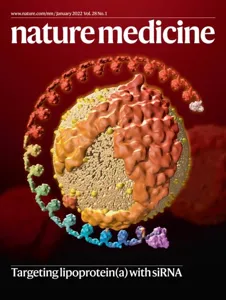
Nature Medicine
Russian Journal of Organic Chemistry
Russian Journal of Coordination Chemistry
Organic Process Research & Development
Crystallography Reports
Journal of Saudi Chemical Society

Chemistry Education Research and Practice
相关文献
Lifespan prediction of Li-ion batteries in electrical vehicles by applying coulombic efficiency: from anode material to battery cell to vehicle application
Yanfei Li, Xiaohua Jiang, Kw Xu
2024-01-08
Paper
DOI: 10.1039/D3SE01455J
MOF-derived Fe–N–C electrocatalyst via a dual ligand strategy for efficient oxygen reduction in acidic media
Yi Sheng, Hongmei Zheng, Jingting Hou, Wanying Zhang, Hong Chen, Luanjie Nie, Jing Zheng, Qingxue Lai
2023-10-23
Paper
DOI: 10.1039/D3SE01183F
Novel electrospun bead-like Ag2MoO4 nanofibers coated on Ni foam for visible light-driven heterogeneous photocatalysis and high-performance supercapacitor electrodes
Amirreza Safartoobi, Jamal Mazloom, Farhad Esmaeili Ghodsi
2023-12-11
Paper
DOI: 10.1039/D3CP04751B
Site planning and selection of hydrogen refueling stations considering the life cycle and demand uncertainty
Xunpeng Qin, Cenglin Yao, Mao Ni, Jun Zhou, Ling Liu, Wenyi Li, Wenlong Yang
2023-10-20
Paper
DOI: 10.1039/D3SE00897E
CeO2-supported multi-nuclear NbxSy clusters for hydrogen evolution reaction
Hongxian Liu, Chencheng Zhao, Hong Li, Xuelan Li, Xianfeng Mu, Dunhua Hong, Furu Zhong, Zhenxing Fang, Yanning Zhang
2023-10-23
Communication
DOI: 10.1039/D3SE01241G
Solution-grown millimeter-scale Mn-doped CsPbBr3/Cs4PbBr6 crystals with enhanced photoluminescence and stability for light-emitting applications
Wenfang Peng, Rongrong Hu, Bobo Yang, Qiaoyun Wu, Pan Liang, Lin Cheng, Xixi Cheng, Yuefeng Li, Jun Zou
2023-11-22
Paper
DOI: 10.1039/D3CP04371A
Study of a proton exchange membrane fuel cell and metal hydride system based on double spiral structure coupling
Xiao Wang, Jin-Xin Wang, Hao Zhang, Shi-Yu Li
2023-12-05
Paper
DOI: 10.1039/D3SE01388J
Syngas conversion to biofuels and biochemicals: a review of process engineering and mechanisms
Sundus Javed
2023-11-27
Review Article
DOI: 10.1039/D3SE00916E
您可能还喜欢
化合物问答
4-[4-三氟甲基苯基]恶唑(CAS号:1126636-40-5)通常如何合成?
4-[4-三氟甲基苯基]恶唑通常通过将4-三氟甲基苯酚与异硫氰酸苯酯在有机溶剂中进行酯化反应合成。该反应可在无水条件下,使用适当的催化剂,如四丁基氢氧化铵,以提...
1126636-40-54-(4-(Trifluoromethy...
59729-32-71-[3-(Dimethylamino)...
化合物问答
RockPhos Pd G3(CAS号:2009020-38-4)通常如何合成?
RockPhos Pd G3 通常通过钯催化偶联反应合成,使用配体 (2'-Amino-2-biphenylyl)(methanesulfonato-kappa...
2009020-38-4(2'-Amino-2-biphenyl...
化合物问答
1-哌啶甲酰胺(CAS号:2158-03-4)的市场或研究趋势如何?
1-哌啶甲酰胺作为有机合成中的重要中间体,其市场需求主要受医药、农药、染料等行业推动。近年来,随着新药开发和绿色化学的发展,该化合物的研究趋势集中在开发更高效、...
2158-03-41-Piperidinecarboxam...
化合物问答
2-(二苯基膦基)乙胺(CAS号:4848-43-5)适用哪些法规指南?
2-(二苯基膦基)乙胺适用于多种法规指南,包括但不限于《全球化学品统一分类和标签制度》(GHS),欧盟《化学品注册、评估、授权和限制》法规(REACH),以及美...
4848-43-52-(Diphenylphosphino...
化合物问答
如何储存间苯二甲酸二烯丙酯(CAS号:1087-21-4)?
间苯二甲酸二烯丙酯应储存在阴凉、干燥、通风良好的地方,远离火源和热源。储存容器应密封,避免光照和高温。储存温度应控制在25℃以下,相对湿度应低于80%。避免与其...
1087-21-4Diallyl isophthalate
化合物问答
什么是间甲苯异硫代异氰酸酯(CAS号:621-30-7)?
间甲苯异硫代异氰酸酯是一种有机化合物,分子式为C7H7NO2S,具有刺激性气味。它是一种重要的有机合成中间体,在合成其他化合物时广泛应用。
621-30-71-Isothiocyanato-3-m...
化合物问答
在合成中是否有N-Boc-D-苯丙氨醇(CAS号:106454-69-7)的替代品?
在合成中,可以考虑使用N-Cbz-D-苯丙氨醇或N-Fmoc-D-苯丙氨醇作为替代品。这些化合物同样具有保护氨基的功能,且在合成过程中表现出良好的反应性能。
106454-69-72-Methyl-2-propanyl ...
化合物问答
3-羟甲基-2-氧异丙基吡啶(CAS号:954240-50-7)的主要用途是什么?
3-羟甲基-2-氧异丙基吡啶主要用于有机合成领域,可以作为合成其他药物、农药或精细化学品的中间体。此外,它还可能在实验室研究中作为特定反应的前体或溶剂。
954240-50-7(2-Isopropoxy-3-pyri...
化合物问答
6-氨基-9-甲基嘌呤(CAS号:700-00-5)应用于哪些行业?
6-氨基-9-甲基嘌呤目前主要应用于医药行业,作为某些药物的中间体。此外,它还可能用于聚合物、传感器和半导体的某些领域,作为功能性单体或掺杂剂。
700-00-59-Methyl-9H-purin-6-...
来源期刊
Polymer Chemistry

CiteScore:
8.6
自引率:
7.3%
年发文量:
457
Polymer Chemistry welcomes submissions in all areas of polymer science that have a strong focus on macromolecular chemistry. Manuscripts may cover a broad range of fields, yet no direct application focus is required.
推荐化合物
推荐供应商





免责声明
本页面提供的学术期刊信息仅供参考和研究使用。我们与任何期刊出版商均无关联,也不处理投稿事宜。如有投稿相关咨询,请直接联系相关期刊出版商。
如发现页面信息有误,请发送邮件至 support@chemtradehub.com 联系我们。我们将及时核实并处理您的问题。