


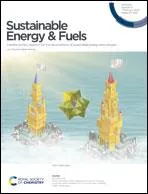

Syngas conversion to biofuels and biochemicals: a review of process engineering and mechanisms
文献信息
发布日期
2023-11-27
DOI
10.1039/D3SE00916E
影响因子
6.367
作者
Sundus Javed
查看原文
摘要
Syngas is generated by thermochemical conversion of a wide range of organic wastes, or it is directly produced as an industry off-gas. The syngas components are converted into alcohols and other high-value-added bioproducts by acetogenic bacteria primarily via the Wood–Ljungdahl pathway. The feasibility of the syngas fermentation process to produce ethanol and other biochemicals is affected by many factors, such as microorganisms, fermentation strategies, gas–liquid mass transfer, and reactor types and design. This study offers new perspectives on the fermentation of syngas by focusing on all these factors to achieve commercialization of these value-added products. Moreover, it includes concepts regarding industrial applications by focusing on metabolic engineering and life cycle assessment for evaluating alternative sustainability dimensions and optimizing the production of ethanol and other biochemicals. This review paper lays a foundation for comparative studies that can be carried out to improve the technological, environmental, and socioeconomic aspects of bioethanol production.
相关文献
FT-IR- and Raman-based biochemical profiling of the early stage of pulmonary metastasis of breast cancer in mice
Kamila Kochan, Agnieszka Jasztal, Elzbieta Buczek, Lisa S. Leslie, Kamilla Malek
2018-03-15
Paper
DOI: 10.1039/C7AN01883E
Complex dielectric transformation of UV-vis diffuse reflectance spectra for estimating optical band-gap energies and materials classification
Prince George, Pradip Chowdhury
2019-03-05
Paper
DOI: 10.1039/C8AN02257G
Electroanalytical identification of 25I-NBOH and 2C-I via differential pulse voltammetry: a rapid and sensitive screening method to avoid misidentification
Ana Flávia Belchior de Andrade, Jose Gonzalez-Rodriguez
2019-02-20
Paper
DOI: 10.1039/C9AN00062C
Anti-Aβ drug candidates in clinical trials and plasmonic nanoparticle-based drug-screen for Alzheimer's disease
Dongtak Lee, Gyudo Lee, Dae Sung Yoon
2018-03-16
Critical Review
DOI: 10.1039/C7AN02013A
A dual-cycling fluorescence scheme for ultrasensitive DNA detection through signal amplification and target regeneration
Idorenyin A. Iwe, Zhigang Li, Jiahao Huang
2019-02-22
Paper
DOI: 10.1039/C9AN00075E
A homogeneous electrochemical sensor for Hg2+ determination in environmental water based on the T–Hg2+–T structure and exonuclease III-assisted recycling amplification
Hao Yu, Lingshan Su, Chang Liu, Yanling Song, Shaoyun Wang, Zhenyu Lin, Fang Chen
2018-03-29
Paper
DOI: 10.1039/C8AN00462E
Fluorescence signal amplification assay for the detection of B. melitensis 16M, based on peptide-mediated magnetic separation technology and a AuNP-mediated bio-barcode assembled by quantum dot technology
Xinxin Li, Chao Zhao, Yi Liu, Yue Li, Fengnan Lian, Dan Wang, Ying Zhang, Juan Wang, Xiuling Song, Juan Li, Yanming Yang, Kun Xu
2019-02-25
Paper
DOI: 10.1039/C9AN00028C
A paper-based chemiluminescence immunoassay device for rapid and high-throughput detection of allergen-specific IgE
Xisi Han, Mengda Cao, Meirong Wu, Yu-Jie Wang, Changmin Yu, Chengwu Zhang, Haidong Yu, Ji-Fu Wei, Lin Li
2019-02-18
Paper
DOI: 10.1039/C8AN02020E
Direct glucose detection in whole blood by colorimetric assay based on glucose oxidase-conjugated graphene oxide/MnO2 nanozymes
Po-Chun Lee, Ying-Pei Hsu, Chen Peng, Hung-Wei Yang
2019-03-19
Paper
DOI: 10.1039/C8AN02440E
Construction of an ultrasensitive electrochemiluminescent aptasensor for ractopamine detection
Huiwen Xiong, Jingwen Gao, Ying Wang, Ziyi Chen, Miao-Miao Chen, Xiuhua Zhang, Shengfu Wang
2019-02-25
Paper
DOI: 10.1039/C9AN00183B
您可能还喜欢
化合物问答
什么是2,6-二溴-4,8-双[(2-乙基己基)氧基]苯并[1,2-b:4,5-b']二噻吩(CAS号:1226782-13-3)?
2,6-二溴-4,8-双[(2-乙基己基)氧基]苯并[1,2-b:4,5-b']二噻吩是一种有机化合物,分子式为C23H32Br2O2S2。该化合物具有芳香性和...
1226782-13-32,6-Dibromo-4,8-bis[...
化合物问答
木聚硫钠(CAS号:37319-17-8)的物理化学性质是什么?
木聚硫钠通常为无色或白色结晶性粉末,具有吸湿性。其分子量约为121.11 g/mol。木聚硫钠易溶于水,不溶于醇类和其他非极性溶剂。在酸性或碱性溶液中,木聚硫钠...
37319-17-8Pentosan
化合物问答
2-甲氧基-4-(三氟甲基)苄溴, JRD(CAS号:886500-59-0)适用哪些法规指南?
该化合物在合成、储存和运输过程中需遵循《全球化学品统一分类和标签制度》(GHS)的健康、环境和物理危险分类。在欧洲还需符合《化学品注册、评估、授权和限制》(RE...
886500-59-02-Methoxy-4-(trifluo...
化合物问答
1,4-Diazoniabicyclo[2.2.2]octane-1,4-disulfinate(CAS号:119752-83-9)的主要用途是什么?
1,4-二氮杂双环[2.2.2]辛烷-1,4-二硫酸二酯主要用于有机合成中的保护基团,特别是在保护胺基和硫醇基方面具有广泛应用。此外,它还用于一些特殊化学反应的...
119752-83-91,4-Diazabicyclo[2.2...
化合物问答
如何处理含有4-(Bromomethyl)-2-fluorobenzenesulphonamide(CAS号:1645275-47-3)的废料?
含有4-(Bromomethyl)-2-fluorobenzenesulphonamide的废液应首先进行中和处理,以降低pH值,避免对环境造成腐蚀性影响。随后...
1645275-47-34-(Bromomethyl)-2-fl...
化合物问答
Loureiriol(CAS号:479195-44-3)的物理化学性质是什么?
Loureiriol是一种天然化合物,其分子式为C15H22O4。Loureiriol为无色结晶性粉末,具有较高的熔点和良好的热稳定性。其相对分子质量为262....
479195-44-3Loureiriol
化合物问答
在合成中是否有3-氨基苯甲酰苯胺(CAS号:14315-16-3)的替代品?
在合成过程中,可以考虑使用类似结构的化合物作为3-氨基苯甲酰苯胺的替代品,例如N-苯基-3-氰基苯胺或N-苯基-3-硝基苯胺等,这些化合物具有相似的化学性质,可...
14315-16-33-Amino-N-phenylbenz...
化合物问答
4-异氰酰苯基硼酸频哪醇酯(CAS号:380430-64-8)的市场或研究趋势如何?
4-异氰酰苯基硼酸频哪醇酯主要应用于有机合成、药物化学和材料科学领域。随着绿色化学的发展,该化合物因其高效的官能团转化能力和环境友好性而受到越来越多的关注。近年...
380430-64-82-(4-Isocyanatopheny...
化合物问答
如何储存3β-乙酰氧基-7,25-甘遂二烯-24(R)-醇(CAS号:1352001-09-2)?
3β-乙酰氧基-7,25-甘遂二烯-24(R)-醇应储存在阴凉、干燥、通风良好的地方,避免直接光照。储存容器应密封,防止空气中的水分和氧气影响化合物的稳定性。建...
1352001-09-23β-acetoxy-eupha- 7,...
化合物问答
如何储存4-氟-2-甲基-1H-吲哚(CAS号:1260383-51-4)?
应将4-氟-2-甲基-1H-吲哚存放在阴凉、干燥、通风良好的地方,避免直接暴露在光照下。容器应密封,避免与空气中的水蒸气接触。建议在避光、温度不超过25℃的环境...
1260383-51-44-Fluoro-2-methyl-1H...
来源期刊
推荐化合物
![1-(Hexopyranosyloxy)-4a,5-dihydroxy-7-methyl-1,4a,5,6,7,7a-hexahydrocyclopenta[c]pyran-7-yl 3-phenylacrylate structure](https://cnstatic.chemtradehub.com/structs/192/19210-12-9-ecae.webp "1-(Hexopyranosyloxy)-4a,5-dihydroxy-7-methyl-1,4a,5,6,7,7a-hexahydrocyclopenta[c]pyran-7-yl 3-phenylacrylate structure")
推荐供应商





免责声明
本页面提供的学术期刊信息仅供参考和研究使用。我们与任何期刊出版商均无关联,也不处理投稿事宜。如有投稿相关咨询,请直接联系相关期刊出版商。
如发现页面信息有误,请发送邮件至 support@chemtradehub.com 联系我们。我们将及时核实并处理您的问题。