


![3,7-Di(1,1':3',1''-terphenyl-5'-yl)-10,11,12,13-tetrahydrodiindeno[7,1-de:1',7'-fg][1,3,2]dioxaphosphocin-5-ol 5-oxide structure](https://cnstatic.chemtradehub.com/structs/135/1352810-38-8-3f10.webp "3,7-Di(1,1':3',1''-terphenyl-5'-yl)-10,11,12,13-tetrahydrodiindeno[7,1-de:1',7'-fg][1,3,2]dioxaphosphocin-5-ol 5-oxide structure")
Modulated excitation extended X-ray absorption fine structure spectroscopy
文献信息
发布日期
2015-03-13
DOI
10.1039/C5CP00609K
影响因子
3.676
作者
Davide Ferri
查看原文
摘要
The sensitivity of extended X-ray absorption fine structure spectroscopy (EXAFS) for minute structural changes can be enhanced by combination with the modulated excitation approach and making use of phase sensitive analysis. A modulated EXAFS experiment of a reversible periodic Pd to PdO partial oxidation has been simulated in order to understand the effect of the phase sensitive analysis on the shape and meaning of the resulting phase-resolved EXAFS spectra. In particular, the simulation comprises either a synchronous or a delayed sinusoidal variation of the EXAFS parameters, i.e. coordination number (N), interatomic distance (R) and Debye–Waller factor (σ2), of first Pd–Pd, first Pd–O, and second Pd–(O)–Pd coordination shells. The effect of these variations on the resulting phase-resolved Fourier transform EXAFS spectra is discussed. The results of the simulation are validated by an in situ EXAFS experiment at the Pd K-edge over 1.6 wt% Pd/Al2O3 undergoing reversible partial oxidation in a H2vs. O2 modulation at 573 K. It is shown that phase sensitive detection (PSD) is able to separate the minor contribution at ca. 2.8 Å corresponding to the growth of the Pd–(O)–Pd shell that is otherwise hidden under the static signal of the Pd–Pd shell of reduced Pd particles. The fitting of the phase-resolved EXAFS spectra suggests that the fast H2 to O2 switch leads the partial oxidation of the Pd surface with the formation of a PdO shell covering a metallic Pd core. Therefore, the dynamics of the full system can be described with greater detail than in conventional EXAFS. The intention of this work is to provide the tools and therefore a solid guidance to qualitatively and quantitatively understand the nature of the shape of phase-resolved FT-EXAFS spectra that may prove helpful in the analysis of a wide range of functional materials.
期刊推荐
Organic Process Research & Development
Russian Chemical Bulletin

Chemistry Education Research and Practice
Russian Journal of Applied Chemistry
Current Opinion in Colloid & Interface Science
Russian Journal of General Chemistry
Russian Journal of Organic Chemistry

Current Opinion in Solid State & Materials Science
Russian Journal of Coordination Chemistry

Journal of Peptide Science
相关文献
Thermodynamics of binary gas adsorption in nanopores
Sujeet Dutta, Ronan Lefort, Denis Morineau, Ramona Mhanna, Odile Merdrignac-Conanec, Arnaud Saint-Jalmes, Théo Leclercq
2016-07-28
Paper
DOI: 10.1039/C6CP01587E
Performance enhancement of organic photovoltaic devices enabled by Au nanoarrows inducing surface plasmonic resonance effect
Zhiqi Li, Xinyuan Zhang, Zhihui Zhang, Chunyu Liu, Liang Shen, Wenbin Guo, Shengping Ruan
2016-08-03
Paper
DOI: 10.1039/C6CP04302J
Utilization of the Donnan potential induced by reverse salt flux in pressure retarded osmosis systems
Chul Ho Park, Sung Jo Kwak, Joo-Youn Nam, Moon Seok Jang, Jung-Hyun Lee
2016-08-15
Communication
DOI: 10.1039/C6CP03939A
Effect of water on the structure of a prototype ionic liquid
Oleg Borodin, David L. Price, Bachir Aoun, Miguel A. González, Justin B. Hooper, Maiko Kofu, Osamu Yamamuro
2016-05-26
Paper
DOI: 10.1039/C6CP02191C
Probing protein adsorption on a nanoparticle surface using second harmonic light scattering
A. Das, A. Chakrabarti, P. K. Das
2016-08-03
Paper
DOI: 10.1039/C6CP02196D
A strategy to achieve enhanced electromagnetic interference shielding at low concentration with a new generation of conductive carbon black in a chlorinated polyethylene elastomeric matrix
Subhadip Mondal, Sayan Ganguly, Mostafizur Rahaman, Ali Aldalbahi, Tapan K. Chaki, Dipak Khastgir, Narayan Ch. Das
2016-08-19
Paper
DOI: 10.1039/C6CP04274K
Theoretical insight into the wavelength-dependent photodissociation mechanism of nitric acid
Satoshi Maeda
2016-08-08
Paper
DOI: 10.1039/C6CP04713K
Proton transfer in acetaldehyde–water clusters mediated by a single water molecule
Oleg Kostko, Tyler P. Troy, Biswajit Bandyopadhyay, Musahid Ahmed
2016-09-05
Paper
DOI: 10.1039/C6CP04916H
Hydrogen evolution in [NiFe] hydrogenases and related biomimetic systems: similarities and differences
Ranjita Das, Frank Neese, Maurice van Gastel
2016-08-10
Paper
DOI: 10.1039/C6CP03672D
A self-consistent GW approach to the van der Waals potential for a helium dimer
Toru Shoji, Riichi Kuwahara, Kaoru Ohno
2016-08-12
Paper
DOI: 10.1039/C6CP04678A
您可能还喜欢
化合物问答
什么是3-表南美楝属二醇(CAS号:19942-04-2)?
3-表南美楝属二醇是一种具有特定立体化学结构的化合物,其分子式为C31H52O2,属于甾醇类化合物。它具有光学活性,是一种复杂的有机分子,主要存在于一些植物中。
19942-04-2(3S,5R,8R,9R,10R,13R...
化合物问答
3-羧基-5-碘苯甲酸甲酯(CAS号:50765-22-5)应用于哪些行业?
3-羧基-5-碘苯甲酸甲酯主要应用于医药行业,作为合成某些药物中间体的重要原料。此外,它还可能用于聚合物的改性、传感器的制备以及半导体材料的制备等领域。
50765-22-5Methyl 3-hydroxy-5-i...
化合物问答
什么是3-Bromoindolin-2-one(CAS号:22942-87-6)?
3-Bromoindolin-2-one是一种含有溴代基团的吲哚酮衍生物,分子式为C9H7BrNO。它是一种无色固体,具有一定的挥发性,熔点为158-159°C...
22942-87-63-Bromoindolin-2-one
化合物问答
如何处理含有L-Lysyl-L-phenylalanyl-L-isoleucylglycyl-L-leucyl-L-methioninamide(CAS号:2990-43-4)的废料?
对于含有该化合物的废液,应先进行中和处理,然后根据其毒性和活性选择合适的处置方法。可以考虑焚烧处理或由专业的化学品废物处理公司进行无害化处理。处理过程中需注意环...
2990-43-4L-Lysyl-L-phenylalan...
化合物问答
ANGIOTENSIN 1/2 + A (2 - 8)(CAS号:51833-76-2)的物理化学性质是什么?
ANGIOTENSIN 1/2 + A (2 - 8)是一种蛋白质类化合物,具有典型的蛋白质性质。它的分子量约为5900 Da。该化合物在水中具有一定的溶解性,...
51833-76-2ANGIOTENSIN 1/2 + A ...
化合物问答
如何储存2-甲基硫代嘧啶-5-硼酸频那酯(CAS号:940284-18-4)?
应将该化合物存放在阴凉干燥、通风良好的地方,避免阳光直射。建议将化合物密封保存在避光的、干燥的容器中,远离火源和高温环境。
940284-18-42-(Methylthio)-5-(4,...
化合物问答
什么是苏丹红IV氘代物 标准品(CAS号:1014689-18-9)?
苏丹红IV氘代物 标准品是一种含有氘代标记的苏丹红IV化合物,是一种用于化合物分析、结构确证以及代谢研究的标准物质。
1014689-18-91-[(E)-{2-Methyl-4-[...
化合物问答
(+)-2-Amino-6-propionamido-d3-tetrahydrobenzothiazole(CAS号:1217680-69-7)适用哪些法规指南?
该化合物需要遵循《全球化学品统一分类和标签制度》(GHS)中的分类和标签要求,具体分类需依据其毒性和物理化学性质。此外,还需要符合《欧盟化学品注册、评估、授权和...
1217680-69-7(+)-2-Amino-6-propio...
化合物问答
如何储存2-氨基-2-(2-吡啶)乙酸乙酯(CAS号:55243-15-7)?
2-氨基-2-(2-吡啶)乙酸乙酯应储存于阴凉、干燥、通风良好的环境中,避免高温和光照。应使用密封容器储存,并远离易燃物、氧化剂和其他危险化学品。
55243-15-7Ethyl 2-amino-2-(pyr...
化合物问答
3-羟基-4-甲氧基吡啶-2-羧酸(CAS号:210300-09-7)的主要用途是什么?
3-羟基-4-甲氧基吡啶-2-羧酸主要用于合成其他有机化合物,如药物合成、农药合成和染料合成等。此外,它还可用作中间体和试剂,在化学研究领域也有一定的应用。
210300-09-73-Hydroxy-4-methoxy-...
来源期刊
Physical Chemistry Chemical Physics

CiteScore:
5.5
自引率:
10.3%
年发文量:
3036
Physical Chemistry Chemical Physics (PCCP) is an international journal co-owned by 19 physical chemistry and physics societies from around the world. This journal publishes original, cutting-edge research in physical chemistry, chemical physics and biophysical chemistry. To be suitable for publication in PCCP, articles must include significant innovation and/or insight into physical chemistry; this is the most important criterion that reviewers and Editors will judge against when evaluating submissions. The journal has a broad scope and welcomes contributions spanning experiment, theory, computation and data science. Topical coverage includes spectroscopy, dynamics, kinetics, statistical mechanics, thermodynamics, electrochemistry, catalysis, surface science, quantum mechanics, quantum computing and machine learning. Interdisciplinary research areas such as polymers and soft matter, materials, nanoscience, energy, surfaces/interfaces, and biophysical chemistry are welcomed if they demonstrate significant innovation and/or insight into physical chemistry. Joined experimental/theoretical studies are particularly appreciated when complementary and based on up-to-date approaches.
推荐化合物
![2-[(E)-(2-Methoxyphenyl)diazenyl]-3-oxo-N-(2-oxo-2,3-dihydro-1H-benzimidazol-5-yl)butanamide structure](https://cnstatic.chemtradehub.com/structs/821/82199-12-0-f1d0.webp "2-[(E)-(2-Methoxyphenyl)diazenyl]-3-oxo-N-(2-oxo-2,3-dihydro-1H-benzimidazol-5-yl)butanamide structure")
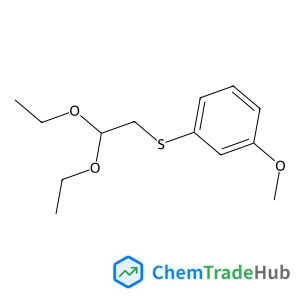
![(3S,4aS,8aS)-2-[(2R,3S)-3-Amino-2-hydroxy-4-phenylbutyl]-N-(2-methyl-2-propanyl)decahydro-3-isoquinolinecarboxamide structure](https://cnstatic.chemtradehub.com/structs/136/136522-17-3-4d77.webp "(3S,4aS,8aS)-2-[(2R,3S)-3-Amino-2-hydroxy-4-phenylbutyl]-N-(2-methyl-2-propanyl)decahydro-3-isoquinolinecarboxamide structure")
推荐供应商





免责声明
本页面提供的学术期刊信息仅供参考和研究使用。我们与任何期刊出版商均无关联,也不处理投稿事宜。如有投稿相关咨询,请直接联系相关期刊出版商。
如发现页面信息有误,请发送邮件至 support@chemtradehub.com 联系我们。我们将及时核实并处理您的问题。