


Prospects and challenges of iron pyroelectrolysis in magnesium aluminosilicate melts near minimum liquidus temperature
文献信息
发布日期
2015-03-03
DOI
10.1039/C5CP00858A
影响因子
3.676
作者
A. V. Kovalevsky, S. M. Mikhalev, F. M. Costa, J. R. Frade
查看原文
摘要
Although steel production by molten oxide electrolysis offers potential economic and environmental advantages over classic extractive metallurgy, its feasibility is far from being convincingly demonstrated, mainly due to inherent experimental difficulties exerted by harsh conditions and lack of knowledge regarding relevant mechanisms and physico-chemical processes in the melts. The present work was intended to demonstrate the concept of pyroelectrolysis at very high temperature near the minimum liquidus point of magnesium aluminosilicate, being conducted under electron-blocking conditions using yttria-stabilized zirconia cells, and to provide a new insight into electrochemistry behind this process. Significant current yields are possible for pyroelectrolysis performed in electron-blocking mode using a solid electrolyte membrane to separate the anode and the molten electrolyte. Parasitic electrochemical processes rise gradually as the concentration of iron oxide dissolved in the molten electrolytes is depleted, impairing faradaic efficiency. Reduction of silica to metallic silicon was identified as a significant contribution to those parasitic currents, among other plausible processes. Direct pyroelectrolysis without electron blocking was found much less plausible, due to major limitations on faradaic efficiency imposed by electronic leakage and insufficient ionic conductivity of the aluminosilicate melt. Ohmic losses may consume an excessive fraction of the applied voltage, thus failing to sustain the Nernst potential required for reduction to metallic iron. The results suggest the need for further optimization of the molten electrolyte composition to promote ionic conductivity and to suppress electronic transport contribution, possibly, by tuning the Al/Si ratio and altering the network-forming/modifying behaviour of the iron cations.
期刊推荐
Environmental Toxicology and Pharmacology
Photochemical & Photobiological Sciences
Mini-Reviews in Medicinal Chemistry
Journal of Medical Biochemistry
Lab on a Chip
Current Pharmaceutical Biotechnology
Nature Reviews Drug Discovery
Angewandte Chemie International Edition
Contact Lens & Anterior Eye
Journal of Enzyme inhibition and Medicinal Chemistry
相关文献
The structure of a zinc metaphosphate glass. A reverse Monte Carlo study
G. Navarra, A. Falqui, G. Piccaluga, G. Pinna
2002-08-28
Paper
DOI: 10.1039/B204964C
A disjoining pressure study of n-dodecyl-β-D-maltoside foam films
Cosima Stubenrauch, Judith Schlarmann, Reinhard Strey
2002-08-19
Paper
DOI: 10.1039/B205728J
Dimerization of thianthrene radical cations as studied by in situESR and UV-Vis-NIRvoltammetry at different temperatures
Philippe Hapiot, Lothar Dunsch
2002-07-30
Paper
DOI: 10.1039/B204024G
Photophysical studies of formic acid in the VUV. Absorption spectrum in the 6–22 eV region
Sydney Leach, Martin Schwell, Francois Dulieu, Jean-Louis Chotin, Hans-Werner Jochims, Helmut Baumgärtel
2002-09-19
Paper
DOI: 10.1039/B205729H
Shock wave study of the unimolecular dissociation of H2O2 in its falloff range and of its secondary reactions
Ch. Kappel, K. Luther, J. Troe
2002-08-09
Paper
DOI: 10.1039/B204364E
Oxygen incorporation into Fe-doped SrTiO3: Mechanistic interpretation of the surface reaction
2002-08-01
Paper
DOI: 10.1039/B204032H
Second virial coefficients of fluorinated methanes CH4−xFx (x = 0–4) and their binary mixtures
Joachim A. Lamp, Bernhard F. Schramm, Shokry M. Saad, Samia A. El-Geubeily
2002-08-12
Paper
DOI: 10.1039/B204839F
Optically induced birefringence in a series of analogous diols
2002-08-05
Paper
DOI: 10.1039/B203010A
Reaction and dissociation mechanism control: the H2 + H2 system
Ernesto Garcia, Antonio Laganà
2002-08-30
Paper
DOI: 10.1039/B205377B
Prediction of the vapor–liquid phase equilibrium of hydrogen sulfide and the binary system water–hydrogen sulfide by molecular simulation
Johannes Vorholz, Bernd Rumpf, Gerd Maurer
2002-08-14
Paper
DOI: 10.1039/B203867F
您可能还喜欢
化合物问答
如何处理含有顺-二(2,2'-联吡啶)二氯化钌(II)二水合物(CAS号:67776-38-9)的废料?
处理含有该化合物的废料时,应先收集并分类,然后根据其危险特性选择合适的处理方法。推荐采用焚烧或由专业机构进行安全处理,以确保符合环保法规的要求。处理过程中应佩戴...
67776-38-93-{[(2R,3R,4S,5R,6R)...
化合物问答
4-amino-2-bromo-3-iodopyridine(CAS号:1300750-77-9)的市场或研究趋势如何?
4-氨基-2-溴-3-碘吡啶主要应用于药物合成和研究领域,尤其是在抗病毒和抗癌药物的研发中。随着新型药物的需求增加,该化合物的研究趋势较好。市场方面,由于其特殊...
1300750-77-92-bromo-3-iodopyridi...
化合物问答
4-乙酰基氨基-2-氨基-苯甲酸(CAS号:43134-76-5)的市场或研究趋势如何?
当前,4-乙酰基氨基-2-氨基-苯甲酸(CAS号:43134-76-5)在医药和化工领域有一定的应用。随着药物研发的进展,该化合物在新型药物设计中的应用可能增加...
43134-76-54-Acetamido-2-aminob...
化合物问答
庚a氟-1-(1-碘-1,2,2,2-四氟乙氧基)丙烷(CAS号:107432-46-2)的市场或研究趋势如何?
该化合物目前主要用于特定的工业应用,如氟聚合物的合成。市场趋势显示,由于其独特的结构和性能,未来可能在新型氟材料和特种化学品领域有更多的应用。研究趋势方面,主要...
107432-46-21,1,1,2,2,3,3-Heptaf...
化合物问答
在合成中是否有Propargyl-PEG13-bromide(CAS号:2055105-25-2)的替代品?
可以考虑使用1,3-丁二烯-1-炔-3-基-聚乙二醇-13-溴化物作为Propargyl-PEG13-bromide的替代品,因为两者在结构上相似,均可用于合成...
2055105-25-2Propargyl-peg13-brom...
化合物问答
2-氨基-6-甲氧基嘌呤(CAS号:20535-83-5)安全吗?
2-氨基-6-甲氧基嘌呤在正常使用条件下相对安全,但在操作时仍需注意防护措施,如佩戴手套和护目镜,避免吸入或接触皮肤和眼睛。
20535-83-56-Methoxy-7H-purin-2...
化合物问答
2-甲基-3-溴苯乙酸乙酯(CAS号:1261862-72-9)适用哪些法规指南?
该化合物根据其化学性质和潜在危害,可能适用于GHS(全球化学品统一分类和标签制度)的分类标准。具体分类需依据其毒性和燃烧危险性进行评估。此外,欧洲化学品管理局(...
1261862-72-9Ethyl (3-bromo-2-met...
化合物问答
4,4-二甲基吡咯烷-3-羧酸盐酸盐(CAS号:1351343-41-3)应用于哪些行业?
4,4-二甲基吡咯烷-3-羧酸盐酸盐在医药、聚合物和传感器领域有应用。在医药领域,它可以作为某些药物的中间体;在聚合物领域,它可用作某些聚合物的稳定剂;在传感器...
1351343-41-34,4-Dimethyl-3-pyrro...
化合物问答
处理5-Hydroxy-7-methoxy-2-(4-methoxyphenyl)-4-oxo-4H-chromen-6-yl 2-O-beta-D-xylopyranosyl-beta-D-glucopyranoside(CAS号:149998-39-0)时应注意哪些实验室安全事项?
处理该化合物时应注意使用个人防护装备(如手套、护目镜和实验服),在通风橱中操作。避免直接接触皮肤和吸入,泄漏时应立即清理并使用适当的吸收材料。参考安全数据表(S...
149998-39-05-Hydroxy-7-methoxy-...
化合物问答
7-甲基-1,2,3,4-四氢-吖啶-9-甲酸(CAS号:345621-27-4)的市场或研究趋势如何?
该化合物在医药研究中具有潜在应用价值,特别是在抗癌药物研发方面。随着研究的深入,对其合成方法的优化和生物活性的进一步探索将成为研究热点。
345621-27-47-Methyl-1,2,3,4-tet...
来源期刊
Physical Chemistry Chemical Physics

CiteScore:
5.5
自引率:
10.3%
年发文量:
3036
Physical Chemistry Chemical Physics (PCCP) is an international journal co-owned by 19 physical chemistry and physics societies from around the world. This journal publishes original, cutting-edge research in physical chemistry, chemical physics and biophysical chemistry. To be suitable for publication in PCCP, articles must include significant innovation and/or insight into physical chemistry; this is the most important criterion that reviewers and Editors will judge against when evaluating submissions. The journal has a broad scope and welcomes contributions spanning experiment, theory, computation and data science. Topical coverage includes spectroscopy, dynamics, kinetics, statistical mechanics, thermodynamics, electrochemistry, catalysis, surface science, quantum mechanics, quantum computing and machine learning. Interdisciplinary research areas such as polymers and soft matter, materials, nanoscience, energy, surfaces/interfaces, and biophysical chemistry are welcomed if they demonstrate significant innovation and/or insight into physical chemistry. Joined experimental/theoretical studies are particularly appreciated when complementary and based on up-to-date approaches.
推荐化合物
![2,2'-[(Abieta-8,11,13-trien-18-ylimino)bis(2,1-ethanediyloxy)]diethanol structure](https://cnstatic.chemtradehub.com/structs/513/51344-62-8-8518.webp "2,2'-[(Abieta-8,11,13-trien-18-ylimino)bis(2,1-ethanediyloxy)]diethanol structure")
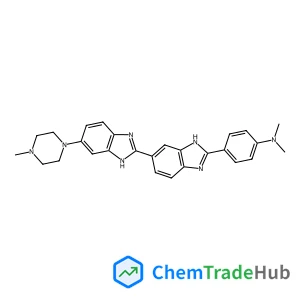
methanone structure](https://cnstatic.chemtradehub.com/structs/814/81449-01-6-786d.webp "[4-(Hydroxymethyl)phenyl](phenyl)methanone structure")
推荐供应商




免责声明
本页面提供的学术期刊信息仅供参考和研究使用。我们与任何期刊出版商均无关联,也不处理投稿事宜。如有投稿相关咨询,请直接联系相关期刊出版商。
如发现页面信息有误,请发送邮件至 support@chemtradehub.com 联系我们。我们将及时核实并处理您的问题。