


Composition-dependent band gaps and indirect–direct band gap transitions of group-IV semiconductor alloys
文献信息
发布日期
2015-07-15
DOI
10.1039/C5CP02558C
影响因子
3.676
作者
Zhen Zhu, Jiamin Xiao, Haibin Sun, Yue Hu, Ronggen Cao, Yin Wang, Li Zhao, Jun Zhuang
查看原文
摘要
We used the coherent potential approximation to investigate the band structures of group-IV semiconductor alloys, including SixGe1−x, Ge1−ySny and SixGe1−x−ySny. The calculations for SixGe1−x prove the reliability and accuracy of the method we used. For Ge1−ySny, the direct band gap optical bowing parameter we obtained is 2.37 eV and the indirect–direct band gap transition point is at y = 0.067, both consistent with the existing experimental data. For SixGe1−x−ySny, with the increase of the Si concentration, the compositional dependency of the band gap becomes complex. An indirect–direct band gap transition is found in SixGe1−x−ySny in the range of 0 < x ≤ 0.20, and the indirect–direct crossover line in the compositional space has the quadratic form of y = 3.4x2 + 1.11x + 0.07, not the linear form as suggested before. Furthermore, for the Ge lattice-matched alloy Ge1−x(Si0.79Sn0.21)X, our results show that those with 0.18 < X < 0.253 have band gaps larger than 0.8 eV at room temperature.
期刊推荐
Journal of Physics and Chemistry of Solids

Fibre Chemistry
Russian Chemical Reviews

Kinetics and Catalysis

Helvetica Chimica Acta

Proceedings of the National Academy of Sciences of the United States of America

Science Progress

Journal of Heterocyclic Chemistry
Pure and Applied Chemistry
Molecular Pharmacology
相关文献
Radical-driven processes within a peptidic sequence of type I collagen upon single-photon ionisation in the gas phase
Lucas Schwob, Mathieu Lalande, Dmitrii Egorov, Jimmy Rangama, Ronnie Hoekstra, Violaine Vizcaino, Thomas Schlathölter, Jean-Christophe Poully
2017-07-25
Paper
DOI: 10.1039/C7CP03376A
Piezoelectricity enhancement and bandstructure modification of atomic defect-mediated MoS2 monolayer
Sheng Yu, Quinton Rice, Tikaram Neupane, Bagher Tabibi, Qiliang Li, Felix Jaetae Seo
2017-08-15
Paper
DOI: 10.1039/C7CP04385F
A soluble star-shaped silsesquioxane-cored polymer—towards novel stabilization of pH-dependent high internal phase emulsions
Jun Peng, Kai Xu, Mingcai Chen
2017-08-09
Paper
DOI: 10.1039/C7CP03325G
Does increasing pressure always accelerate the condensed material decay initiated through bimolecular reactions? A case of the thermal decomposition of TKX-50 at high pressures
Qun Zeng, Xianggui Xue, Zengming Zhang, Fude Nie, Chaoyang Zhang
2017-08-04
Paper
DOI: 10.1039/C7CP04015F
Short bent-core molecules: X-ray, polarization, dielectricity, texture and electro-optics investigations
S. Torgova, S. P. Sreenilayam, O. Francescangeli, F. Vita, J. K. Vij, E. Pozhidaev, M. Minchenko, C. Ferrero
2017-07-26
Paper
DOI: 10.1039/C7CP03561F
Spectroscopic insight into molecular fluctuations and phase stability of nematic composites containing gold nanoparticles or carbon nanotubes
Mathias Bourg, Martin Urbanski
2017-08-14
Paper
DOI: 10.1039/C7CP02943H
Spin dynamics of light-induced charge separation in composites of semiconducting polymers and PC60BM revealed using Q-band pulse EPR
E. Suturina, E. Reijerse, W. Lubitz
2017-07-26
Paper
DOI: 10.1039/C7CP03680A
Interpenetration of CH3NH3PbI3 and TiO2 improves perovskite solar cells while TiO2 expansion leads to degradation
A. Kovalsky, Y. C. Wang, L. L. Wang, S. Goldberg, W. L. Kao, C. Y. Wu, H. Y. Chang, J. J. Shyue
2017-07-18
Paper
DOI: 10.1039/C7CP03116E
A complicated biocomputing system based on multi-responsive P(NIPAM-co-APBA) copolymer film electrodes and electrocatalysis of NADH
Jiying Liang, Xue Yu, Tiangang Yang, Menglu Li, Li Shen, Yue Jin, Hongyun Liu
2017-07-25
Paper
DOI: 10.1039/C7CP04030J
Nonlinear behavior and fluctuation-induced dynamics in the photosensitive Belousov–Zhabotinsky reaction
Ioannis G. Kevrekidis
2017-08-04
Paper
DOI: 10.1039/C7CP03260A
您可能还喜欢
化合物问答
(3-氨苯基)环丙基甲酮(CAS号:162174-75-6)的主要用途是什么?
(3-氨苯基)环丙基甲酮主要用于合成化学中间体,特别是在药物化学领域作为原料。它还可以用于有机合成反应中,作为催化剂或反应物。
162174-75-6(3-Aminophenyl)(cycl...
化合物问答
如何储存亚胺菌(CAS号:136470-79-6)?
亚胺菌应储存在干燥、阴凉处,避免直接暴露于光线下。建议使用密封容器储存,防止吸潮和污染。具体的储存条件应参考产品的安全数据表(MSDS)或药品说明书。
136470-79-6Abacavir EP Impurity...
化合物问答
2-氯-2,2-二氟乙酰胺(CAS号:354-28-9)应用于哪些行业?
2-氯-2,2-二氟乙酰胺在医药、聚合物、传感器、半导体等领域有广泛应用。在医药领域,它作为中间体用于合成其他药物;在聚合物领域,用作聚合引发剂或稳定剂;在传感...
354-28-92-Chloro-2,2-difluor...
化合物问答
处理4-甲基-3-硝基-1,1-联苯(CAS号:53812-68-3)时应注意哪些实验室安全事项?
在处理4-甲基-3-硝基-1,1-联苯时,应佩戴手套、护目镜和实验室外套等个人防护装备(PPE),确保在通风橱中操作以减少吸入风险。若发生泄露,应立即使用沙子或...
53812-68-34'-Methyl-3-nitro-1,...
化合物问答
(2S)-羟基(苯基)乙酸 (2R)-N-苄基-1-(4-甲氧基苯基)丙-2-胺盐(CAS号:188690-84-8)应用于哪些行业?
该化合物广泛应用于医药、聚合物和半导体行业。在医药领域,它是某些药物中间体的重要组成部分;在聚合物领域,可用作增塑剂;在半导体行业,可用于制造光刻胶。
188690-84-8Benzeneacetic acid, ...
化合物问答
在合成中是否有芬苯哒唑砜-D3标准品(CAS号:1228182-49-7)的替代品?
芬苯哒唑砜-D3标准品的替代品可能包括类似的苯并咪唑类化合物,如芬苯哒唑本身或其非同位素标记版本。这些替代品在结构上与芬苯哒唑砜-D3相似,但在具体应用中需进行...
1228182-49-7(~2~H_3_)Methyl [5-(...
化合物问答
2-氟-4-硝基苯乙酸(CAS号:315228-19-4)通常如何合成?
2-氟-4-硝基苯乙酸可以通过一系列化学反应合成,通常是从4-氟苯胺开始,首先进行硝化反应生成4-氟-2-硝基苯胺,然后进行乙酰化反应得到目标产物。具体的合成步...
315228-19-42-(2-fluoro-4-nitrop...
化合物问答
2-氟-4-甲氧基苯乙酸(CAS号:883531-28-0)通常如何合成?
2-氟-4-甲氧基苯乙酸通常通过将4-甲氧基苯乙酸与氟化试剂(如氟化氰)反应来合成。反应通常在无水条件下进行,使用催化剂如六氟磷酸锂或四氟硼酸锂以提高选择性和产...
883531-28-02-Fluoro-4-methoxyph...
化合物问答
什么是4SC 202;4SC202(CAS号:1186222-89-8)?
4SC 202;4SC202是一种化学化合物,其化学名称为(2E)-N-(2-氨基苯基)-3-(1-{[4-(1-甲基-1H-吡唑-4-基)苯基]磺酰基}-1H...
1186222-89-8(2E)-N-(2-Aminopheny...
132980-99-53,5-Difluorobenzamid...
来源期刊
Physical Chemistry Chemical Physics

CiteScore:
5.5
自引率:
10.3%
年发文量:
3036
Physical Chemistry Chemical Physics (PCCP) is an international journal co-owned by 19 physical chemistry and physics societies from around the world. This journal publishes original, cutting-edge research in physical chemistry, chemical physics and biophysical chemistry. To be suitable for publication in PCCP, articles must include significant innovation and/or insight into physical chemistry; this is the most important criterion that reviewers and Editors will judge against when evaluating submissions. The journal has a broad scope and welcomes contributions spanning experiment, theory, computation and data science. Topical coverage includes spectroscopy, dynamics, kinetics, statistical mechanics, thermodynamics, electrochemistry, catalysis, surface science, quantum mechanics, quantum computing and machine learning. Interdisciplinary research areas such as polymers and soft matter, materials, nanoscience, energy, surfaces/interfaces, and biophysical chemistry are welcomed if they demonstrate significant innovation and/or insight into physical chemistry. Joined experimental/theoretical studies are particularly appreciated when complementary and based on up-to-date approaches.
推荐化合物
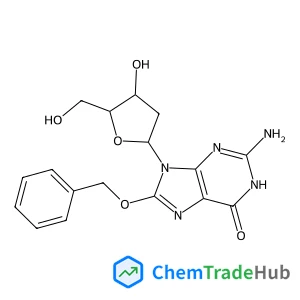
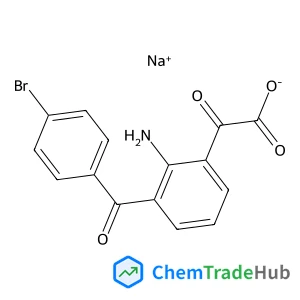
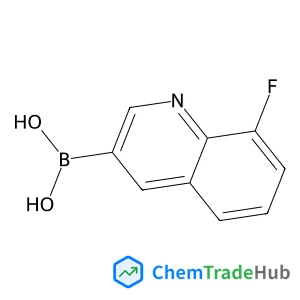
推荐供应商




免责声明
本页面提供的学术期刊信息仅供参考和研究使用。我们与任何期刊出版商均无关联,也不处理投稿事宜。如有投稿相关咨询,请直接联系相关期刊出版商。
如发现页面信息有误,请发送邮件至 support@chemtradehub.com 联系我们。我们将及时核实并处理您的问题。