









Thermodynamics of Fe3O4–Co3O4 and Fe3O4–Mn3O4 spinel solid solutions at the bulk and nanoscale
文献信息
发布日期
2015-07-22
DOI
10.1039/C5CP02972D
影响因子
3.676
作者
Sulata K. Sahu, Baiyu Huang, Kristina Lilova, Brian F. Woodfield, Alexandra Navrotsky
查看原文
摘要
High temperature oxide melt solution calorimetry has been performed to investigate the enthalpies of mixing (ΔmixH) of bulk and nanophase (1 − x)Fe3O4–xM3O4 (M = Co, Mn) spinel solid solutions. The entropies of mixing (ΔmixS) were calculated from the configurational entropies based on cation distributions, and the Gibbs free energies of mixing (ΔmixG) were obtained. The ΔmixH and ΔmixG for the (1 − x)Fe3O4–xCo3O4 system are negative over the complete solid solution range, for both macroscopic and nanoparticulate materials. In (1 − x)Fe3O4–xMn3O4, the formation enthalpies of cubic Fe3O4 (magnetite) and tetragonal Mn3O4 (hausmannite) are negative for Mn3O4 mole fractions less than 0.67 and slightly positive for higher manganese content. Relative to cubic Fe3O4 and cubic Mn3O4 (stable at high temperature), the enthalpies and Gibbs energies of mixing are negative over the entire composition range. A combination of measured mixing enthalpies and reported Gibbs energies in the literature provides experimental entropies of mixing. The experimental entropies of mixing are consistent with those calculated from cation distributions for x > 0.3 but are smaller than those predicted for x < 0.3. This discrepancy may be related to the calculations, having treated Fe2+ and Fe3+ as distinguishable species. The measured surface energies of the (1 − x)Fe3O4–xM3O4 solid solutions are in the range of 0.6–0.9 J m−2, similar to those of many other spinels. Because the surface energies are relatively constant, the thermodynamics of mixing at a given particle size throughout the solid solution can be considered independent of the particular particle size, thus confirming and extending the conclusions of a recent study on iron spinels.
相关文献
Supramolecular micelles with dual temperature and redox responses for multi-controlled drug release
Hui Zou, Wen Guo, Tianxiang Shen
2013-02-27
Communication
DOI: 10.1039/C3PY00211J
Atom transfer radical polymerization as a tool for making poly(N-acryloylglycinamide) with molar mass independent UCST-type transitions in water and electrolytes
Fangyao Liu, Jan Seuring, Seema Agarwal
2013-03-05
Paper
DOI: 10.1039/C3PY00222E
Synthesis and characterization of diazafluorene-based oligofluorenes and polyfluorene
Wei-Jie Li, Bin Liu, Yan Qian, Ling-Hai Xie, Jing Wang, Sheng-Biao Li, Wei Huang
2012-12-11
Paper
DOI: 10.1039/C2PY20971C
Synthesis, self-assembly and (absence of) protein interactions of poly(glycerol methacrylate)–silicone macro-amphiphiles
Ghislaine Robert-Nicoud, Robert Evans, Cong-Duan Vo, Christopher J. Cadman
2013-04-03
Paper
DOI: 10.1039/C3PY00273J
Catalytic Y-tailed amphiphilic homopolymers – aqueous nanoreactors for high activity, low loading SCS pincer catalysts
Joseph P. Patterson, Pepa Cotanda, Elizabeth G. Kelley, Adam O. Moughton, Annhelen Lu, Thomas H. Epps, III, Rachel K. O'Reilly
2013-01-28
Paper
DOI: 10.1039/C3PY21137A
One-pot controlled synthesis of double thermoresponsive N-vinylcaprolactam-based copolymers with tunable LCSTs
Anthony Kermagoret, Charles-André Fustin, Maxime Bourguignon, Christophe Detrembleur, Christine Jérôme, Antoine Debuigne
2013-02-18
Paper
DOI: 10.1039/C3PY00134B
A continuous-flow approach for the multi-gram scale synthesis of C2-alkyl- or β-amino functionalized 1,3-dicarbonyl derivatives and ondansetron drug using 1,3-dicarbonyls
Nirmala Mohanta, Krishna Nair, Dasharath Vishambar Sutar, Boopathy Gnanaprakasam
2020-06-19
Paper
DOI: 10.1039/D0RE00171F
Fluorescence turn-on detection of DNA based on the aggregation-induced emission of conjugated poly(pyridinium salt)s
Jingfen Sun, Yan Lu, Lei Wang, Dandan Cheng, Yujiao Sun, Xianshun Zeng
2013-05-09
Paper
DOI: 10.1039/C3PY00350G
Synthesis of 1,4-polybutadiene-g-poly(ethylene oxide) via the macromonomer approach by ROMP
Dao Le, Véronique Montembault, Sagrario Pascual, Floraine Collette, Valérie Héroguez, Laurent Fontaine
2013-01-23
Paper
DOI: 10.1039/C3PY21103G
A facile method to produce PBS-PEG/CNTs nanocomposites with controllable electro-induced shape memory effect
Cai-Li Huang, Man-Jie He, Meng Huo, Lan Du, Cong Zhan, Cheng-Jie Fan, Ke-Ke Yang, In-Joo Chin, Yu-Zhong Wang
2013-05-01
Paper
DOI: 10.1039/C3PY00461A
您可能还喜欢
化合物问答
如何处理含有3-氯苯甲酰肼(CAS号:1673-47-8)的废料?
处理含有3-氯苯甲酰肼(CAS号:1673-47-8)的废料时,应首先收集并分类,确保废液中不含有其他有害物质。然后,采用适当的化学方法进行处理,如生物降解或化...
1673-47-83-Chlorobenzohydrazi...
化合物问答
(2E)-N-(2-氨基-4-氟苯基)-3-[1-(3-苯基-2-丙烯-1-基)-1H-吡唑-4-基]-2-丙烯酰胺(CAS号:1396841-57-8)应用于哪些行业?
(2E)-N-(2-氨基-4-氟苯基)-3-[1-(3-苯基-2-丙烯-1-基)-1H-吡唑-4-基]-2-丙烯酰胺主要应用于医药行业,作为药物前体或中间体。此...
1396841-57-8(2E)-N-(2-Amino-4-fl...
化合物问答
什么是对-N,N-二甲氨基苯甲酸乙酯(CAS号:10287-53-3)?
对-N,N-二甲氨基苯甲酸乙酯是一种有机化合物,化学式为C10H14N2O2,分子量为202.23。其结构由苯甲酸乙酯基团与对位连接的N,N-二甲氨基取代基组成...
10287-53-3Ethyl 4-(dimethylami...
化合物问答
3,6-二溴-9-(4-甲基苯基)-9H-咔唑(CAS号:357437-74-2)的物理化学性质是什么?
3,6-二溴-9-(4-甲基苯基)-9H-咔唑是一种深红色固体,具有较高的结晶性。其分子量约为416.25 g/mol。该化合物易溶于有机溶剂如DMF、DMSO...
357437-74-23,6-Dibromo-9-(4-met...
化合物问答
在合成中是否有FMOC-(2R,4S)-PRO(4-F)-OH(CAS号:913820-87-8)的替代品?
在合成中,可以考虑使用类似结构的化合物作为替代品,例如FMOC-(2R,4R)-PRO(4-F)-OH。这些替代品在结构上类似,可以用于类似的化学反应中。不过,...
913820-87-8(2R,4S)-1-(((9H-Fluo...
化合物问答
2-苄基八氢环戊并[c]吡咯-4-胺(CAS号:186201-60-5)的主要用途是什么?
2-苄基八氢环戊并[c]吡咯-4-胺主要用于有机合成和药物化学研究领域,作为合成中间体或先导化合物。此外,由于其独特的化学结构,它也可能在某些特定的医药应用中发...
186201-60-52-Benzyloctahydrocyc...
化合物问答
奥氮平N乙酰基杂质(CAS号:935272-10-9)的市场或研究趋势如何?
奥氮平N乙酰基杂质的市场趋势主要集中在药物生产和研究领域。随着奥氮平及其类似药物在临床上的应用越来越广泛,对相关杂质的研究和控制也愈加重视。近年来,研究人员更关...
935272-10-9Olanzapine Impurity ...
化合物问答
处理Chloropropylate(CAS号:5836-10-2)时应注意哪些实验室安全事项?
在处理氯丙基酯(Chloropropylate)时,应注意以下安全事项:1. 佩戴适当的个人防护装备,包括防护眼镜、实验室外套和手套。2. 在通风橱中进行操作,...
5836-10-2Isopropyl bis(4-chlo...
化合物问答
在合成中是否有4-氢氯化氨基安替比林(CAS号:22198-72-7)的替代品?
在合成中,可以考虑使用4-氨基安替比林作为原料,通过不同的合成路线制备4-氢氯化氨基安替比林。此外,也可以探索其他含有氨基和氯化基团的化合物作为潜在替代品。
22198-72-74-Amino-1,5-dimethyl...
化合物问答
如何处理含有3-脱氧-D-葡糖酮醛(CAS号:4084-27-9)的废料?
处理含有3-脱氧-D-葡糖酮醛的废料时,首先应确保废液收集于合适的容器中,并密封好。随后,可以考虑采用焚烧或交由专业废弃物处理公司进行处理的方法。在处理过程中,...
4084-27-93-Deoxyglucosone
来源期刊
Physical Chemistry Chemical Physics

CiteScore:
5.5
自引率:
10.3%
年发文量:
3036
Physical Chemistry Chemical Physics (PCCP) is an international journal co-owned by 19 physical chemistry and physics societies from around the world. This journal publishes original, cutting-edge research in physical chemistry, chemical physics and biophysical chemistry. To be suitable for publication in PCCP, articles must include significant innovation and/or insight into physical chemistry; this is the most important criterion that reviewers and Editors will judge against when evaluating submissions. The journal has a broad scope and welcomes contributions spanning experiment, theory, computation and data science. Topical coverage includes spectroscopy, dynamics, kinetics, statistical mechanics, thermodynamics, electrochemistry, catalysis, surface science, quantum mechanics, quantum computing and machine learning. Interdisciplinary research areas such as polymers and soft matter, materials, nanoscience, energy, surfaces/interfaces, and biophysical chemistry are welcomed if they demonstrate significant innovation and/or insight into physical chemistry. Joined experimental/theoretical studies are particularly appreciated when complementary and based on up-to-date approaches.
推荐化合物
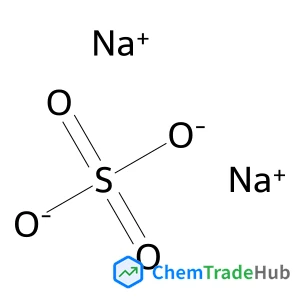
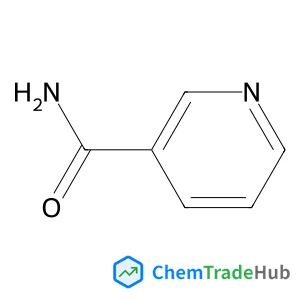
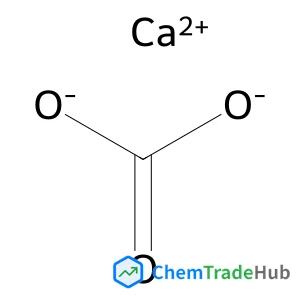
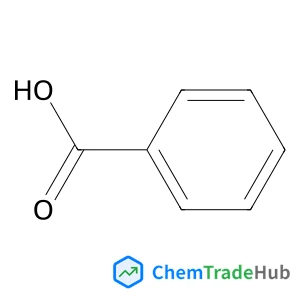
推荐供应商




免责声明
本页面提供的学术期刊信息仅供参考和研究使用。我们与任何期刊出版商均无关联,也不处理投稿事宜。如有投稿相关咨询,请直接联系相关期刊出版商。
如发现页面信息有误,请发送邮件至 support@chemtradehub.com 联系我们。我们将及时核实并处理您的问题。