


![3-[(3R,4R)-3-[(6-aminopyrimidin-4-yl)-methyl-amino]-4-methyl-1-piperidyl]-3-oxo-propanenitrile structure](https://cnstatic.chemtradehub.com/structs/164/1640971-60-3-83a4.webp "3-[(3R,4R)-3-[(6-aminopyrimidin-4-yl)-methyl-amino]-4-methyl-1-piperidyl]-3-oxo-propanenitrile structure")
Spectroscopic evidence of 3-hydroxyflavone sorption within MFI type zeolites: ESIPT and metal complexation
文献信息
发布日期
2015-09-10
DOI
10.1039/C5CP04147C
影响因子
3.676
作者
A. Moissette, M. Hureau, A. Le Person, J. P. Cornard, I. De Waele, I. Batonneau-Gener
查看原文
摘要
Due to its chemical and photochemical properties and potential applications in numerous domains as a molecular probe, 3-hydroxyflavone (3HF) is a molecule of high interest. In particular, the processes of intramolecular proton transfer in the excited state and metallic complexation are known to be dependent on the chemical environment. In this context, the particular properties of zeolites make these microporous materials an environment adapted to study the reactivity of isolated molecules adsorbed in their porous void space. Thus, this report investigates the incorporation without any solvent of 3HF into the internal volume of various channel-type MFI zeolites. Using complementary techniques (diffuse reflectance UV-vis absorption, Raman scattering, FTIR, fluorescence emission and molecular modelling), very different spectral behaviours are observed in totally dealuminated silicalite-1 and in Al rich MZSM-5 (M = H+, Na+, Zn2+). In silicalite-1, the non-polar and non-protic internal micro-environment does not induce any valuable interaction between 3HF and the channel walls. Therefore, the molecule shows easy tautomer formation upon excitation. Within HZSM-5, 3HF is adsorbed in close proximity of the acid proton of the zeolite which inhibits the intramolecular proton transfer and then, only the normal form is observed at the excited state. For NaZSM-5, the spectral data show an intermediary behaviour due to the aprotic but polar environment, in agreement with 3HF sorption in close proximity of the Na+ extra framework cation. After mixing 3HF and ZnZSM-5, the spectral features clearly indicate metallic complexation of the guest molecule. The zeolite dependent reactivity reported here demonstrates the adsorption of the guest within the internal volume because the charge balancing cations which clearly control the reaction are principally located in the zeolite channels. The 3HF incorporation into the internal volume is proved by the decrease of the microporous volume observed by nitrogen adsorption–desorption isotherm measurements. The experimental data are confirmed by Monte Carlo molecular modelling which also predicts 3HF sorption in the zeolite channels in the proximity of charge compensating cations. Consequently, as the molecule dimensions are assumed to be slightly larger than the channel size, the flexibility of the molecule and the lattice deformation have to be considered to allow 3HF penetration into the zeolite void space.
期刊推荐
Planta Medica

Organic Preparations and Procedures International

Fibre Chemistry

European Journal of Wood and Wood Products

Russian Chemical Reviews
Journal of Physics and Chemistry of Solids

Israel Journal of Chemistry

Science Progress

Journal of Organometallic Chemistry

Proceedings of the National Academy of Sciences of the United States of America
相关文献
Enhancing thermoelectrochemical properties by tethering ferrocene to the anion or cation of ionic liquids: altered thermodynamics and solubility
Jeffrey J. Black, Maximo C. Elias, Bruno Gélinas, Dominic Rochefort
2017-08-15
Paper
DOI: 10.1039/C7CP04322H
Interpretation of the à ← transition of hydrated protons in aqueous solutions observed in the far-UV region with quantum chemical calculations
Takeyoshi Goto, Krzysztof B. Beć, Yukihiro Ozaki
2017-07-20
Paper
DOI: 10.1039/C7CP01766A
Nonlinear imaging microscopy for assessing structural and photochemical modifications upon laser removal of dammar varnish on photosensitive substrates
M. Oujja, S. Psilodimitrakopoulos, E. Carrasco, M. Sanz, A. Philippidis, A. Selimis, P. Pouli, G. Filippidis, M. Castillejo
2017-08-08
Paper
DOI: 10.1039/C7CP02509B
Role of intrinsic hydrogen bonds in the assembly of perylene imide derivatives in solution and at the liquid–solid interface
Zongxia Guo, Kun Wang, Ping Yu, Shengyue Zhang, Kai Sun, Zhibo Li
2017-08-01
Paper
DOI: 10.1039/C7CP04928E
Analyzing the dependence of oxygen incorporation current density on overpotential and oxygen partial pressure in mixed conducting oxide electrodes
Zixuan Guan, Di Chen, William C. Chueh
2017-08-08
Paper
DOI: 10.1039/C7CP03654J
Critical adsorption of periodic and random polyampholytes onto charged surfaces
Daniel L. Z. Caetano, Sidney J. de Carvalho, Ralf Metzler, Andrey G. Cherstvy
2017-08-08
Paper
DOI: 10.1039/C7CP04040G
Role of carboxylic acid groups in the reduction of nitric oxide by carbon at low temperature, as exemplified by graphene oxide
Q. Gao, X. M. Li, J. Z. Zhou, X. X. Ruan, Q. Liu, G. R. Qian
2017-08-02
Paper
DOI: 10.1039/C7CP01541K
Ab initio study of Li, Mg and Al insertion into rutile VO2: fast diffusion and enhanced voltages for multivalent batteries
Vadym V. Kulish, Daniel Koch, Sergei Manzhos
2017-07-31
Paper
DOI: 10.1039/C7CP04360K
Interface nanoparticle control of a nanometer water pump
Jiaye Su, Yunzhen Zhao, Chang Fang, Syed Bilal Ahmed, Yue Shi
2017-08-04
Paper
DOI: 10.1039/C7CP03351F
您可能还喜欢
化合物问答
(3-氨苯基)环丙基甲酮(CAS号:162174-75-6)的主要用途是什么?
(3-氨苯基)环丙基甲酮主要用于合成化学中间体,特别是在药物化学领域作为原料。它还可以用于有机合成反应中,作为催化剂或反应物。
162174-75-6(3-Aminophenyl)(cycl...
化合物问答
如何储存亚胺菌(CAS号:136470-79-6)?
亚胺菌应储存在干燥、阴凉处,避免直接暴露于光线下。建议使用密封容器储存,防止吸潮和污染。具体的储存条件应参考产品的安全数据表(MSDS)或药品说明书。
136470-79-6Abacavir EP Impurity...
化合物问答
2-氯-2,2-二氟乙酰胺(CAS号:354-28-9)应用于哪些行业?
2-氯-2,2-二氟乙酰胺在医药、聚合物、传感器、半导体等领域有广泛应用。在医药领域,它作为中间体用于合成其他药物;在聚合物领域,用作聚合引发剂或稳定剂;在传感...
354-28-92-Chloro-2,2-difluor...
化合物问答
处理4-甲基-3-硝基-1,1-联苯(CAS号:53812-68-3)时应注意哪些实验室安全事项?
在处理4-甲基-3-硝基-1,1-联苯时,应佩戴手套、护目镜和实验室外套等个人防护装备(PPE),确保在通风橱中操作以减少吸入风险。若发生泄露,应立即使用沙子或...
53812-68-34'-Methyl-3-nitro-1,...
化合物问答
(2S)-羟基(苯基)乙酸 (2R)-N-苄基-1-(4-甲氧基苯基)丙-2-胺盐(CAS号:188690-84-8)应用于哪些行业?
该化合物广泛应用于医药、聚合物和半导体行业。在医药领域,它是某些药物中间体的重要组成部分;在聚合物领域,可用作增塑剂;在半导体行业,可用于制造光刻胶。
188690-84-8Benzeneacetic acid, ...
化合物问答
在合成中是否有芬苯哒唑砜-D3标准品(CAS号:1228182-49-7)的替代品?
芬苯哒唑砜-D3标准品的替代品可能包括类似的苯并咪唑类化合物,如芬苯哒唑本身或其非同位素标记版本。这些替代品在结构上与芬苯哒唑砜-D3相似,但在具体应用中需进行...
1228182-49-7(~2~H_3_)Methyl [5-(...
化合物问答
2-氟-4-硝基苯乙酸(CAS号:315228-19-4)通常如何合成?
2-氟-4-硝基苯乙酸可以通过一系列化学反应合成,通常是从4-氟苯胺开始,首先进行硝化反应生成4-氟-2-硝基苯胺,然后进行乙酰化反应得到目标产物。具体的合成步...
315228-19-42-(2-fluoro-4-nitrop...
化合物问答
2-氟-4-甲氧基苯乙酸(CAS号:883531-28-0)通常如何合成?
2-氟-4-甲氧基苯乙酸通常通过将4-甲氧基苯乙酸与氟化试剂(如氟化氰)反应来合成。反应通常在无水条件下进行,使用催化剂如六氟磷酸锂或四氟硼酸锂以提高选择性和产...
883531-28-02-Fluoro-4-methoxyph...
化合物问答
什么是4SC 202;4SC202(CAS号:1186222-89-8)?
4SC 202;4SC202是一种化学化合物,其化学名称为(2E)-N-(2-氨基苯基)-3-(1-{[4-(1-甲基-1H-吡唑-4-基)苯基]磺酰基}-1H...
1186222-89-8(2E)-N-(2-Aminopheny...
132980-99-53,5-Difluorobenzamid...
来源期刊
Physical Chemistry Chemical Physics

CiteScore:
5.5
自引率:
10.3%
年发文量:
3036
Physical Chemistry Chemical Physics (PCCP) is an international journal co-owned by 19 physical chemistry and physics societies from around the world. This journal publishes original, cutting-edge research in physical chemistry, chemical physics and biophysical chemistry. To be suitable for publication in PCCP, articles must include significant innovation and/or insight into physical chemistry; this is the most important criterion that reviewers and Editors will judge against when evaluating submissions. The journal has a broad scope and welcomes contributions spanning experiment, theory, computation and data science. Topical coverage includes spectroscopy, dynamics, kinetics, statistical mechanics, thermodynamics, electrochemistry, catalysis, surface science, quantum mechanics, quantum computing and machine learning. Interdisciplinary research areas such as polymers and soft matter, materials, nanoscience, energy, surfaces/interfaces, and biophysical chemistry are welcomed if they demonstrate significant innovation and/or insight into physical chemistry. Joined experimental/theoretical studies are particularly appreciated when complementary and based on up-to-date approaches.
推荐化合物
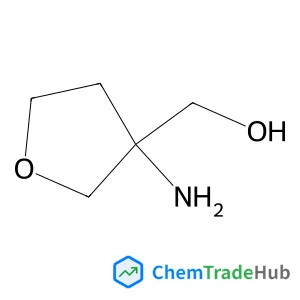
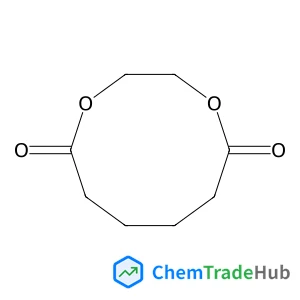
推荐供应商





免责声明
本页面提供的学术期刊信息仅供参考和研究使用。我们与任何期刊出版商均无关联,也不处理投稿事宜。如有投稿相关咨询,请直接联系相关期刊出版商。
如发现页面信息有误,请发送邮件至 support@chemtradehub.com 联系我们。我们将及时核实并处理您的问题。