






Why solid oxide cells can be reversibly operated in solid oxide electrolysis cell and fuel cell modes?
文献信息
发布日期
2015-10-28
DOI
10.1039/C5CP05065K
影响因子
3.676
作者
Kongfa Chen, Na Ai, San Ping Jiang
查看原文
摘要
High temperature solid oxide cells (SOCs) are attractive for storage and regeneration of renewable energy by operating reversibly in solid oxide electrolysis cell (SOEC) and solid oxide fuel cell (SOFC) modes. However, the stability of SOCs, particularly the deterioration of the performance of oxygen electrodes in the SOEC operation mode, is the most critical issue in the development of high performance and durable SOCs. In this study, we investigate in detail the electrochemical activity and stability of La0.8Sr0.2MnO3 (LSM) oxygen electrodes in cyclic SOEC and SOFC modes. The results show that the deterioration of LSM oxygen electrodes caused by anodic polarization can be partially or completely recovered by subsequent cathodic polarization. Using in situ assembled LSM electrodes without pre-sintering, we demonstrate that the deteriorated LSM/YSZ interface can be repaired and regenerated by operating the cells under cathodic polarization conditions. This study for the first time establishes the foundation for the development of truly reversible and stable SOCs for hydrogen fuel production and electricity generation in cyclic SOEC and SOFC operation modes.
相关文献
Structure and dynamics of the [Zn(NH3)(H2O)5]2+ complex in aqueous solution obtained by an ab initio QM/MM molecular dynamics study
M. Qaiser Fatmi, Thomas S. Hofer, Bernhard R. Randolf, Bernd M. Rode
2006-03-13
Paper
DOI: 10.1039/B518223A
Crack propagation and defect formation at polymer interfaces investigated by ultra-small angle X-ray scattering
P. Müller-Buschbaum, T. Ittner, B. Mahltig, S. Cunis, G. V. Krosigk, R. Gehrke, C. Creton, M. Stamm
2003-02-06
Paper
DOI: 10.1039/B210684A
The HOOH–HOO complex. A matrix isolation study
Anders Engdahl, Bengt Nelander
2004-01-12
Paper
DOI: 10.1039/B309964D
Extracting deposition parameters for cobalt–molybdenum alloy from potentiostatic current transients
E. Gómez, Z. G. Kipervaser, E. Pellicer, E. Vallés
2004-02-10
Paper
DOI: 10.1039/B315057G
Structure and dynamics of the aluminum chlorohydrate polymer Al13O4(OH)24(H2O)12Cl7
Vojislava Pophristic, Venkatachalapathy S. K. Balagurusamy, Michael L. Klein
2004-02-03
Paper
DOI: 10.1039/B310882A
Modeling fluid diffusion using the lattice density functional theory approach: counterdiffusion in an external field
Daniel Matuszak, Gregory L. Aranovich, Marc D. Donohue
2006-02-23
Paper
DOI: 10.1039/B516036G
The nature of water on surfaces of laboratory systems and implications for heterogeneous chemistry in the troposphere
Ann Louise Sumner, Erik J. Menke, Yael Dubowski, John T. Newberg, Reginald M. Penner, John C. Hemminger, Lisa M. Wingen, Theo Brauers, Barbara J. Finlayson-Pitts
2004-01-12
Paper
DOI: 10.1039/B308125G
Chemical capacitance of nanoporous-nanocrystalline TiO2 in a room temperature ionic liquid
Francisco Fabregat-Santiago, Hyacinthe Randriamahazaka, Arie Zaban, Jorge Garcia-Cañadas, G. Garcia-Belmonte, Juan Bisquert
2006-03-28
Paper
DOI: 10.1039/B600452K
Urethane cross-linked poly(oxyethylene)/siliceous nanohybrids doped with Eu3+ ions Part 1. Coordinating ability of the host matrix
Verónica de Zea Bermudez, Denis Ostrovskii, M. Cristina Gonçalves, Luís D. Carlos, Rute A. Sá Ferreira, Lucinda Reis, Per Jacobsson
2004-01-12
Paper
DOI: 10.1039/B308201F
您可能还喜欢
化合物问答
(3-氨苯基)环丙基甲酮(CAS号:162174-75-6)的主要用途是什么?
(3-氨苯基)环丙基甲酮主要用于合成化学中间体,特别是在药物化学领域作为原料。它还可以用于有机合成反应中,作为催化剂或反应物。
162174-75-6(3-Aminophenyl)(cycl...
化合物问答
如何储存亚胺菌(CAS号:136470-79-6)?
亚胺菌应储存在干燥、阴凉处,避免直接暴露于光线下。建议使用密封容器储存,防止吸潮和污染。具体的储存条件应参考产品的安全数据表(MSDS)或药品说明书。
136470-79-6Abacavir EP Impurity...
化合物问答
2-氯-2,2-二氟乙酰胺(CAS号:354-28-9)应用于哪些行业?
2-氯-2,2-二氟乙酰胺在医药、聚合物、传感器、半导体等领域有广泛应用。在医药领域,它作为中间体用于合成其他药物;在聚合物领域,用作聚合引发剂或稳定剂;在传感...
354-28-92-Chloro-2,2-difluor...
化合物问答
处理4-甲基-3-硝基-1,1-联苯(CAS号:53812-68-3)时应注意哪些实验室安全事项?
在处理4-甲基-3-硝基-1,1-联苯时,应佩戴手套、护目镜和实验室外套等个人防护装备(PPE),确保在通风橱中操作以减少吸入风险。若发生泄露,应立即使用沙子或...
53812-68-34'-Methyl-3-nitro-1,...
化合物问答
(2S)-羟基(苯基)乙酸 (2R)-N-苄基-1-(4-甲氧基苯基)丙-2-胺盐(CAS号:188690-84-8)应用于哪些行业?
该化合物广泛应用于医药、聚合物和半导体行业。在医药领域,它是某些药物中间体的重要组成部分;在聚合物领域,可用作增塑剂;在半导体行业,可用于制造光刻胶。
188690-84-8Benzeneacetic acid, ...
化合物问答
在合成中是否有芬苯哒唑砜-D3标准品(CAS号:1228182-49-7)的替代品?
芬苯哒唑砜-D3标准品的替代品可能包括类似的苯并咪唑类化合物,如芬苯哒唑本身或其非同位素标记版本。这些替代品在结构上与芬苯哒唑砜-D3相似,但在具体应用中需进行...
1228182-49-7(~2~H_3_)Methyl [5-(...
化合物问答
2-氟-4-硝基苯乙酸(CAS号:315228-19-4)通常如何合成?
2-氟-4-硝基苯乙酸可以通过一系列化学反应合成,通常是从4-氟苯胺开始,首先进行硝化反应生成4-氟-2-硝基苯胺,然后进行乙酰化反应得到目标产物。具体的合成步...
315228-19-42-(2-fluoro-4-nitrop...
化合物问答
2-氟-4-甲氧基苯乙酸(CAS号:883531-28-0)通常如何合成?
2-氟-4-甲氧基苯乙酸通常通过将4-甲氧基苯乙酸与氟化试剂(如氟化氰)反应来合成。反应通常在无水条件下进行,使用催化剂如六氟磷酸锂或四氟硼酸锂以提高选择性和产...
883531-28-02-Fluoro-4-methoxyph...
化合物问答
什么是4SC 202;4SC202(CAS号:1186222-89-8)?
4SC 202;4SC202是一种化学化合物,其化学名称为(2E)-N-(2-氨基苯基)-3-(1-{[4-(1-甲基-1H-吡唑-4-基)苯基]磺酰基}-1H...
1186222-89-8(2E)-N-(2-Aminopheny...
132980-99-53,5-Difluorobenzamid...
来源期刊
Physical Chemistry Chemical Physics

CiteScore:
5.5
自引率:
10.3%
年发文量:
3036
Physical Chemistry Chemical Physics (PCCP) is an international journal co-owned by 19 physical chemistry and physics societies from around the world. This journal publishes original, cutting-edge research in physical chemistry, chemical physics and biophysical chemistry. To be suitable for publication in PCCP, articles must include significant innovation and/or insight into physical chemistry; this is the most important criterion that reviewers and Editors will judge against when evaluating submissions. The journal has a broad scope and welcomes contributions spanning experiment, theory, computation and data science. Topical coverage includes spectroscopy, dynamics, kinetics, statistical mechanics, thermodynamics, electrochemistry, catalysis, surface science, quantum mechanics, quantum computing and machine learning. Interdisciplinary research areas such as polymers and soft matter, materials, nanoscience, energy, surfaces/interfaces, and biophysical chemistry are welcomed if they demonstrate significant innovation and/or insight into physical chemistry. Joined experimental/theoretical studies are particularly appreciated when complementary and based on up-to-date approaches.
推荐化合物
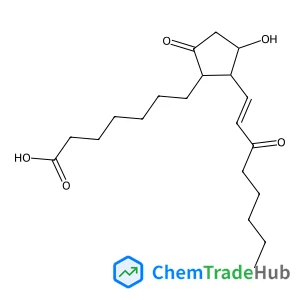
![4-[(2,4-Dihydroxyphenyl)diazenyl]-5-hydroxy-2,7-naphthalenedisulfonic acid structure](https://cnstatic.chemtradehub.com/structs/362/3627-01-8-79ac.webp "4-[(2,4-Dihydroxyphenyl)diazenyl]-5-hydroxy-2,7-naphthalenedisulfonic acid structure")
4-[(2,4-Dihydroxyphenyl)diazenyl]-5-hydroxy-2,7-naphthalenedisulfonic acid
CAS号:
3627-01-8
分子式:
C16H12N2O9S2

推荐供应商




免责声明
本页面提供的学术期刊信息仅供参考和研究使用。我们与任何期刊出版商均无关联,也不处理投稿事宜。如有投稿相关咨询,请直接联系相关期刊出版商。
如发现页面信息有误,请发送邮件至 support@chemtradehub.com 联系我们。我们将及时核实并处理您的问题。