






Electrochemo-dynamical characterization of polypyrrole actuators coated on gold electrodes
文献信息
发布日期
2015-11-18
DOI
10.1039/C5CP05841D
影响因子
3.676
作者
T. F. Otero, E. W. H. Jager
查看原文
摘要
Polypyrrole coated gold wires were subjected to consecutive square current waves in LiClO4 aqueous solutions using the same constant anodic and cathodic charge. Parallel in situ diameter variations were followed using a laser scan micrometer. The procedure was repeated by changing one experimental variable every time: applied current, electrolyte concentration or working temperature to perform electrochemodynamical characterization of the system. On average, the diameter follows a linear variation of the consumed charge, as expected for any faradaic system, although a high dispersion was attained in the data. Such deviations were attributed to the presence of irreversible hydrogen evolution at the gold/polypyrrole interface at cathodic potentials more than 0.0 V vs. Ag/AgCl, detected and quantified from separated coulovoltammetric responses. Despite this parallel hydrogen evolution the consumed energy during reactions is a robust sensor of the working conditions. In conclusion a gold support, the metal most used for technological applications of conducting polymers, should be avoided when a device is driven by current flow in the presence of aqueous solutions, water contamination or moisture: a fraction of the charge will be consumed by hydrogen generation with possible degradation of the device.
相关文献
The solubilisation behaviour of some dichloroalkanes in aqueous solutions of PEO–PPO–PEO triblock copolymers: a dynamic light scattering, fluorescence spectroscopy, and SANS study
M. Gradzielski
2006-04-11
Paper
DOI: 10.1039/B516242B
Hydration pressure of a homologous series of nonionic alkyl hydroxyoligo(ethylene oxide) surfactants
Helge Pfeiffer, Hans Binder, Gotthard Klose, Karel Heremans
2003-12-19
Paper
DOI: 10.1039/B313445H
High-resolution IRcavity ring-down spectroscopy of jet-cooled free radicals and other species
Shenghai Wu, Patrick Dupré, Terry A. Miller
2006-03-02
Paper
DOI: 10.1039/B518279D
Shape resonances in molecular clusters: the 2t2g shape resonances in S 2p-excited sulfur hexafluoride clusters
A. A. Pavlychev, X. O. Brykalova, R. Flesch, E. Rühl
2006-03-24
Paper
DOI: 10.1039/B517967J
Effect of H2reduction on the catalytic properties of MoO3 with noble metals for the conversions of pentane and propan-2-ol
Takeshi Matsuda, Shuhei Uozumi, Nobuo Takahashi
2004-01-12
Paper
DOI: 10.1039/B309870M
Dielectric investigation of the temperature dependence of the dynamics of a hydrated protein
F. Bruni, S. E. Pagnotta
2004-02-18
Paper
DOI: 10.1039/B314046F
Structure and dynamics of the [Zn(NH3)(H2O)5]2+ complex in aqueous solution obtained by an ab initio QM/MM molecular dynamics study
M. Qaiser Fatmi, Thomas S. Hofer, Bernhard R. Randolf, Bernd M. Rode
2006-03-13
Paper
DOI: 10.1039/B518223A
Theoretical modeling of the valence UV spectra of 1,2,3-triazine and uracil in solution
Andrea Amadei, Nico Sanna, Andrea Grandi, Giovanni Chillemi, Alfredo Di Nola, Marco D’Abramo, Massimiliano Aschi
2006-02-24
Paper
DOI: 10.1039/B515648C
The structure and electric dipole moment of camphor determined by rotational spectroscopy
Z. Kisiel, O. Desyatnyk, E. Białkowska-Jaworska, L. Pszczółkowski
2003-01-29
Paper
DOI: 10.1039/B212029A
Comment on “A deuteron NMR study of the tetrahydrofuran clathrate hydrate. Part II: Coupling of rotational and translational dynamics of water” by T. M. Kirschgen, M. D. Zeidler, B. Geil and F. Fujara, Phys. Chem. Chem. Phys., 2003, 5, 5247
Marta Bach-Vergés, Simon J. Kitchin, Kenneth D. M. Harris, Minjas Zugic, Carolyn A. Koh
2004-02-02
Comment
DOI: 10.1039/B307944A
您可能还喜欢
化合物问答
(3-氨苯基)环丙基甲酮(CAS号:162174-75-6)的主要用途是什么?
(3-氨苯基)环丙基甲酮主要用于合成化学中间体,特别是在药物化学领域作为原料。它还可以用于有机合成反应中,作为催化剂或反应物。
162174-75-6(3-Aminophenyl)(cycl...
化合物问答
如何储存亚胺菌(CAS号:136470-79-6)?
亚胺菌应储存在干燥、阴凉处,避免直接暴露于光线下。建议使用密封容器储存,防止吸潮和污染。具体的储存条件应参考产品的安全数据表(MSDS)或药品说明书。
136470-79-6Abacavir EP Impurity...
化合物问答
2-氯-2,2-二氟乙酰胺(CAS号:354-28-9)应用于哪些行业?
2-氯-2,2-二氟乙酰胺在医药、聚合物、传感器、半导体等领域有广泛应用。在医药领域,它作为中间体用于合成其他药物;在聚合物领域,用作聚合引发剂或稳定剂;在传感...
354-28-92-Chloro-2,2-difluor...
化合物问答
处理4-甲基-3-硝基-1,1-联苯(CAS号:53812-68-3)时应注意哪些实验室安全事项?
在处理4-甲基-3-硝基-1,1-联苯时,应佩戴手套、护目镜和实验室外套等个人防护装备(PPE),确保在通风橱中操作以减少吸入风险。若发生泄露,应立即使用沙子或...
53812-68-34'-Methyl-3-nitro-1,...
化合物问答
(2S)-羟基(苯基)乙酸 (2R)-N-苄基-1-(4-甲氧基苯基)丙-2-胺盐(CAS号:188690-84-8)应用于哪些行业?
该化合物广泛应用于医药、聚合物和半导体行业。在医药领域,它是某些药物中间体的重要组成部分;在聚合物领域,可用作增塑剂;在半导体行业,可用于制造光刻胶。
188690-84-8Benzeneacetic acid, ...
化合物问答
在合成中是否有芬苯哒唑砜-D3标准品(CAS号:1228182-49-7)的替代品?
芬苯哒唑砜-D3标准品的替代品可能包括类似的苯并咪唑类化合物,如芬苯哒唑本身或其非同位素标记版本。这些替代品在结构上与芬苯哒唑砜-D3相似,但在具体应用中需进行...
1228182-49-7(~2~H_3_)Methyl [5-(...
化合物问答
2-氟-4-硝基苯乙酸(CAS号:315228-19-4)通常如何合成?
2-氟-4-硝基苯乙酸可以通过一系列化学反应合成,通常是从4-氟苯胺开始,首先进行硝化反应生成4-氟-2-硝基苯胺,然后进行乙酰化反应得到目标产物。具体的合成步...
315228-19-42-(2-fluoro-4-nitrop...
化合物问答
2-氟-4-甲氧基苯乙酸(CAS号:883531-28-0)通常如何合成?
2-氟-4-甲氧基苯乙酸通常通过将4-甲氧基苯乙酸与氟化试剂(如氟化氰)反应来合成。反应通常在无水条件下进行,使用催化剂如六氟磷酸锂或四氟硼酸锂以提高选择性和产...
883531-28-02-Fluoro-4-methoxyph...
化合物问答
什么是4SC 202;4SC202(CAS号:1186222-89-8)?
4SC 202;4SC202是一种化学化合物,其化学名称为(2E)-N-(2-氨基苯基)-3-(1-{[4-(1-甲基-1H-吡唑-4-基)苯基]磺酰基}-1H...
1186222-89-8(2E)-N-(2-Aminopheny...
132980-99-53,5-Difluorobenzamid...
来源期刊
Physical Chemistry Chemical Physics

CiteScore:
5.5
自引率:
10.3%
年发文量:
3036
Physical Chemistry Chemical Physics (PCCP) is an international journal co-owned by 19 physical chemistry and physics societies from around the world. This journal publishes original, cutting-edge research in physical chemistry, chemical physics and biophysical chemistry. To be suitable for publication in PCCP, articles must include significant innovation and/or insight into physical chemistry; this is the most important criterion that reviewers and Editors will judge against when evaluating submissions. The journal has a broad scope and welcomes contributions spanning experiment, theory, computation and data science. Topical coverage includes spectroscopy, dynamics, kinetics, statistical mechanics, thermodynamics, electrochemistry, catalysis, surface science, quantum mechanics, quantum computing and machine learning. Interdisciplinary research areas such as polymers and soft matter, materials, nanoscience, energy, surfaces/interfaces, and biophysical chemistry are welcomed if they demonstrate significant innovation and/or insight into physical chemistry. Joined experimental/theoretical studies are particularly appreciated when complementary and based on up-to-date approaches.
推荐化合物
![2-Methyl-2-propanyl [(2S)-1-hydroxy-3-(4-hydroxyphenyl)-2-propanyl]carbamate structure](https://cnstatic.chemtradehub.com/structs/833/83345-46-4-eec2.webp "2-Methyl-2-propanyl [(2S)-1-hydroxy-3-(4-hydroxyphenyl)-2-propanyl]carbamate structure")
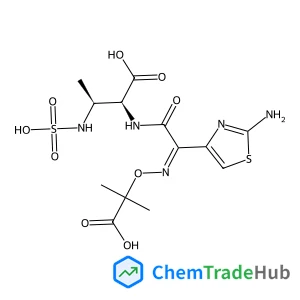
![2-[({[(2-Methyl-2-propanyl)oxy]carbonyl}amino)methyl]isonicotinic acid structure](https://cnstatic.chemtradehub.com/structs/473/473924-63-9-973b.webp "2-[({[(2-Methyl-2-propanyl)oxy]carbonyl}amino)methyl]isonicotinic acid structure")
2-[({[(2-Methyl-2-propanyl)oxy]carbonyl}amino)methyl]isonicotinic acid
CAS号:
473924-63-9
分子式:
C12H16N2O4
推荐供应商



免责声明
本页面提供的学术期刊信息仅供参考和研究使用。我们与任何期刊出版商均无关联,也不处理投稿事宜。如有投稿相关咨询,请直接联系相关期刊出版商。
如发现页面信息有误,请发送邮件至 support@chemtradehub.com 联系我们。我们将及时核实并处理您的问题。