


A computationally efficient double hybrid density functional based on the random phase approximation
文献信息
发布日期
2015-12-03
DOI
10.1039/C5CP06600J
影响因子
3.676
作者
Stefan Grimme, Marc Steinmetz
查看原文
摘要
We present a revised form of a double hybrid density functional (DHDF) dubbed PWRB95. It contains semi-local Perdew–Wang exchange and Becke95 correlation with a fixed amount of 50% non-local Fock exchange. New features are that the robust random phase approximation (RPA) is used to calculate the non-local correlation part instead of a second-order perturbative treatment as in standard DHDF, and the non-self-consistent evaluation of the Fock exchange with KS-orbitals at the GGA level which leads to a significant reduction of the computational effort. To account for London dispersion effects we include the non-local VV10 dispersion functional. Only three empirical scaling parameters were adjusted. The PWRB95 results for extensive standard thermochemical benchmarks (GMTKN30 data base) are compared to those of well-known functionals from the classes of (meta-)GGAs, (meta-)hybrid functionals, and DHDFs, as well as to standard (direct) RPA. The new method is furthermore tested on prototype bond activations with (Ni/Pd)-based transition metal catalysts, and two difficult cases for DHDF, namely the isomerization reaction of the [Cu2(en)2O2]2+ complex and the singlet–triplet energy difference in highly unsaturated cyclacenes. The results show that PWRB95 is almost as accurate as standard DHDF for main-group thermochemistry but has a similar or better performance for non-covalent interactions, more difficult transition metal containing molecules and other electronically problematic cases. Because of its relatively weak basis set dependence, PWRB95 can be applied even in combination with AO basis sets of only triple-zeta quality which yields huge overall computational savings by a factor of about 40 compared to standard DHDF/‘quadruple-zeta’ calculations. Structure optimizations of small molecules with PWRB95 indicate an accurate description of bond distances superior to that provided by TPSS-D3, PBE0-D3, or other RPA type methods.
期刊推荐
Russian Journal of Coordination Chemistry
New Journal of Chemistry
Drug Discovery Today
Organic Process Research & Development
Russian Journal of General Chemistry

Chemistry Education Research and Practice
Russian Journal of Applied Chemistry

Journal of Natural Medicines
Russian Chemical Bulletin
Current Opinion in Solid State & Materials Science
相关文献
An ultrasensitive method: surface-enhanced Raman scattering of Ag nanoparticles from β-silver vanadate and copper
Lei Lu, Hong Wang, Sheng Wang, Ming-Liang Zhang, Dorothy-Duo-Duo Ma, Shuit-Tong Lee
2008-04-10
Communication
DOI: 10.1039/B802405G
Catalytic enantioselective Reformatsky reaction with ketones
M. Ángeles Fernández-Ibáñez, Beatriz Maciá, Adriaan J. Minnaard, Ben L. Feringa
2008-04-01
Communication
DOI: 10.1039/B801749B
Carbohydrate and steroid analysis by desorption electrospray ionization mass spectrometry
Tiina J. Kauppila, Nari Talaty, Ayanna U. Jackson, Risto Kostiainen, R. Graham Cooks
2008-05-08
Communication
DOI: 10.1039/B804413A
High-yield bamboo-shaped carbon nanotubes from cresol for electrochemical application
Ruitao Lv, Lin Zou, Xuchun Gui, Feiyu Kang, Yanqiu Zhu, Hongwei Zhu, Jinquan Wei, Jialin Gu, Kunlin Wang, Dehai Wu
2008-02-20
Communication
DOI: 10.1039/B800233A
Superhydrophobic pure silver surface with flower-like structures by a facile galvanic exchange reaction with [Ag(NH3)2]OH
Debao Xiao, Longtian Kang, Zhongliang Wang, Shuxiao Zhang, Ying Ma, Hongbing Fu, Jiannian Yao
2008-05-14
Communication
DOI: 10.1039/B803959C
Gelation-induced fluorescence enhancement of benzoxazole-based organogel and its naked-eye fluoride detection
Tae Hyeon Kim, Moon Soo Choi, Byeong-Hyeok Sohn, Soo-Young Park, Won Seok Lyoo, Taek Seung Lee
2008-03-20
Communication
DOI: 10.1039/B800813B
Time-dependent amplification of helical bias in self-assembled dyenanorods directed by the sergeants-and-soldiers principle
Andreas Lohr, Frank Würthner
2008-03-28
Communication
DOI: 10.1039/B802696C
The influence of cage size on the reactivity of trimetallic nitride metallofullerenes: a mono- and bis-methanoadduct of Gd3N@C80 and a monoadduct of Gd3N@C84
Manuel N. Chaur, Frederic Melin, Andreas J. Athans, Bevan Elliott, Kenneth Walker, Brian C. Holloway, Luis Echegoyen
2008-05-09
Communication
DOI: 10.1039/B804847A
Unexpected kinetic complexity in the formation of a nonheme oxoiron(iv) complex
Xiaopeng Shan, Lawrence Que, Jr.
2008-03-27
Communication
DOI: 10.1039/B716036D
Formation of bicyclic pyrroles from the catalytic coupling reaction of 2,5-disubstituted pyrroles with terminal alkynes, involving the activation of multiple C–H bonds
Chae S. Yi, Jie Zhang
2008-04-21
Communication
DOI: 10.1039/B804263B
您可能还喜欢
化合物问答
什么是5-Fluoro-4-iodo-2-methylaniline(CAS号:307306-08-7)?
5-氟-4-碘-2-甲氨基苯属于芳香族化合物,其分子式为C8H7FN2I。该化合物具有一定的反应活性,在有机合成和药物化学领域有一定的应用。
307306-08-75-Fluoro-4-iodo-2-me...
化合物问答
4-氟-3-硝基三氟甲苯(CAS号:367-86-2)通常如何合成?
4-氟-3-硝基三氟甲苯通常通过将三氟甲基苯在酸性条件下催化氧化为三氟甲基硝基苯,然后进行氟化反应得到目标化合物。该过程需要使用催化剂,如三氟乙酸,反应产率较高...
367-86-21-Fluoro-2-nitro-4-(...
化合物问答
6-氯-9-(2,3,5-三苯甲酰氧基-2-C-甲基-beta-D-呋喃核糖基)-9H-嘌呤(CAS号:205171-05-7)的物理化学性质是什么?
该化合物为白色至类白色晶体,分子量约为1046.95。它在水中几乎不溶,在有机溶剂如乙腈和甲醇中具有一定的溶解性。该化合物具有良好的化学稳定性和生物活性。
205171-05-76-Chloro-9-(2-C-meth...
化合物问答
如何储存6-氟喹啉-4-羧酸(CAS号:220844-73-5)?
6-氟喹啉-4-羧酸应储存在阴凉、干燥、通风良好的地方,避免阳光直射。储存在密闭容器中,避免与空气中的水分接触。储存温度应控制在室温以下,避免高温。
220844-73-56-Fluoroquinoline-4-...
化合物问答
(2S,2'S,3S,3'S)-3,3'-di-tert-butyl-4,4'-bis(2,6-dimethoxyphenyl)-2,2',3,3'-tetrahydro-2,2'-bibenzo[d][1,3]oxaphosphole(CAS号:1435940-21-8)通常如何合成?
该化合物通常通过芳香族化合物的亲核取代反应合成,首先将2,6-二甲氧基苯基引入到双环结构中,然后通过特定条件下的还原或氧化反应引入二叔丁基。反应过程中使用了钯作...
1435940-21-8(2S,2'S,3S,3'S)-4,4'...
化合物问答
如何储存KY02111(CAS号:1118807-13-8)?
KY02111应储存于阴凉、干燥、通风良好的地方,避免阳光直射和高温环境。应使用合适的密闭容器储存,并确保容器密封良好,防止水分和潮气进入。在储存期间,应注意检...
1118807-13-8N-(6-chlorobenzo[d]t...
化合物问答
如何储存4-(4-氯苯氧基)丁酸乙酯(CAS号:59227-79-1)?
4-(4-氯苯氧基)丁酸乙酯应储存在阴凉、干燥、通风良好的地方,远离火源和热源。避免阳光直射,防止容器破裂导致泄漏。储存时应保持容器密封,避免与空气中的水蒸气接...
59227-79-1Ethyl 4-(4-chlorophe...
化合物问答
4-庚基苯乙酮(CAS号:37593-03-6)安全吗?
4-庚基苯乙酮相对安全,但在使用和储存时仍需注意。应避免吸入其蒸气,避免皮肤接触,使用时需佩戴防护眼镜和手套。储存时应远离火源和热源,保持容器密封,放置于阴凉、...
37593-03-61-(4-Heptylphenyl)et...
化合物问答
什么是乙基2-氨基-4-(3-溴苯基)噻吩-3-羧酸乙酯(CAS号:438218-48-5)?
乙基2-氨基-4-(3-溴苯基)噻吩-3-羧酸乙酯是一种有机化合物,分子式为C16H12BrN2O2S。它是一种含有噻吩环、氨基、溴苯基和羧酸酯结构的化合物。这...
438218-48-5ethyl 2-amino-4-(3-b...
化合物问答
什么是(9ci)-2-氨基-6-甲基-苯甲酰胺(CAS号:1885-31-0)?
(9ci)-2-氨基-6-甲基-苯甲酰胺是一种化学化合物,其英文名称为2-Amino-6-methylbenzamide,CAS号为1885-31-0。该化合物...
1885-31-02-Amino-6-methylbenz...
来源期刊
Physical Chemistry Chemical Physics

CiteScore:
5.5
自引率:
10.3%
年发文量:
3036
Physical Chemistry Chemical Physics (PCCP) is an international journal co-owned by 19 physical chemistry and physics societies from around the world. This journal publishes original, cutting-edge research in physical chemistry, chemical physics and biophysical chemistry. To be suitable for publication in PCCP, articles must include significant innovation and/or insight into physical chemistry; this is the most important criterion that reviewers and Editors will judge against when evaluating submissions. The journal has a broad scope and welcomes contributions spanning experiment, theory, computation and data science. Topical coverage includes spectroscopy, dynamics, kinetics, statistical mechanics, thermodynamics, electrochemistry, catalysis, surface science, quantum mechanics, quantum computing and machine learning. Interdisciplinary research areas such as polymers and soft matter, materials, nanoscience, energy, surfaces/interfaces, and biophysical chemistry are welcomed if they demonstrate significant innovation and/or insight into physical chemistry. Joined experimental/theoretical studies are particularly appreciated when complementary and based on up-to-date approaches.
推荐化合物

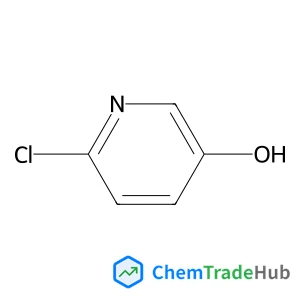
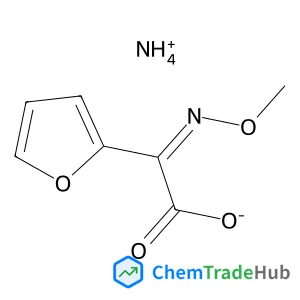
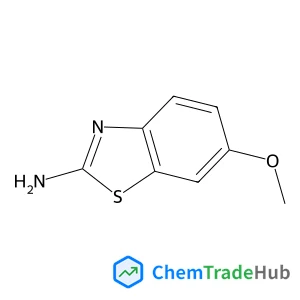
推荐供应商






免责声明
本页面提供的学术期刊信息仅供参考和研究使用。我们与任何期刊出版商均无关联,也不处理投稿事宜。如有投稿相关咨询,请直接联系相关期刊出版商。
如发现页面信息有误,请发送邮件至 support@chemtradehub.com 联系我们。我们将及时核实并处理您的问题。