


Measuring binding kinetics of aromatic thiolated molecules with nanoparticles via surface-enhanced Raman spectroscopy
文献信息
发布日期
2015-04-13
DOI
10.1039/C5NR01006C
影响因子
7.79
作者
Prabuddha Mukherjee, Catherine J. Murphy
查看原文
摘要
Colloidal plasmonic nanomaterials, consisting of metals such as gold and silver, are excellent candidates for advanced optical probes and devices, but precise control over surface chemistry is essential for realizing their full potential. Coupling thiolated (R-SH) molecules to nanoprobe surfaces is a convenient and established route to tailor surface properties. The ability to dynamically probe and monitor the surface chemistry of nanoparticles in solution is essential for rapidly manufacturing spectroscopically tunable nanoparticles. In this study, we report the development of surface-enhanced Raman spectroscopy (SERS) as a method to monitor the kinetics of gold–thiolate bond formation on colloidal gold nanoparticles. A theoretical model combining SERS enhancement with the Beer–Lambert law is proposed to explain ensemble scattering and absorption effects in colloids during chemisorption. In order to maximize biological relevance and signal reproducibility, experiments used to validate the model focused on maintaining nanoparticle stability after the addition of water-soluble aromatic thiolated molecules. Our results indicate that ligand exchange on gold nanoparticles follow a first-order Langmuir adsorption model with rate constants on the order of 0.01 min−1. This study demonstrates an experimental spectroscopic method and theoretical model for monitoring binding kinetics that may prove useful for designing novel probes.
期刊推荐
Contact Lens & Anterior Eye

Advanced Engineering Materials
Journal of Enzyme inhibition and Medicinal Chemistry
Current Pharmaceutical Biotechnology
Molecules
European Journal of Organic Chemistry
Faraday Discussions
Journal of Medical Biochemistry
Angewandte Chemie International Edition
Mini-Reviews in Medicinal Chemistry
相关文献
Thermal cyclotrimerization of tetraphenyl[5]cumulene(tetraphenylhexapentaene) to a tricyclodecadiene derivative
Nazrul Islam, Takashi Ooi, Tetsuo Iwasawa, Masaki Nishiuchi, Yasuhiko Kawamura
2008-12-15
Communication
DOI: 10.1039/B815620D
An alternative approach to develop a highly sensitive and selective chemosensor for the colorimetric sensing of cyanide in water
Xiaoding Lou, Liyao Zhang, Jingui Qin, Zhen Li
2008-10-01
Communication
DOI: 10.1039/B812746H
Reversible colorimetric ion sensors based on surface initiated polymerization of photochromic polymers
Kristen Fries, Satyabrata Samanta, Sara Orski, Jason Locklin
2008-11-04
Communication
DOI: 10.1039/B818042C
Sn(iv) phosphonates as catalysts in solvent-free Baeyer–Villiger oxidations using H2O2
Sharath Kirumakki, Sandani Samarajeewa, Robert Harwell, Atashi Mukherjee, Rolfe H. Herber, Abraham Clearfield
2008-10-08
Communication
DOI: 10.1039/B807938B
The doping effect of fluorinated aromatic hydrocarbon solvents on the performance of common olefin metathesis catalysts: application in the preparation of biologically active compounds
Cezary Samojłowicz, Michał Bieniek, Andrzej Zarecki, Renat Kadyrov, Karol Grela
2008-10-22
Communication
DOI: 10.1039/B816567J
Highly regioselective ring-opening of trisubstituted aziridines by sulfur-stabilised carbanions
Santiago Carballares, Donald Craig, Christopher J. T. Hyland, Pengfei Lu, Tanya Mathie, Andrew J. P. White
2008-11-26
Communication
DOI: 10.1039/B815971H
Palladium-catalysed direct synthesis of benzo[b]thiophenes from thioenols
Kiyofumi Inamoto, Yukari Arai, Kou Hiroya, Takayuki Doi
2008-09-24
Communication
DOI: 10.1039/B811362A
Glycosylated asterisks are among the most potent low valency inducers of Concanavalin A aggregation
Mazen Sleiman, Annabelle Varrot, Jean-Manuel Raimundo, Marc Gingras, Peter G. Goekjian
2008-11-07
Communication
DOI: 10.1039/B814816C
Silver-enhanced fluorescence emission of single quantum dot nanocomposites
Yi Fu, Jian Zhang, Joseph R. Lakowicz
2008-11-19
Communication
DOI: 10.1039/B816736B
您可能还喜欢
化合物问答
4-[4-三氟甲基苯基]恶唑(CAS号:1126636-40-5)通常如何合成?
4-[4-三氟甲基苯基]恶唑通常通过将4-三氟甲基苯酚与异硫氰酸苯酯在有机溶剂中进行酯化反应合成。该反应可在无水条件下,使用适当的催化剂,如四丁基氢氧化铵,以提...
1126636-40-54-(4-(Trifluoromethy...
59729-32-71-[3-(Dimethylamino)...
化合物问答
RockPhos Pd G3(CAS号:2009020-38-4)通常如何合成?
RockPhos Pd G3 通常通过钯催化偶联反应合成,使用配体 (2'-Amino-2-biphenylyl)(methanesulfonato-kappa...
2009020-38-4(2'-Amino-2-biphenyl...
化合物问答
1-哌啶甲酰胺(CAS号:2158-03-4)的市场或研究趋势如何?
1-哌啶甲酰胺作为有机合成中的重要中间体,其市场需求主要受医药、农药、染料等行业推动。近年来,随着新药开发和绿色化学的发展,该化合物的研究趋势集中在开发更高效、...
2158-03-41-Piperidinecarboxam...
化合物问答
2-(二苯基膦基)乙胺(CAS号:4848-43-5)适用哪些法规指南?
2-(二苯基膦基)乙胺适用于多种法规指南,包括但不限于《全球化学品统一分类和标签制度》(GHS),欧盟《化学品注册、评估、授权和限制》法规(REACH),以及美...
4848-43-52-(Diphenylphosphino...
化合物问答
如何储存间苯二甲酸二烯丙酯(CAS号:1087-21-4)?
间苯二甲酸二烯丙酯应储存在阴凉、干燥、通风良好的地方,远离火源和热源。储存容器应密封,避免光照和高温。储存温度应控制在25℃以下,相对湿度应低于80%。避免与其...
1087-21-4Diallyl isophthalate
化合物问答
什么是间甲苯异硫代异氰酸酯(CAS号:621-30-7)?
间甲苯异硫代异氰酸酯是一种有机化合物,分子式为C7H7NO2S,具有刺激性气味。它是一种重要的有机合成中间体,在合成其他化合物时广泛应用。
621-30-71-Isothiocyanato-3-m...
化合物问答
在合成中是否有N-Boc-D-苯丙氨醇(CAS号:106454-69-7)的替代品?
在合成中,可以考虑使用N-Cbz-D-苯丙氨醇或N-Fmoc-D-苯丙氨醇作为替代品。这些化合物同样具有保护氨基的功能,且在合成过程中表现出良好的反应性能。
106454-69-72-Methyl-2-propanyl ...
化合物问答
3-羟甲基-2-氧异丙基吡啶(CAS号:954240-50-7)的主要用途是什么?
3-羟甲基-2-氧异丙基吡啶主要用于有机合成领域,可以作为合成其他药物、农药或精细化学品的中间体。此外,它还可能在实验室研究中作为特定反应的前体或溶剂。
954240-50-7(2-Isopropoxy-3-pyri...
化合物问答
6-氨基-9-甲基嘌呤(CAS号:700-00-5)应用于哪些行业?
6-氨基-9-甲基嘌呤目前主要应用于医药行业,作为某些药物的中间体。此外,它还可能用于聚合物、传感器和半导体的某些领域,作为功能性单体或掺杂剂。
700-00-59-Methyl-9H-purin-6-...
来源期刊
Nanoscale
CiteScore:
12.1
自引率:
5.2%
年发文量:
1681
Nanoscale is a high-impact international journal, publishing high-quality research across nanoscience and nanotechnology. Nanoscale publishes a full mix of research articles on experimental and theoretical work, including reviews, communications, and full papers. Highly interdisciplinary, Nanoscale appeals to scientists, researchers and professionals interested in nanoscience and nanotechnology, quantum materials and quantum technology, including the areas of physics, chemistry, biology, medicine, materials, energy/environment, information technology, detection science, healthcare and drug discovery, and electronics. For publication in Nanoscale, papers must report high-quality reproducible new work that will be of significant general interest to the journal's wide international readership. Nanoscale is a collaborative venture between the Royal Society of Chemistry Publishing and a leading nanoscience research centre, the National Center for Nanoscience and Technology (NCNST) in Beijing, China. image block The journal publishes weekly issues, complementing and building on the nano content already published across the Royal Society of Chemistry Publishing journal portfolio. Since its launch in late 2009, Nanoscale has established itself as a platform for high-quality, cross-community research that bridges the various disciplines involved with nanoscience and nanotechnology, publishing important research from leading international research groups.
推荐化合物
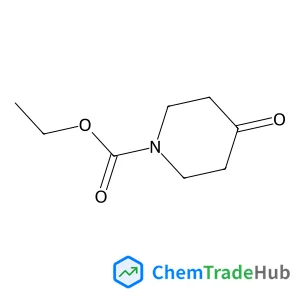
![2-Bromodibenzo[b,d]furan structure](https://cnstatic.chemtradehub.com/structs/86-/86-76-0-1814.webp "2-Bromodibenzo[b,d]furan structure")
推荐供应商





免责声明
本页面提供的学术期刊信息仅供参考和研究使用。我们与任何期刊出版商均无关联,也不处理投稿事宜。如有投稿相关咨询,请直接联系相关期刊出版商。
如发现页面信息有误,请发送邮件至 support@chemtradehub.com 联系我们。我们将及时核实并处理您的问题。