


Synthesis and in-depth characterization of reactive, uniform, crosslinked microparticles based on free radical copolymerization of 4-vinylbenzyl azide
文献信息
发布日期
2016-01-06
DOI
10.1039/C5PY01848J
影响因子
5.582
作者
Marco Albuszis, Peter J. Roth, Franziska Exnowitz, Doris Locsin Wong, Werner Pauer, Hans-Ulrich Moritz
查看原文
摘要
The introduction of functional groups into microparticles is commonly accomplished through, at times, low-yielding post-synthesis modification. In this detailed study, the introduction of azide functionality into uniform, crosslinked, macroporous microparticles through direct copolymerization of styrene, divinylbenzene (DVB), and 4-vinylbenzyl azide (VBA) in varying ratios inside swollen polystyrene seed (template) particles is investigated. Formulations contained up to 40 wt% of VBA in the monomer mixture. Resulting microspheres were characterised by SEM, porosimetry, FT-IR spectroscopy, and CHN elemental analysis. Uniform spherical particles with diameters ranging from 7.3 to 10.8 μm with diameter dispersities typically below 1.01 and with tuneable azide loadings from 0.11 to 1.17 mmol g−1 were obtained. Interestingly, severe effects of VBA addition on porosity, surface smoothness, and particle shape were observed. Specific surface areas and cumulative pore volumes increased with the amount of DVB in feed, decreased with increasing VBA feed ratio, and increased drastically for the use of azide-functional template particles with measured cumulative pore volumes reaching up to 0.60 cm3 g−1. With increasing VBA feed, formation of smaller, secondary particles was observed and attributed to an incomplete swelling of VBA into seed particles, which is discussed as a main reason for lower-than-expected azide contents in product particles. For high VBA feed ratios (>25 wt%), dented, hollow, or hollow collapsed azide-functional particles were found, presumably due to immiscibility of the growing azide-functional copolymer with the polystyrene seeds. Finally, successful click-modification is demonstrated with phenylacetylene and an alkyne-functional Rhodamine B dye allowing for mapping of functionalization density through confocal fluorescence microscopy.
期刊推荐
Advanced Engineering Materials

Foundations of Chemistry
Journal of Enzyme inhibition and Medicinal Chemistry
Faraday Discussions
European Journal of Organic Chemistry
Mini-Reviews in Medicinal Chemistry
Molecules
Contact Lens & Anterior Eye
Angewandte Chemie International Edition
Journal of Medical Biochemistry
相关文献
A detailed study of cholinium chloride and levulinic acid deep eutectic solvent system for CO2 capture via experimental and molecular simulation approaches
Ruh Ullah, Mert Atilhan, Baraa Anaya, Majeda Khraisheh, Gregorio García, Ahmed ElKhattat, Mohammad Tariq, Santiago Aparicio
2015-06-30
Paper
DOI: 10.1039/C5CP03364K
Surface force at the nano-scale: observation of non-monotonic surface tension and disjoining pressure
Mahshid Firouzi, Qibin Li, Kang Peng
2015-07-14
Paper
DOI: 10.1039/C5CP03050A
Monitoring the intramolecular charge transfer process in the Z907 solar cell sensitizer: a transient Vis and IR spectroscopy and ab initio investigation
Nicolò Azzaroli, Maria Grazia Lobello, Laura Bussotti, Giuseppe Calogero, Mariachiara Pastore, Filippo De Angelis
2015-07-13
Paper
DOI: 10.1039/C5CP03314D
A facile one-pot synthesis of blue and red luminescent thiol stabilized gold nanoclusters: a thorough optical and microscopy study
Nabin Kumar Pal, Carola Kryschi
2015-07-08
Paper
DOI: 10.1039/C5CP01773D
Development of an electrochemical surface-enhanced Raman spectroscopy (EC-SERS) aptasensor for direct detection of DNA hybridization
R. A. Karaballi, A. Nel, S. Krishnan, J. Blackburn, C. L. Brosseau
2015-03-06
Paper
DOI: 10.1039/C4CP05077K
Six-fold-symmetry internal rotation in toluenes: the low barrier challenge of 2,6- and 3,5-difluorotoluene
K. P. Rajappan Nair, Michaela K. Jahn, Alberto Lesarri, Vadim V. Ilyushin, Jens-Uwe Grabow
2015-09-22
Paper
DOI: 10.1039/C5CP03751D
Surface- and tip-enhanced resonant Raman scattering from CdSe nanocrystals
E. Sheremet, R. D. Rodriguez, T. Weiss, M. Nesterov, O. D. Gordan, L. L. Sveshnikova, T. A. Duda, V. A. Gridchin, V. M. Dzhagan, M. Hietschold, D. R. T. Zahn
2014-12-22
Paper
DOI: 10.1039/C4CP05087H
Plasmonic properties of regiospecific core–satellite assemblies of gold nanostars and nanospheres
A. Swarnapali D. S. Indrasekara, Roney Thomas
2014-10-31
Paper
DOI: 10.1039/C4CP04517C
Droplet based microfluidics: spectroscopic characterization of levofloxacin and its SERS detection
I. J. Hidi, M. Jahn
2015-01-16
Paper
DOI: 10.1039/C4CP04970E
SERS activity of Ag decorated nanodiamond and nano-β-SiC, diamond-like-carbon and thermally annealed diamond thin film surfaces
Mohan Kumar Kuntumalla, Vadali Venkata Satya Siva Srikanth, Satyavathi Ravulapalli, Upender Gangadharini, Harish Ojha, Narayana Rao Desai, Chandrahas Bansal
2015-02-05
Paper
DOI: 10.1039/C4CP05236F
您可能还喜欢
化合物问答
什么是3-表南美楝属二醇(CAS号:19942-04-2)?
3-表南美楝属二醇是一种具有特定立体化学结构的化合物,其分子式为C31H52O2,属于甾醇类化合物。它具有光学活性,是一种复杂的有机分子,主要存在于一些植物中。
19942-04-2(3S,5R,8R,9R,10R,13R...
化合物问答
3-羧基-5-碘苯甲酸甲酯(CAS号:50765-22-5)应用于哪些行业?
3-羧基-5-碘苯甲酸甲酯主要应用于医药行业,作为合成某些药物中间体的重要原料。此外,它还可能用于聚合物的改性、传感器的制备以及半导体材料的制备等领域。
50765-22-5Methyl 3-hydroxy-5-i...
化合物问答
什么是3-Bromoindolin-2-one(CAS号:22942-87-6)?
3-Bromoindolin-2-one是一种含有溴代基团的吲哚酮衍生物,分子式为C9H7BrNO。它是一种无色固体,具有一定的挥发性,熔点为158-159°C...
22942-87-63-Bromoindolin-2-one
化合物问答
如何处理含有L-Lysyl-L-phenylalanyl-L-isoleucylglycyl-L-leucyl-L-methioninamide(CAS号:2990-43-4)的废料?
对于含有该化合物的废液,应先进行中和处理,然后根据其毒性和活性选择合适的处置方法。可以考虑焚烧处理或由专业的化学品废物处理公司进行无害化处理。处理过程中需注意环...
2990-43-4L-Lysyl-L-phenylalan...
化合物问答
ANGIOTENSIN 1/2 + A (2 - 8)(CAS号:51833-76-2)的物理化学性质是什么?
ANGIOTENSIN 1/2 + A (2 - 8)是一种蛋白质类化合物,具有典型的蛋白质性质。它的分子量约为5900 Da。该化合物在水中具有一定的溶解性,...
51833-76-2ANGIOTENSIN 1/2 + A ...
化合物问答
如何储存2-甲基硫代嘧啶-5-硼酸频那酯(CAS号:940284-18-4)?
应将该化合物存放在阴凉干燥、通风良好的地方,避免阳光直射。建议将化合物密封保存在避光的、干燥的容器中,远离火源和高温环境。
940284-18-42-(Methylthio)-5-(4,...
化合物问答
什么是苏丹红IV氘代物 标准品(CAS号:1014689-18-9)?
苏丹红IV氘代物 标准品是一种含有氘代标记的苏丹红IV化合物,是一种用于化合物分析、结构确证以及代谢研究的标准物质。
1014689-18-91-[(E)-{2-Methyl-4-[...
化合物问答
(+)-2-Amino-6-propionamido-d3-tetrahydrobenzothiazole(CAS号:1217680-69-7)适用哪些法规指南?
该化合物需要遵循《全球化学品统一分类和标签制度》(GHS)中的分类和标签要求,具体分类需依据其毒性和物理化学性质。此外,还需要符合《欧盟化学品注册、评估、授权和...
1217680-69-7(+)-2-Amino-6-propio...
化合物问答
如何储存2-氨基-2-(2-吡啶)乙酸乙酯(CAS号:55243-15-7)?
2-氨基-2-(2-吡啶)乙酸乙酯应储存于阴凉、干燥、通风良好的环境中,避免高温和光照。应使用密封容器储存,并远离易燃物、氧化剂和其他危险化学品。
55243-15-7Ethyl 2-amino-2-(pyr...
化合物问答
3-羟基-4-甲氧基吡啶-2-羧酸(CAS号:210300-09-7)的主要用途是什么?
3-羟基-4-甲氧基吡啶-2-羧酸主要用于合成其他有机化合物,如药物合成、农药合成和染料合成等。此外,它还可用作中间体和试剂,在化学研究领域也有一定的应用。
210300-09-73-Hydroxy-4-methoxy-...
来源期刊
Polymer Chemistry

CiteScore:
8.6
自引率:
7.3%
年发文量:
457
Polymer Chemistry welcomes submissions in all areas of polymer science that have a strong focus on macromolecular chemistry. Manuscripts may cover a broad range of fields, yet no direct application focus is required.
推荐化合物
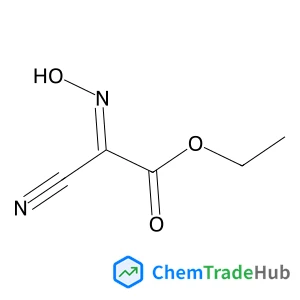
![(4-Methyl-1H-benzo[d]imidazol-2-yl)methanamine structure](https://cnstatic.chemtradehub.com/structs/933/933756-31-1-7b0b.webp "(4-Methyl-1H-benzo[d]imidazol-2-yl)methanamine structure")

推荐供应商






免责声明
本页面提供的学术期刊信息仅供参考和研究使用。我们与任何期刊出版商均无关联,也不处理投稿事宜。如有投稿相关咨询,请直接联系相关期刊出版商。
如发现页面信息有误,请发送邮件至 support@chemtradehub.com 联系我们。我们将及时核实并处理您的问题。