


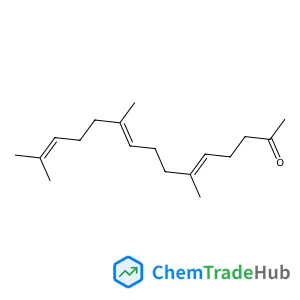
Nickel-catalyzed reductive coupling of alkyl halides with other electrophiles: concept and mechanistic considerations
文献信息
发布日期
2015-08-20
DOI
10.1039/C5QO00224A
影响因子
5.281
作者
Jun Gu, Xuan Wang, Weichao Xue
查看原文
摘要
The formation of C–C bonds directly by catalytic reductive cross-coupling of two different electrophiles represents one of the practical synthetic protocols that differs from the conventional nucleophile/electrophile coupling methods. Particularly the reductive coupling of alkyl electrophiles with other electrophiles is still a challenge. This report summarizes the advances in the formation of C(sp3)–C(sp3) bonds between two alkyl electrophiles, with emphasis on the control of chemoselectivity that is exceedingly challenging to achieve due to similar structures and reactivities of two unactivated alkyl halides. The coupling of alkyl halides with aryl or acyl electrophiles was also discussed based on the chemical approach developed by our group, followed by a brief overview of the reactions of tertiary alkyl halides. In the end, a brief overview of the challenges in this exciting field was illustrated. Whereas the reaction mechanisms generating alkyl–alkyl products are proposed to involve reactions of Ni(I) species with alkyl halides to generate Ralkyl–Ni(III)–Ralkyl intermediates through a radical/Ni cage-rebound process, the obtained evidence seemingly supports that the radical chain mechanism governs the acylation and arylation of alkyl halides. The latter features a cage-escaped alkyl radical.
期刊推荐
Angewandte Chemie International Edition
Advanced Engineering Materials
Foundations of Chemistry
Molecular Diversity
Current Pharmaceutical Biotechnology
Journal of Enzyme inhibition and Medicinal Chemistry

Physical Chemistry Chemical Physics
European Journal of Organic Chemistry
Faraday Discussions

Coloration Technology
相关文献
G-quadruplex-based DNAzyme for sensitive mercury detection with the naked eye
2009-05-07
Communication
DOI: 10.1039/B903993G
A highly selective cyanide sensing in watervia fluorescence change and its application to in vivo imaging
So-Young Chung, Seong-Won Nam, Jeesun Lim, Sungsu Park
2009-03-30
Communication
DOI: 10.1039/B901140D
Regio- and stereoselective formation of conjugated dienes by titanocene(ii)-promoted alkylation of propargyl carbonates
Yasutaka Yatsumonji, Yuichiro Atake, Akira Tsubouchi, Takeshi Takeda
2009-04-28
Communication
DOI: 10.1039/B905782J
Solid-phase combinatorial synthesis of ester-type banana-shaped molecules by sequential palladium-catalyzed carbonylation
Sungmin Kang, Junji Watanabe, Takashi Takahashi
2009-03-23
Communication
DOI: 10.1039/B901788G
A bimetallic endohedral fullerene: PrSc@C80
Simon R. Plant, Tsz Cheong Ng, Jamie H. Warner, Arzhang Ardavan, G. Andrew D. Briggs, Kyriakos Porfyrakis
2009-06-01
Communication
DOI: 10.1039/B902520K
The detection of Hg2+ by cyanobacteria in aqueous media
Moorthy Suresh, Sanjiv K. Mishra, Sandhya Mishra, Amitava Das
2009-04-02
Communication
DOI: 10.1039/B821687H
Ribosomal synthesis of dehydrobutyrine- and methyllanthionine-containing peptides
Kohei Torikai, Hiroshi Murakami
2009-04-30
Communication
DOI: 10.1039/B904314D
The anomalous solid state decomposition of ammonium dinitramide: a matter of surface polarization
Tore Brinck
2009-04-06
Communication
DOI: 10.1039/B900915A
您可能还喜欢
化合物问答
什么是5-Fluoro-4-iodo-2-methylaniline(CAS号:307306-08-7)?
5-氟-4-碘-2-甲氨基苯属于芳香族化合物,其分子式为C8H7FN2I。该化合物具有一定的反应活性,在有机合成和药物化学领域有一定的应用。
307306-08-75-Fluoro-4-iodo-2-me...
化合物问答
4-氟-3-硝基三氟甲苯(CAS号:367-86-2)通常如何合成?
4-氟-3-硝基三氟甲苯通常通过将三氟甲基苯在酸性条件下催化氧化为三氟甲基硝基苯,然后进行氟化反应得到目标化合物。该过程需要使用催化剂,如三氟乙酸,反应产率较高...
367-86-21-Fluoro-2-nitro-4-(...
化合物问答
6-氯-9-(2,3,5-三苯甲酰氧基-2-C-甲基-beta-D-呋喃核糖基)-9H-嘌呤(CAS号:205171-05-7)的物理化学性质是什么?
该化合物为白色至类白色晶体,分子量约为1046.95。它在水中几乎不溶,在有机溶剂如乙腈和甲醇中具有一定的溶解性。该化合物具有良好的化学稳定性和生物活性。
205171-05-76-Chloro-9-(2-C-meth...
化合物问答
如何储存6-氟喹啉-4-羧酸(CAS号:220844-73-5)?
6-氟喹啉-4-羧酸应储存在阴凉、干燥、通风良好的地方,避免阳光直射。储存在密闭容器中,避免与空气中的水分接触。储存温度应控制在室温以下,避免高温。
220844-73-56-Fluoroquinoline-4-...
化合物问答
(2S,2'S,3S,3'S)-3,3'-di-tert-butyl-4,4'-bis(2,6-dimethoxyphenyl)-2,2',3,3'-tetrahydro-2,2'-bibenzo[d][1,3]oxaphosphole(CAS号:1435940-21-8)通常如何合成?
该化合物通常通过芳香族化合物的亲核取代反应合成,首先将2,6-二甲氧基苯基引入到双环结构中,然后通过特定条件下的还原或氧化反应引入二叔丁基。反应过程中使用了钯作...
1435940-21-8(2S,2'S,3S,3'S)-4,4'...
化合物问答
如何储存KY02111(CAS号:1118807-13-8)?
KY02111应储存于阴凉、干燥、通风良好的地方,避免阳光直射和高温环境。应使用合适的密闭容器储存,并确保容器密封良好,防止水分和潮气进入。在储存期间,应注意检...
1118807-13-8N-(6-chlorobenzo[d]t...
化合物问答
如何储存4-(4-氯苯氧基)丁酸乙酯(CAS号:59227-79-1)?
4-(4-氯苯氧基)丁酸乙酯应储存在阴凉、干燥、通风良好的地方,远离火源和热源。避免阳光直射,防止容器破裂导致泄漏。储存时应保持容器密封,避免与空气中的水蒸气接...
59227-79-1Ethyl 4-(4-chlorophe...
化合物问答
4-庚基苯乙酮(CAS号:37593-03-6)安全吗?
4-庚基苯乙酮相对安全,但在使用和储存时仍需注意。应避免吸入其蒸气,避免皮肤接触,使用时需佩戴防护眼镜和手套。储存时应远离火源和热源,保持容器密封,放置于阴凉、...
37593-03-61-(4-Heptylphenyl)et...
化合物问答
什么是乙基2-氨基-4-(3-溴苯基)噻吩-3-羧酸乙酯(CAS号:438218-48-5)?
乙基2-氨基-4-(3-溴苯基)噻吩-3-羧酸乙酯是一种有机化合物,分子式为C16H12BrN2O2S。它是一种含有噻吩环、氨基、溴苯基和羧酸酯结构的化合物。这...
438218-48-5ethyl 2-amino-4-(3-b...
化合物问答
什么是(9ci)-2-氨基-6-甲基-苯甲酰胺(CAS号:1885-31-0)?
(9ci)-2-氨基-6-甲基-苯甲酰胺是一种化学化合物,其英文名称为2-Amino-6-methylbenzamide,CAS号为1885-31-0。该化合物...
1885-31-02-Amino-6-methylbenz...
来源期刊
Organic Chemistry Frontiers

CiteScore:
7.8
自引率:
8.7%
年发文量:
724
Organic Chemistry Frontiers publishes high-quality research from across organic chemistry. Emphases are placed on studies that make significant contributions to the field of organic chemistry by reporting either new or significantly improved protocols or methodologies. Topics include, but are not limited to the following: Organic synthesis Development of synthetic methodologies Catalysis Natural products Functional organic materials Supramolecular and macromolecular chemistry Physical and computational organic chemistry
推荐化合物
推荐供应商




免责声明
本页面提供的学术期刊信息仅供参考和研究使用。我们与任何期刊出版商均无关联,也不处理投稿事宜。如有投稿相关咨询,请直接联系相关期刊出版商。
如发现页面信息有误,请发送邮件至 support@chemtradehub.com 联系我们。我们将及时核实并处理您的问题。