


Reactivity and mechanistic insight into the cross coupling reaction between isochromans and β-keto esters through C–H bond activation under visible light irradiation
文献信息
发布日期
2016-02-10
DOI
10.1039/C5QO00412H
影响因子
5.281
作者
Ming Xiang, Qing-Yuan Meng, Xue-Wang Gao, Tao Lei, Bin Chen, Chen-Ho Tung, Li-Zhu Wu
查看原文
摘要
The visible light catalytic cross coupling reaction from two different C–H bonds provides an efficient protocol for C–H bond activation and C–C bond construction. The application of the oxidative photoredox strategy to couple C–H bonds next to an oxygen atom with other C–H bonds is more challenging because of the more positive oxidation potential of ethers than that of amines. Here, we take advantage of organic dye 9-mesityl-10-methylacridinium perchlorate (Acr+-Mes ClO4−) as the photosensitizer and BrCCl3 as the terminal oxidant to achieve the addition of β-keto esters to oxonium species, directly generated from isochromans, leading to the formation of alkylation products in the α-position of an oxygen atom under visible light irradiation.
期刊推荐
Russian Journal of General Chemistry
Russian Journal of Bioorganic Chemistry
Drug Discovery Today

Chemistry Education Research and Practice

Russian Chemical Bulletin
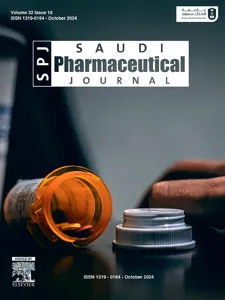
Saudi Pharmaceutical Journal

New Journal of Chemistry
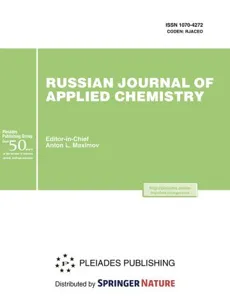
Russian Journal of Applied Chemistry
Current Opinion in Solid State & Materials Science
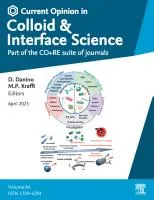
Current Opinion in Colloid & Interface Science
相关文献
DNA molecular recognition of intercalators affects aggregation of a thermoresponsive polymer
Yuuki Sugawara, Takanori Tamaki, Takeo Yamaguchi
2014-05-07
Communication
DOI: 10.1039/C4PY00600C
Thiol–ene “click” reactions and recent applications in polymer and materials synthesis: a first update
Andrew B. Lowe
2014-05-01
Review Article
DOI: 10.1039/C4PY00339J
Cyclodextrin–calixarene co-polymers as a new class of nanosponges
Paolo Lo Meo, Giuseppe Lazzara, Leonarda Liotta, Serena Riela, Renato Noto
2014-04-03
Paper
DOI: 10.1039/C4PY00325J
Rapid, semi-automated convergent synthesis of low generation triazine dendrimers using microwave assisted reactions
Alan E. Enciso, Zachary M. Abid, Eric E. Simanek
2014-04-15
Paper
DOI: 10.1039/C4PY00349G
Highly pH-sensitive polyurethane exhibiting shape memory and drug release
Ying Li, Ye Liu, Tao Gong, Lin Wang, Shaobing Zhou
2014-05-02
Paper
DOI: 10.1039/C4PY00474D
One-pot synthesis of POSS-containing alternating copolymers by RAFT polymerization and their microphase-separated nanostructures
Zhenghe Zhang, Lizhi Hong, Yun Gao, Weian Zhang
2014-04-07
Paper
DOI: 10.1039/C4PY00302K
SET-LRP of semifluorinated acrylates and methacrylates
Shampa R. Samanta, Ruilong Cai, Virgil Percec
2014-05-27
Paper
DOI: 10.1039/C4PY00635F
Synthesis and chiral recognition ability of helical polyacetylenes bearing helicene pendants
Hiroki Iida, Tomoko Yamaguchi, Koutarou Hayashi, Daisuke Kumano, Jeanne Crassous, Nicolas Vanthuyne, Christian Roussel, Eiji Yashima
2014-06-09
Paper
DOI: 10.1039/C4PY00692E
Low band-gap copolymers derived from fluorinated isoindigo and dithienosilole: synthesis, properties and photovoltaic applications
Zhenguo Wang, Ying Li, Qiang Peng
2014-05-02
Paper
DOI: 10.1039/C4PY00273C
您可能还喜欢
化合物问答
4-[4-三氟甲基苯基]恶唑(CAS号:1126636-40-5)通常如何合成?
4-[4-三氟甲基苯基]恶唑通常通过将4-三氟甲基苯酚与异硫氰酸苯酯在有机溶剂中进行酯化反应合成。该反应可在无水条件下,使用适当的催化剂,如四丁基氢氧化铵,以提...
1126636-40-54-(4-(Trifluoromethy...
59729-32-71-[3-(Dimethylamino)...
化合物问答
RockPhos Pd G3(CAS号:2009020-38-4)通常如何合成?
RockPhos Pd G3 通常通过钯催化偶联反应合成,使用配体 (2'-Amino-2-biphenylyl)(methanesulfonato-kappa...
2009020-38-4(2'-Amino-2-biphenyl...
化合物问答
1-哌啶甲酰胺(CAS号:2158-03-4)的市场或研究趋势如何?
1-哌啶甲酰胺作为有机合成中的重要中间体,其市场需求主要受医药、农药、染料等行业推动。近年来,随着新药开发和绿色化学的发展,该化合物的研究趋势集中在开发更高效、...
2158-03-41-Piperidinecarboxam...
化合物问答
2-(二苯基膦基)乙胺(CAS号:4848-43-5)适用哪些法规指南?
2-(二苯基膦基)乙胺适用于多种法规指南,包括但不限于《全球化学品统一分类和标签制度》(GHS),欧盟《化学品注册、评估、授权和限制》法规(REACH),以及美...
4848-43-52-(Diphenylphosphino...
化合物问答
如何储存间苯二甲酸二烯丙酯(CAS号:1087-21-4)?
间苯二甲酸二烯丙酯应储存在阴凉、干燥、通风良好的地方,远离火源和热源。储存容器应密封,避免光照和高温。储存温度应控制在25℃以下,相对湿度应低于80%。避免与其...
1087-21-4Diallyl isophthalate
化合物问答
什么是间甲苯异硫代异氰酸酯(CAS号:621-30-7)?
间甲苯异硫代异氰酸酯是一种有机化合物,分子式为C7H7NO2S,具有刺激性气味。它是一种重要的有机合成中间体,在合成其他化合物时广泛应用。
621-30-71-Isothiocyanato-3-m...
化合物问答
在合成中是否有N-Boc-D-苯丙氨醇(CAS号:106454-69-7)的替代品?
在合成中,可以考虑使用N-Cbz-D-苯丙氨醇或N-Fmoc-D-苯丙氨醇作为替代品。这些化合物同样具有保护氨基的功能,且在合成过程中表现出良好的反应性能。
106454-69-72-Methyl-2-propanyl ...
化合物问答
3-羟甲基-2-氧异丙基吡啶(CAS号:954240-50-7)的主要用途是什么?
3-羟甲基-2-氧异丙基吡啶主要用于有机合成领域,可以作为合成其他药物、农药或精细化学品的中间体。此外,它还可能在实验室研究中作为特定反应的前体或溶剂。
954240-50-7(2-Isopropoxy-3-pyri...
化合物问答
6-氨基-9-甲基嘌呤(CAS号:700-00-5)应用于哪些行业?
6-氨基-9-甲基嘌呤目前主要应用于医药行业,作为某些药物的中间体。此外,它还可能用于聚合物、传感器和半导体的某些领域,作为功能性单体或掺杂剂。
700-00-59-Methyl-9H-purin-6-...
来源期刊
Organic Chemistry Frontiers

CiteScore:
7.8
自引率:
8.7%
年发文量:
724
Organic Chemistry Frontiers publishes high-quality research from across organic chemistry. Emphases are placed on studies that make significant contributions to the field of organic chemistry by reporting either new or significantly improved protocols or methodologies. Topics include, but are not limited to the following: Organic synthesis Development of synthetic methodologies Catalysis Natural products Functional organic materials Supramolecular and macromolecular chemistry Physical and computational organic chemistry
推荐化合物
![1-(Hexopyranosyloxy)-4a,5-dihydroxy-7-methyl-1,4a,5,6,7,7a-hexahydrocyclopenta[c]pyran-7-yl 3-phenylacrylate structure](https://cnstatic.chemtradehub.com/structs/192/19210-12-9-ecae.webp "1-(Hexopyranosyloxy)-4a,5-dihydroxy-7-methyl-1,4a,5,6,7,7a-hexahydrocyclopenta[c]pyran-7-yl 3-phenylacrylate structure")
推荐供应商




免责声明
本页面提供的学术期刊信息仅供参考和研究使用。我们与任何期刊出版商均无关联,也不处理投稿事宜。如有投稿相关咨询,请直接联系相关期刊出版商。
如发现页面信息有误,请发送邮件至 support@chemtradehub.com 联系我们。我们将及时核实并处理您的问题。