


Thermostable and nonflammable silica–polyetherimide–polyurethane nanofibrous separators for high power lithium ion batteries
文献信息
发布日期
2015-04-13
DOI
10.1039/C5TA00856E
影响因子
12.732
作者
Ke Xiao, Jianyong Yu, Jianmao Yang
查看原文
摘要
Safety remains a practical concern in lithium ion batteries (LIBs), which is closely associated with the internal shorting caused by the poor dimensional thermostability at elevated temperature and the flammability of separators. Here, we report a novel strategy to fabricate thermostable and nonflammable silica–polyetherimide–polyurethane (SiO2–PEI–PU) nanofibrous membranes via an electrospinning process. Benefiting from the high porosity, interpenetrating network structure and synergetic effect of silica nanoparticles, PEI and PU, the as-prepared SiO2–PEI–PU membranes exhibit uniform pore size distribution, high ionic conductivity (6.25 mS cm−1) and good electrochemical stability up to 4.86 V. Notably, the hot oven and combustion tests reveal that the SiO2–PEI–PU membranes possess improved thermostability displaying 2% dimensional change after exposure to 170 °C for 0.5 h and flame retardant properties, which could be beneficial for improving the safety of LIBs. Significantly, the SiO2–PEI–PU membrane based Li/LiFePO4 cell exhibits more excellent cyclability delivering a discharge capacity of 158.91 mA h g−1 at the 90th cycle and better rate capability compared with the cell based on the Celgard membrane. Meanwhile, the SiO2–PEI–PU membrane based Li/LiFePO4 cell also shows more excellent cell performance even at an elevated temperature of 60 °C. The results clearly demonstrate that the SiO2–PEI–PU membranes are promising separator candidates, which will also pave the way for further application of nanofibrous membranes in high power LIBs.
期刊推荐
Russian Chemical Reviews
Kinetics and Catalysis
Israel Journal of Chemistry
Helvetica Chimica Acta
Journal of Heterocyclic Chemistry
Pure and Applied Chemistry
Journal of Catalysis

European Journal of Wood and Wood Products
Nature
Proceedings of the National Academy of Sciences of the United States of America
相关文献
Dynamic combinatorial libraries of metalloporphyrins: templated amplification of disulfide-linked oligomers
Amy L. Kieran, Andrew D. Bond, Ana M. Belenguer, Jeremy K. M. Sanders
2003-09-30
Communication
DOI: 10.1039/B310438A
Efficient electrophilic catalysis of 1,5-anhydrocellobiitol hydrolysis by AlIII; implications for the conservation of “rosin-alum” sized paper
John Baty, Michael L. Sinnott
2004-02-27
Communication
DOI: 10.1039/B316417A
Tetracyanoresorcin[4]arene ion channel shows pH dependent conductivity change
Song-De Tan, Mika Yamamura
2004-03-03
Communication
DOI: 10.1039/B312952G
Porphyrin ring contraction: a one-pot reaction leading to divalent corroles
Christophe Jeandon, Romain Ruppert, Henry J. Callot
2004-04-02
Communication
DOI: 10.1039/B400812J
First in-situSAXS studies of the mesostructuration of spherical silica and titania particles during spray-drying process
C. Boissiere, D. Grosso, H. Amenitsch, A. Gibaud, A. Coupé, N. Baccile, C. Sanchez
2003-10-14
Communication
DOI: 10.1039/B308694A
Room temperature borylation of arenes and heteroarenes using stoichiometric amounts of pinacolborane catalyzed by iridium complexes in an inert solvent
Tatsuo Ishiyama, Yusuke Nobuta, John F. Hartwig, Norio Miyaura
2003-10-22
Communication
DOI: 10.1039/B311103B
Regioselective uncatalysed hydrophosphination of alkenes: a facile route to P-alkylated phosphine derivatives
Olivier Delacroix, Annie-Claude Gaumont
2003-10-29
Communication
DOI: 10.1039/B311892D
Crystalline molecular alloys
Sylvie Ferlay, Wais Hosseini
2004-03-05
Communication
DOI: 10.1039/B400295B
Remarkable enhancement of reactivity of carbonyl compounds for polymerizations with non-activated aromatic hydrocarbons
Mikhail Zolotukhin, Serguei Fomine, Roberto Salcedo, Leonard Khalilov
2004-03-25
Communication
DOI: 10.1039/B317108F
Solvent-free ketone hydrogenations catalyzed by molybdenum complexes
Barbara F. M. Kimmich, Paul J. Fagan, Elisabeth Hauptman, R. Morris Bullock
2004-03-22
Communication
DOI: 10.1039/B401760A
您可能还喜欢
化合物问答
(5-氨基吡唑-3-基)乙酸(CAS号:174891-10-2)的物理化学性质是什么?
(5-氨基吡唑-3-基)乙酸是一种无色至白色固体,分子量为174.15 g/mol。它在水中具有较好的溶解性,在有机溶剂中的溶解度较低。该化合物具有较好的反应活...
174891-10-2(3-Amino-1H-pyrazol-...
化合物问答
3-氟-4,5-二氯苯胺(CAS号:35754-38-2)适用哪些法规指南?
3-氟-4,5-二氯苯胺受到多项法规指南的约束,包括但不限于GHS(全球化学品统一分类和标签制度)的危险分类标准、欧盟的REACH法规(注册、评估、授权和限制)...
35754-38-23,4-Dichloro-5-fluor...
化合物问答
什么是(R)-(+)-2,2',6,6'-四甲氧基-4,4'-联(二(3,5-二甲苯基基)膦基)-3,3'-二联吡啶(CAS号:442905-33-1)?
这是一种有机化合物,化学名为(R)-(+)-2,2',6,6'-四甲氧基-4,4'-联(二(3,5-二甲苯基基)膦基)-3,3'-二联吡啶,CAS号为44290...
442905-33-14,4'-Bis[bis(3,5-dim...
化合物问答
1-氨基-2-氰基萘(CAS号:3100-67-2)应用于哪些行业?
1-氨基-2-氰基萘在医药、聚合物、传感器和半导体等行业中有应用。在医药领域,它可用作中间体合成某些药物。在聚合物行业,它可以用于制备具有特定性能的聚合物。此外...
3100-67-21-Amino-2-naphthonit...
化合物问答
如何处理含有1-溴-4-(异丙氧基甲基)苯(CAS号:98446-84-5)的废料?
处理含1-溴-4-(异丙氧基甲基)苯的废料时,首先应确保废液收集在防渗漏的容器中,避免泄露。然后,可以考虑采用化学降解法或物理吸附法进行处理。在特定条件下,可通...
98446-84-51-Bromo-4-(isopropox...
化合物问答
6-Chloro-8-(trifluoromethyl)chroman-4-one(CAS号:1344889-75-3)的主要用途是什么?
6-氯-8-三氟甲基-2,3-二氢-4H-色喃-4-酮主要用于有机合成中的中间体,也可作为研究试剂使用。
1344889-75-36-Chloro-8-(trifluor...
化合物问答
7-乙氧基-2-萘酚(CAS号:57944-44-2)通常如何合成?
7-乙氧基-2-萘酚通常通过N-乙氧基化反应合成,首先将2-萘酚与乙醇钠在乙醇中反应生成7-乙氧基-2-萘酚钠盐,再通过酸化进一步得到7-乙氧基-2-萘酚。该合...
57944-44-27-Ethoxy-2-naphthol
化合物问答
4-(1,1-二氧硫代吗啉)丁醇(CAS号:59801-41-1)适用哪些法规指南?
该化合物需遵循一系列的法规指南,包括但不限于GHS全球统一分类和标签制度,其分类可能包括易燃液体和可能危害水生环境。在欧洲,还需遵循REACH法规,确保物质和混...
59801-41-14-(4-Hydroxybutyl)th...
化合物问答
4-甲氧基苄基叠氮甲酸酯(CAS号:25474-85-5)的物理化学性质是什么?
4-甲氧基苄基叠氮甲酸酯是一种无色液体,具有一定的挥发性。其分子量为198.16,熔点为-69°C,沸点为105°C。该化合物在水中溶解度较低,在有机溶剂如乙醇...
25474-85-54-Methoxybenzyl carb...
化合物问答
如何处理含有4-氯-2-氟嘧啶(CAS号:51422-00-5)的废料?
含有4-氯-2-氟嘧啶的废料应按照危险废物处理。首先,应收集并分类这些废料,避免与其他废物混合。然后,可以采用焚烧处理或者交由专业机构进行处置。在处理过程中,需...
51422-00-54-Chloro-2-fluoropyr...
来源期刊
Journal of Materials Chemistry A
CiteScore:
19.5
自引率:
4.7%
年发文量:
2211
Journal of Materials Chemistry A, B & C cover high quality studies across all fields of materials chemistry. The journals focus on those theoretical or experimental studies that report new understanding, applications, properties and synthesis of materials. The journals have a strong history of publishing quality reports of interest to interdisciplinary communities and providing an efficient and rigorous service through peer review and publication. The journals are led by an international team of Editors-in-Chief and Associate Editors who are all active researchers in their fields. Journal of Materials Chemistry A, B & C are separated by the intended application of the material studied. Broadly, applications in energy and sustainability are of interest to Journal of Materials Chemistry A, applications in biology and medicine are of interest to Journal of Materials Chemistry B, and applications in optical, magnetic and electronic devices are of interest to Journal of Materials Chemistry C. More than one Journal of Materials Chemistry journal may be suitable for certain fields and researchers are encouraged to submit their paper to the journal that they feel best fits for their particular article. Example topic areas within the scope of Journal of Materials Chemistry A are listed below. This list is neither exhaustive nor exclusive. Artificial photosynthesis Batteries Carbon dioxide conversion Catalysis Fuel cells Gas capture/separation/storage Green/sustainable materials Hydrogen generation Hydrogen storage Photocatalysis Photovoltaics Self-cleaning materials Self-healing materials Sensors Supercapacitors Thermoelectrics Water splitting Water treatment
推荐化合物
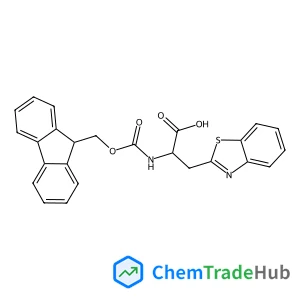
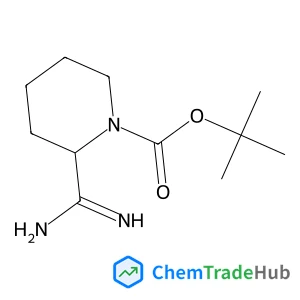
![1-(1-Benzyl-1,2,3,6-tetrahydropyridin-4-yl)-1H-benzo[d]imidazol-2(3H)-one structure](https://cnstatic.chemtradehub.com/structs/603/60373-71-9-7dfb.webp "1-(1-Benzyl-1,2,3,6-tetrahydropyridin-4-yl)-1H-benzo[d]imidazol-2(3H)-one structure")
推荐供应商






免责声明
本页面提供的学术期刊信息仅供参考和研究使用。我们与任何期刊出版商均无关联,也不处理投稿事宜。如有投稿相关咨询,请直接联系相关期刊出版商。
如发现页面信息有误,请发送邮件至 support@chemtradehub.com 联系我们。我们将及时核实并处理您的问题。