


Effects of the charge-transfer reorganization energy on the open-circuit voltage in small-molecular bilayer organic photovoltaic devices: comparison of the influence of deposition rates of the donor
文献信息
发布日期
2016-04-05
DOI
10.1039/C6CP00184J
影响因子
3.676
作者
Chih-Chien Lee, Wei-Cheng Su, Wen-Chang Chang
查看原文
摘要
The theoretical maximum of open-circuit voltage (VOC) of organic photovoltaic (OPV) devices has yet to be determined, and its origin remains debated. Here, we demonstrate that VOC of small-molecule OPV devices can be improved by controlling the deposition rate of a donor without changing the interfacial energy gap at the donor/acceptor interface. The measurement of external quantum efficiency and electroluminescence spectra facilitates the observation of the existence of charge transfer (CT) states. A simplified approach by reusing the reciprocity relationship for obtaining the properties of the CT states is proposed without introducing complex techniques. We compare experimental and fitting results and propose that reorganization energy is the primary factor in determining VOC instead of either the CT energy or electronic coupling term in bilayer OPV devices. Atomic force microscopy images indicate a weak molecular aggregation when a higher deposition rate is used. The results of temperature-dependent measurements suggest the importance of molecular stacking for the CT properties.
期刊推荐
European Journal of Wood and Wood Products
Journal of Organometallic Chemistry
Proceedings of the National Academy of Sciences of the United States of America
Helvetica Chimica Acta
Pharmacological Reviews
Israel Journal of Chemistry
Fibre Chemistry
Organic Preparations and Procedures International

Science
Journal of Medicinal Chemistry
相关文献
Spin-filtering and tunneling magnetoresistance effects in 6,6,12-graphyne-based molecular magnetic tunnel junctions
Maoyun Di, Li-Chun Xu
2018-12-26
Paper
DOI: 10.1039/C8CP06927A
Binding of the atomic cations hydrogen through argon to water and hydrogen sulfide
Brent R. Westbrook, Katelyn M. Dreux, Gregory S. Tschumper, Joseph S. Francisco, Ryan C. Fortenberry
2018-10-02
Paper
DOI: 10.1039/C8CP05378B
Mechanical properties of anhydrous oxalic acid and oxalic acid dihydrate
2019-01-04
Paper
DOI: 10.1039/C8CP07188H
Half-metal state of a Ti2C monolayer by asymmetric surface decoration
Jiming Zheng, Ruijiao He, Yun Wan, Puju Zhao, Ping Guo, Zhenyi Jiang
2019-01-15
Paper
DOI: 10.1039/C8CP07157H
Insights into the effects produced by doping of medium-sized boron clusters with ruthenium
Bole Chen, Weiguo Sun, Xiaoyu Kuang, Xinxin Xia, Hongxiao Shi, Gennady L. Gutsev
2018-11-15
Paper
DOI: 10.1039/C8CP05725G
Fullerene and endometallofullerene Kagome lattices with symmetry-forced spin frustration
Dmitri V. Konarev, Salavat S. Khasanov, Yasuhiro Shimizu, Alexey V. Kuzmin, Rimma N. Lyubovskaya
2018-12-17
Communication
DOI: 10.1039/C8CP07017B
The activation of carbon dioxide by first row transition metals (Sc–Zn)
Demeter Tzeli, Einar Uggerud
2018-09-21
Paper
DOI: 10.1039/C8CP04231D
Crowding and conformation interplay on human DNA G-quadruplex by ultraviolet resonant Raman scattering
Silvia Di Fonzo, John W. Brady, Letizia Tavagnacco, Marco Caterino, Luigi Petraccone, Jussara Amato, Concetta Giancola
2019-01-06
Paper
DOI: 10.1039/C8CP04728F
Assessing the transferability of common top-down and bottom-up coarse-grained molecular models for molecular mixtures
Thomas D. Potter, Jos Tasche, Mark R. Wilson
2018-12-27
Paper
DOI: 10.1039/C8CP05889J
您可能还喜欢
化合物问答
如何储存8-溴-4-羟基-6-(三氟甲氧基)喹啉-3-羧酸乙酯(CAS号:1072944-81-0)?
8-溴-4-羟基-6-(三氟甲氧基)喹啉-3-羧酸乙酯应储存在阴凉、干燥的地方,避免光照和高温。建议使用密封容器进行储存,以防止水分和空气的影响。
1072944-81-0Ethyl 8-bromo-4-hydr...
化合物问答
2,2-二(2-呋喃基)丙烷(CAS号:17920-88-6)的市场或研究趋势如何?
2,2-二(2-呋喃基)丙烷的研究趋势主要集中在新型材料的开发和应用,如高分子材料、有机光电材料等。市场趋势方面,随着环保要求的提高和新材料的应用,该化合物的需...
17920-88-62,2'-(2,2-Propanediy...
化合物问答
如何处理含有螺[呋喃并[3,4-b]吡啶-5(7H),4'-哌啶]-7-酮盐酸盐(CAS号:475152-31-9)的废料?
对于含有螺[呋喃并[3,4-b]吡啶-5(7H),4'-哌啶]-7-酮盐酸盐的废料,应首先进行分类和分离,以减少危险物质的数量。随后,可以考虑通过化学氧化、生物...
475152-31-97H-Spiro[furo[3,4-b]...
化合物问答
Cinnamyl 3-aminobut-2-enoate(CAS号:113898-97-8)安全吗?
Cinnamyl 3-氨基丁-2-烯酸在接触皮肤和眼睛时可能会引起刺激。应避免吸入其粉尘和烟雾。操作时应穿戴适当的个人防护装备,如手套、护目镜和实验室外套。
113898-97-8Cinnamyl 3-aminobut-...
化合物问答
反式-2-十二碳烯二酸(CAS号:6402-36-4)的市场或研究趋势如何?
反式-2-十二碳烯二酸在医药、材料科学等领域有一定的应用,但其市场相对较小。近年来,由于环保意识的提升,对环境友好型化学品的需求增加,研究倾向于开发更绿色的合成...
6402-36-4Traumatic Acid
化合物问答
什么是(9ci)-1H-苯并咪唑-5-乙酸(CAS号:473895-86-2)?
(9ci)-1H-苯并咪唑-5-乙酸是一种含氮杂环化合物,其化学结构为1H-苯并咪唑-5-乙酸。该化合物具有特定的分子式C8H7NO2,属于有机酸类化合物。
473895-86-21H-Benzimidazol-5-yl...
化合物问答
酞菁蓝(CAS号:147-14-8)的主要用途是什么?
酞菁蓝主要用作颜料和染料,广泛应用于塑料、油墨、涂料、纺织品及橡胶工业中。它也用于光敏材料,如太阳能电池和光刻胶。在医疗领域,酞菁蓝因其光敏特性被用于某些光动力...
147-14-8Copper(2+) phthalocy...
化合物问答
5-甲基-1,2,3,4-四氢异喹啉(CAS号:123593-99-7)安全吗?
5-甲基-1,2,3,4-四氢异喹啉在使用和储存时需要谨慎处理。它具有一定的毒性,应避免吸入其蒸气或直接接触皮肤和眼睛。操作此化合物时,建议佩戴防护眼镜、实验服...
123593-99-75-Methyl-1,2,3,4-tet...
化合物问答
如何处理含有3',4',5'-三甲氧基苯乙酮(CAS号:1136-86-3)的废料?
含有3',4',5'-三甲氧基苯乙酮的废液应首先确保其是否为危险废物,根据当地法规确定处理方法。通常,这类有机废液可以采用中和反应降低其pH值,然后通过蒸馏或萃...
1136-86-31-(3,4,5-Trimethoxyp...
化合物问答
如何储存KI-7(CAS号:1489263-00-4)?
KI-7应储存在通风良好的干燥环境中,避免光照和高温。建议使用密封容器储存,并保持在阴凉处。储存温度应控制在室温范围内,一般建议不超过25°C。避免与氧化剂接触...
1489263-00-42-(1-Benzyl-1H-indol...
来源期刊
Physical Chemistry Chemical Physics

CiteScore:
5.5
自引率:
10.3%
年发文量:
3036
Physical Chemistry Chemical Physics (PCCP) is an international journal co-owned by 19 physical chemistry and physics societies from around the world. This journal publishes original, cutting-edge research in physical chemistry, chemical physics and biophysical chemistry. To be suitable for publication in PCCP, articles must include significant innovation and/or insight into physical chemistry; this is the most important criterion that reviewers and Editors will judge against when evaluating submissions. The journal has a broad scope and welcomes contributions spanning experiment, theory, computation and data science. Topical coverage includes spectroscopy, dynamics, kinetics, statistical mechanics, thermodynamics, electrochemistry, catalysis, surface science, quantum mechanics, quantum computing and machine learning. Interdisciplinary research areas such as polymers and soft matter, materials, nanoscience, energy, surfaces/interfaces, and biophysical chemistry are welcomed if they demonstrate significant innovation and/or insight into physical chemistry. Joined experimental/theoretical studies are particularly appreciated when complementary and based on up-to-date approaches.
推荐化合物
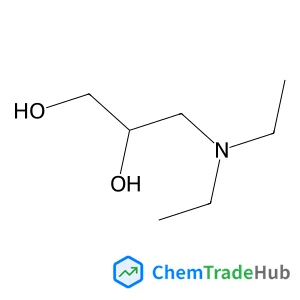
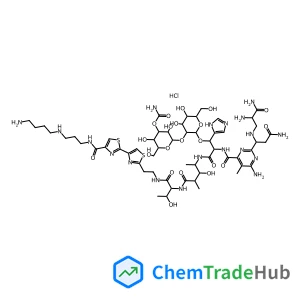
![(2S)-{[(9H-Fluoren-9-ylmethoxy)carbonyl]amino}(phenyl)acetic acid structure](https://cnstatic.chemtradehub.com/structs/102/102410-65-1-4aa7.webp "(2S)-{[(9H-Fluoren-9-ylmethoxy)carbonyl]amino}(phenyl)acetic acid structure")
![2,5-Furandione, dihydro-3-[3-(triethoxysilyl)propyl]- structure](https://cnstatic.chemtradehub.com/structs/936/93642-68-3-3b4b.webp "2,5-Furandione, dihydro-3-[3-(triethoxysilyl)propyl]- structure")
推荐供应商




免责声明
本页面提供的学术期刊信息仅供参考和研究使用。我们与任何期刊出版商均无关联,也不处理投稿事宜。如有投稿相关咨询,请直接联系相关期刊出版商。
如发现页面信息有误,请发送邮件至 support@chemtradehub.com 联系我们。我们将及时核实并处理您的问题。