


Vapor pressure of ionic liquids at low temperatures from AC-chip-calorimetry
文献信息
发布日期
2016-07-08
DOI
10.1039/C6CP01948J
影响因子
3.676
作者
Mathias Ahrenberg, Martin Beck, Christin Neise
查看原文
摘要
The very low vapor pressure of ionic liquids is challenging to measure. At elevated temperatures the liquids might start to decompose, and at relatively low temperatures the vapor pressure becomes too low to be measured by conventional methods. In this work we developed a highly sensitive method for mass loss determination at temperatures starting from 350 K. This technique is based on an alternating current calorimeter equipped with a chip sensor that consists of a free-standing SiNx-membrane (thickness <1 μm) and a measuring area with lateral dimensions of the order of 1 mm. A small droplet (diameter ca. 600 μm) of an ionic liquid is vaporized isothermally from the chip sensor in a vacuum-chamber. The surface-to-volume-ratio of such a droplet is large and the relative mass loss due to evaporation is therefore easy to monitor by the changing heat capacity (J K−1) of the remaining liquid. The vapor pressure is determined from the measured mass loss rates using the Langmuir equation. The method was successfully tested for the determination of the vapor pressure and the vaporization enthalpy of an archetypical ionic liquid 1-ethyl-3-methylimidazolium bis(trifluoromethylsulfonyl)imide ([EMIm][NTf2]). The data set created in this way in an extremely broad temperature range from 358 K to 780 K has allowed the estimation of the boiling temperature of [EMIm][NTf2]. The value (1120 ± 50) K should be considered as the first reliable boiling point of the archetypical ionic liquid obtained from experimental vapor pressures measured in the most possible close proximity to the normal boiling temperature.
期刊推荐
Journal of Saudi Chemical Society
Organic Process Research & Development
Russian Chemical Bulletin
Russian Journal of General Chemistry
Russian Journal of Applied Chemistry
Saudi Pharmaceutical Journal

Journal of Natural Medicines

Acta Materialia
Russian Journal of Coordination Chemistry
Drug Discovery Today
相关文献
DNA that is dispersed in the liquid crystalline phases of phospholipids is actively transcribed
Josephine Corsi, Marcus K. Dymond, Oscar Ces, Joscha Muck, Daniele Zink, George S. Attard
2008-04-08
Communication
DOI: 10.1039/B801199K
Zinc ferrite nanoparticles as MRI contrast agents
Carlos Bárcena, Amandeep K. Sra, Girija S. Chaubey, Chalermchai Khemtong, J. Ping Liu, Jinming Gao
2008-03-11
Communication
DOI: 10.1039/B801041B
An atom-efficient conjugation approach to well-defined block copolymers using RAFT chemistry and hetero Diels–Alder cycloaddition
Sebastian Sinnwell, Andrew J. Inglis, Thomas P. Davis, Martina H. Stenzel, Christopher Barner-Kowollik
2008-02-20
Communication
DOI: 10.1039/B718180A
Quantum dot probes for bacteria distinguish Escherichia coli mutants and permit in vivo imaging
W. Matthew Leevy, Timothy N. Lambert, James R. Johnson, Joshua Morris, Bradley D. Smith
2008-04-10
Communication
DOI: 10.1039/B803590C
Proton chemical shift anisotropy measurements of hydrogen-bonded functional groups by fast magic-angle spinningsolid-state NMR spectroscopy
Luminita Duma, Daniel Abergel, Piotr Tekely, Geoffrey Bodenhausen
2008-03-18
Communication
DOI: 10.1039/B801154K
In situ synthesis of gold-cross-linked poly(ethylene glycol) nanocomposites by photoinduced electron transfer and free radical polymerization processes
Yusuf Yagci, Marco Sangermano, Giancarlo Rizza
2008-04-04
Communication
DOI: 10.1039/B803279C
Anion complexation via C–H⋯X interactions using a palladacyclic receptor
Robin B. Bedford, Michael Betham, Craig P. Butts, Simon J. Coles, Michael B. Hursthouse, P. Noelle Scully, James H. R. Tucker, John Wilkie, Yasmine Willener
2008-04-23
Communication
DOI: 10.1039/B801823E
Novel iron titanate catalyst for the selective catalyticreduction of NO with NH3 in the medium temperature range
Fudong Liu, Hong He, Changbin Zhang
2008-02-20
Communication
DOI: 10.1039/B800143J
Identification of an intermediate in the deboronation of ortho-carborane: an adduct of ortho-carborane with two nucleophiles on one boron atom‡
Yoshiyuki Taoda, Takehiko Sawabe, Yasuyuki Endo, Kentaro Yamaguchi, Shinya Fujii, Hiroyuki Kagechika
2008-02-20
Communication
DOI: 10.1039/B716079H
您可能还喜欢
化合物问答
什么是5-Fluoro-4-iodo-2-methylaniline(CAS号:307306-08-7)?
5-氟-4-碘-2-甲氨基苯属于芳香族化合物,其分子式为C8H7FN2I。该化合物具有一定的反应活性,在有机合成和药物化学领域有一定的应用。
307306-08-75-Fluoro-4-iodo-2-me...
化合物问答
4-氟-3-硝基三氟甲苯(CAS号:367-86-2)通常如何合成?
4-氟-3-硝基三氟甲苯通常通过将三氟甲基苯在酸性条件下催化氧化为三氟甲基硝基苯,然后进行氟化反应得到目标化合物。该过程需要使用催化剂,如三氟乙酸,反应产率较高...
367-86-21-Fluoro-2-nitro-4-(...
化合物问答
6-氯-9-(2,3,5-三苯甲酰氧基-2-C-甲基-beta-D-呋喃核糖基)-9H-嘌呤(CAS号:205171-05-7)的物理化学性质是什么?
该化合物为白色至类白色晶体,分子量约为1046.95。它在水中几乎不溶,在有机溶剂如乙腈和甲醇中具有一定的溶解性。该化合物具有良好的化学稳定性和生物活性。
205171-05-76-Chloro-9-(2-C-meth...
化合物问答
如何储存6-氟喹啉-4-羧酸(CAS号:220844-73-5)?
6-氟喹啉-4-羧酸应储存在阴凉、干燥、通风良好的地方,避免阳光直射。储存在密闭容器中,避免与空气中的水分接触。储存温度应控制在室温以下,避免高温。
220844-73-56-Fluoroquinoline-4-...
化合物问答
(2S,2'S,3S,3'S)-3,3'-di-tert-butyl-4,4'-bis(2,6-dimethoxyphenyl)-2,2',3,3'-tetrahydro-2,2'-bibenzo[d][1,3]oxaphosphole(CAS号:1435940-21-8)通常如何合成?
该化合物通常通过芳香族化合物的亲核取代反应合成,首先将2,6-二甲氧基苯基引入到双环结构中,然后通过特定条件下的还原或氧化反应引入二叔丁基。反应过程中使用了钯作...
1435940-21-8(2S,2'S,3S,3'S)-4,4'...
化合物问答
如何储存KY02111(CAS号:1118807-13-8)?
KY02111应储存于阴凉、干燥、通风良好的地方,避免阳光直射和高温环境。应使用合适的密闭容器储存,并确保容器密封良好,防止水分和潮气进入。在储存期间,应注意检...
1118807-13-8N-(6-chlorobenzo[d]t...
化合物问答
如何储存4-(4-氯苯氧基)丁酸乙酯(CAS号:59227-79-1)?
4-(4-氯苯氧基)丁酸乙酯应储存在阴凉、干燥、通风良好的地方,远离火源和热源。避免阳光直射,防止容器破裂导致泄漏。储存时应保持容器密封,避免与空气中的水蒸气接...
59227-79-1Ethyl 4-(4-chlorophe...
化合物问答
4-庚基苯乙酮(CAS号:37593-03-6)安全吗?
4-庚基苯乙酮相对安全,但在使用和储存时仍需注意。应避免吸入其蒸气,避免皮肤接触,使用时需佩戴防护眼镜和手套。储存时应远离火源和热源,保持容器密封,放置于阴凉、...
37593-03-61-(4-Heptylphenyl)et...
化合物问答
什么是乙基2-氨基-4-(3-溴苯基)噻吩-3-羧酸乙酯(CAS号:438218-48-5)?
乙基2-氨基-4-(3-溴苯基)噻吩-3-羧酸乙酯是一种有机化合物,分子式为C16H12BrN2O2S。它是一种含有噻吩环、氨基、溴苯基和羧酸酯结构的化合物。这...
438218-48-5ethyl 2-amino-4-(3-b...
化合物问答
什么是(9ci)-2-氨基-6-甲基-苯甲酰胺(CAS号:1885-31-0)?
(9ci)-2-氨基-6-甲基-苯甲酰胺是一种化学化合物,其英文名称为2-Amino-6-methylbenzamide,CAS号为1885-31-0。该化合物...
1885-31-02-Amino-6-methylbenz...
来源期刊
Physical Chemistry Chemical Physics

CiteScore:
5.5
自引率:
10.3%
年发文量:
3036
Physical Chemistry Chemical Physics (PCCP) is an international journal co-owned by 19 physical chemistry and physics societies from around the world. This journal publishes original, cutting-edge research in physical chemistry, chemical physics and biophysical chemistry. To be suitable for publication in PCCP, articles must include significant innovation and/or insight into physical chemistry; this is the most important criterion that reviewers and Editors will judge against when evaluating submissions. The journal has a broad scope and welcomes contributions spanning experiment, theory, computation and data science. Topical coverage includes spectroscopy, dynamics, kinetics, statistical mechanics, thermodynamics, electrochemistry, catalysis, surface science, quantum mechanics, quantum computing and machine learning. Interdisciplinary research areas such as polymers and soft matter, materials, nanoscience, energy, surfaces/interfaces, and biophysical chemistry are welcomed if they demonstrate significant innovation and/or insight into physical chemistry. Joined experimental/theoretical studies are particularly appreciated when complementary and based on up-to-date approaches.
推荐化合物
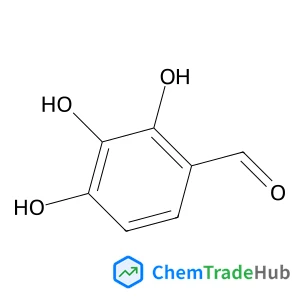
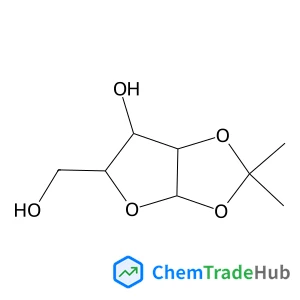
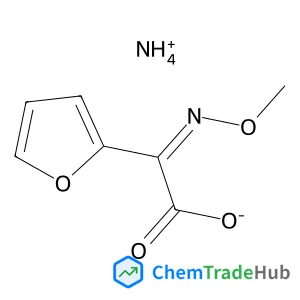
推荐供应商




免责声明
本页面提供的学术期刊信息仅供参考和研究使用。我们与任何期刊出版商均无关联,也不处理投稿事宜。如有投稿相关咨询,请直接联系相关期刊出版商。
如发现页面信息有误,请发送邮件至 support@chemtradehub.com 联系我们。我们将及时核实并处理您的问题。