


![N-[(1R,2R)-2-Amino-1,2-diphenylethyl]-1,1,1-trifluoromethanesulfonamide structure](https://cnstatic.chemtradehub.com/structs/852/852212-89-6-5ef9.webp "N-[(1R,2R)-2-Amino-1,2-diphenylethyl]-1,1,1-trifluoromethanesulfonamide structure")
N-[(1R,2R)-2-Amino-1,2-diphenylethyl]-1,1,1-trifluoromethanesulfonamide
CAS号:
852212-89-6
分子式:
C15H15F3N2O2S
Marcileia Zanatta, Anne-Lise Girard, Graciane Marin, Gunter Ebeling, Francisco P. dos Santos, Chiara Valsecchi, Hubert Stassen, Paolo R. Livotto, William Lewis
It is well known that the macroscopic physico-chemical properties of ionic liquids (ILs) are influenced by the presence of water that strongly interferes with the supramolecular organization of these fluids. However, little is known about the function of water traces within this confined space and restricted ionic environments, i.e. between cations and anions. Using specially designed ILs namely 1,2,3-trimethyl-1H-imidazol-3-ium imidazol-1-ide (MMMI·Im) and 3-n-butyl-1,2-dimethyl-1H-imidazol-3-ium imidazol-1-ide (BMMI·Im), the structure and function of water have been determined in condensed, solution and gas phases by X-ray diffraction studies, NMR, molecular dynamics simulations (MDS) and DFT calculations. In the solid state the water molecule is trapped inside the ionic network (constituted of contact ion pairs formed by π+–π− interaction) through strong H-bonds involving the water hydrogens and the nitrogens of two imidazolate anions forming a guest@host supramolecular structure. A similar structural arrangement was corroborated by DFT calculations and MDS. The presence of a guest@host species (H2O@ILpair) is maintained to a great extent even in solution as detected by 1H–1H NOESY-experiments of the ILs dissolved in solvents with low and high dielectric constants. This confined water catalyses the H/D exchange with other substrates containing acidic-H such as chloroform.
E. L. Albuquerque
DOI: 10.1039/D1CP01977E
Cheng-chau Chiu, Jer-Lai Kuo
DOI: 10.1039/D1CP02997E
Catia Clementi, Fausto Elisei, Federica Daus
DOI: 10.1039/D1CP01535D
Máté Szalay, Dániel Buzsáki, Júlia Barabás, Endre Faragó, Ewald Janssens
DOI: 10.1039/D1CP02220B
Beppo Hartwig, Martin A. Suhm
DOI: 10.1039/D1CP03367K
Sangeetha Ashok Kumar, Jaya Seeli Shankar, Bhuvana K. Periyasamy, Sanjay K. Nayak
DOI: 10.1039/D1CP03035C
Mykola Telychko, Lulu Wang, Guangwu Li, Xinnan Peng, Shaotang Song, Jie Su, Jishan Wu, Ming Wah Wong
DOI: 10.1039/D1CP02996G
Yasuhiko Takeda, Tomiko M. Suzuki, Shunsuke Sato, Takeshi Morikawa
DOI: 10.1039/D1CP00597A
Quan-De Wang, Dongchang Liu, Jinhu Liang
DOI: 10.1039/D1CP02066H
Takuya Hirakawa, Erik Walinda, Daichi Morimoto, Kenji Sugase
DOI: 10.1039/D1CP03175A
奥美沙坦酯杂质4在药物工业中并无特定用途,主要作为生产和质量控制中的监控指标,以确保产品质量和符合相关规范。它具有一定的化学活性,因此在生产过程中需要严格控制其...
C3bot (154-182)应储存在干燥、阴凉、通风良好的环境中,避免阳光直射。具体储存条件需要参考其相关安全数据表(SDS)中的储存信息。建议使用密闭容器存...
在合成过程中,可以考虑使用类似结构的化合物作为替代品,例如4-吡唑甲酸甲酯或其他吡唑类化合物。这些替代品在性质上相似,可以用于相似的合成反应中,但需根据具体应用...
(2-溴乙基)三甲基硅烷主要用作有机合成中的溴代试剂,特别是在硅化学领域中,用于制备硅烷衍生物和硅基功能材料。它也用于表面改性、催化剂合成、医药中间体合成以及分...
含该化合物的废料需按照危险废物管理规定进行分类和处理。首先,应尽量减少废料的产生,通过改进生产工艺实现废物最小化。对于不可避免的废料,建议采用安全的收集方法,避...
1,1,1-三氟-6-苯基-5-(e)-己烯-2,4-二酮是一种有机化合物,化学式为C14H8F3O2。它是一种具有特定立体结构的芳香族化合物,属于酮类。
2-(2-甲基哌啶-1-基)-2-氧代-乙酸主要用于药物合成、有机合成及作为化学试剂。它在医药领域有一定的应用,可用于合成某些药物中间体。此外,它还用于实验室研...
应将(R)-1-(3-氯苯基)-2,2,2-三氟乙胺储存在阴凉、干燥、通风良好的地方,远离火源和热源。应使用密封的容器储存,并避免光照。储存温度应控制在室温范围...
N-亚硝基-N,N-二壬基胺目前主要应用于有机合成和药物化学领域。市场趋势显示,随着有机合成技术的进步,该化合物在新药研发中的应用将更加广泛。新兴研究领域包括其...
该化合物在医药、农药等领域有潜在应用价值,但市场需求较小。目前研究趋势主要集中在探索其在特定领域的应用潜力,如作为药物合成中的中间体。随着研究的深入,预计未来市...

Physical Chemistry Chemical Physics (PCCP) is an international journal co-owned by 19 physical chemistry and physics societies from around the world. This journal publishes original, cutting-edge research in physical chemistry, chemical physics and biophysical chemistry. To be suitable for publication in PCCP, articles must include significant innovation and/or insight into physical chemistry; this is the most important criterion that reviewers and Editors will judge against when evaluating submissions. The journal has a broad scope and welcomes contributions spanning experiment, theory, computation and data science. Topical coverage includes spectroscopy, dynamics, kinetics, statistical mechanics, thermodynamics, electrochemistry, catalysis, surface science, quantum mechanics, quantum computing and machine learning. Interdisciplinary research areas such as polymers and soft matter, materials, nanoscience, energy, surfaces/interfaces, and biophysical chemistry are welcomed if they demonstrate significant innovation and/or insight into physical chemistry. Joined experimental/theoretical studies are particularly appreciated when complementary and based on up-to-date approaches.
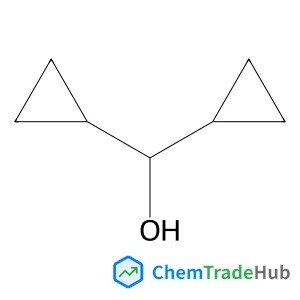
![5,10-Dihydro-11H-dibenzo[b,e][1,4]diazepin-11-one structure](https://cnstatic.chemtradehub.com/structs/581/5814-41-5-0b01.webp "5,10-Dihydro-11H-dibenzo[b,e][1,4]diazepin-11-one structure")