






A theoretical study of the atmospherically important radical–radical reaction BrO + HO2; the product channel O2(a1Δg) + HOBr is formed with the highest rate
文献信息
发布日期
2016-10-20
DOI
10.1039/C6CP05877A
影响因子
3.676
作者
Ronald Chow, Daniel K. W. Mok, John M. Dyke
查看原文
摘要
A theoretical study has been made of the BrO + HO2 reaction, a radical–radical reaction which contributes to ozone depletion in the atmosphere via production of HOBr. Reaction enthalpies, activation energies and mechanisms have been determined for five reaction channels. Also rate coefficients have been calculated, in the atmospherically important temperature range 200–400 K, for the two channels with the lowest activation energies, both of which produce HOBr: (R1a) HOBr(X1A′) + O2(X3Σ−g) and (R1b) HOBr(X1A′) + O2(a1Δg). The other channels considered are: (R2) BrO + HO2 → HBr + O3, (R3) BrO + HO2 → OBrO + OH and (R4) BrO + HO2 → BrOO + OH. For all channels, geometry optimization and frequency calculations were carried out at the M06-2X/AVDZ level, while relative energies of the stationary points on the reaction surface were improved at a higher level (BD(TQ)/CBS or CCSD(T)/CBS). The computed standard reaction enthalpies (ΔHRX298K) for channels (R1a), (R1b), (R2), (R3) and (R4) are −47.5, −25.0, −4.3, 14.9 and 5.9 kcal mol−1, and the corresponding computed activation energies (ΔE) are 2.53, −3.07, 11.83, 35.0 and 37.81 kcal mol−1. These values differ significantly from those obtained in earlier work by Kaltsoyannis and Rowley (Phys. Chem. Chem. Phys., 2002, 4, 419–427), particularly for channel (R1b), and reasons for this are discussed. In particular, the importance of obtaining an open-shell singlet wavefunction, rather than a closed-shell singlet wavefunction, for the transition state of this channel is emphasized. Rate coefficient calculations from computed potential energy surfaces were made for BrO + HO2 for the first time. Although channel (R1a) is the most exothermic, channel (R1b) has the lowest barrier height, which is negative (at −3.07 kcal mol−1). Most rate coefficient calculations were therefore made for (R1b). A two transition state model has been used, involving an outer and an inner transition state. The inner transition state was found to be the major bottleneck of the reaction with the outer transition state having essentially no effect on the overall rate coefficient (k) in the temperature range considered. Studying the entropy, enthalpy and free energy of activation of this channel as a function of temperature shows that the main contributor to the magnitude of ln k at a selected temperature is the entropy term (ΔS#/kB) whereas the temperature dependence of ln k is determined mainly by the enthalpy term (−ΔH#/kBT). This compares with reactions with positive barrier heights where the enthalpy term makes a bigger contribution to ln k. Comparison of the computed rate coefficients with available experimental values shows that the computed values have a negative temperature dependence, as observed experimentally, but are too low by approximately an order of magnitude at any selected temperature in the range 200–400 K.
相关文献
Separation of cobalt and nickel by solvent extraction with two mutually immiscible ionic liquids
Sil Wellens, Ben Thijs, Claudia Möller, Koen Binnemans
2013-04-12
Paper
DOI: 10.1039/C3CP50819F
Investigation of porosity and heterojunction effects of a mesoporous hematiteelectrode on photoelectrochemical water splitting
Jingling Liu, Muhammad Shahid, Young-Seon Ko, Eunchul Kim, Tae Kyu Ahn, Jong Hyeok Park
2013-04-22
Paper
DOI: 10.1039/C3CP51053K
High performance thylakoid bio-solar cell using laccase enzymatic biocathodes
Michelle Rasmussen, Alexander Shrier, Shelley D. Minteer
2013-05-13
Communication
DOI: 10.1039/C3CP51813B
Ab initio calculations of the optical absorption spectra of C60-conjugated polymer hybrids
Peter D. Haynes
2013-06-24
Paper
DOI: 10.1039/C3CP52043A
A novel correlation of vibrational circular dichroismspectra with the electronic ground state for Δ-SAPR-8-cesium-tetrakis((+)-heptafluorobutyryl-camphorato)lanthanide(iii) complexes
Sumio Kaizaki, Dai Shirotani, Hisako Sato
2013-05-07
Communication
DOI: 10.1039/C3CP50509J
Tuning the Förster overlap integral: energy transfer over 20 Ångstroms from a pyrene-based donor to borondipyrromethene (Bodipy)
Dan Bai, Andrew C. Benniston, Jerry Hagon, Helge Lemmetyinen, Nikolai V. Tkachenko, Ross W. Harrington
2013-05-07
Paper
DOI: 10.1039/C3CP50173F
Deuterium isotope effects in the polyatomic reaction of O(1D2) + CH4 → OH + CH3
Yoshihiro Ogi, Hiroshi Kohguchi
2013-07-01
Paper
DOI: 10.1039/C3CP51680F
Organic n-type materials for charge transport and charge storage applications
Monika Stolar, Thomas Baumgartner
2013-05-14
Perspective
DOI: 10.1039/C3CP51379C
(Sub-)femtosecond control of molecular reactions via tailoring the electric field of light
Philipp von den Hoff, Irina Znakovskaya, Regina de Vivie-Riedle
2013-04-09
Perspective
DOI: 10.1039/C3CP50591J
Noble metal catalyzed preparation of Ni2P/α-Al2O3
Xuguang Liu, Lei Xu
2013-04-30
Paper
DOI: 10.1039/C3CP51170G
您可能还喜欢
化合物问答
什么是2-Bromo-1-(pyrimidin-2-yl)ethanone hydrobromide(CAS号:1588441-02-4)?
2-Bromo-1-(pyrimidin-2-yl)ethanone hydrobromide是一种有机化合物,分子式为C6H5Br2N2O2。它是一种溴代化合...
1588441-02-42-Bromo-1-(2-pyrimid...
化合物问答
在合成中是否有1-正-丁基-3-甲基咪唑鎓三氟甲烷磺酸盐(CAS号:174899-66-2)的替代品?
在合成中,可以考虑使用1-正-丁基-3-甲基咪唑鎓溴酸盐或1-正-丁基-3-甲基咪唑鎓氯酸盐作为替代品。这些化合物在性能上与1-正-丁基-3-甲基咪唑鎓三氟甲烷...
174899-66-21-Butyl-3-methyl-1H-...
化合物问答
2-methyl-5-thiophen-2-ylfuran-3-carboxylic acid(CAS号:651005-90-2)的市场或研究趋势如何?
目前,2-methyl-5-thiophen-2-ylfuran-3-carboxylic acid的研究主要集中在药物化学和新型材料领域。随着生物医药和有机合...
651005-90-22-Methyl-5-(thien-2-...
化合物问答
格列吡嗪杂质H(CAS号:13554-93-3)的主要用途是什么?
格列吡嗪杂质H主要作为药物中间体或副产物存在,并无特定的工业应用。在药物生产中,它可能需要被处理掉以保证最终药物的质量。
13554-93-3Ethyl (2-(4-((cycloh...
化合物问答
如何储存(9ci)-4-甲氧基-1H-苯并咪唑-2-乙腈(CAS号:317817-41-7)?
(9ci)-4-甲氧基-1H-苯并咪唑-2-乙腈应储存在阴凉、干燥、通风良好的地方,避免阳光直射。使用密封的玻璃或塑料容器储存,并确保容器的密封性良好,以防止挥...
317817-41-7(4-Methoxy-1H-benzim...
化合物问答
4,5,9,10-四氢苯芘(CAS号:781-17-9)应用于哪些行业?
4,5,9,10-四氢苯芘在医药行业用于作为某些药物的中间体,在聚合物行业用作添加剂提升材料的热稳定性,在传感器领域作为传感器的敏感材料,在半导体行业中用作掺杂...
781-17-94,5,9,10-Tetrahydrop...
化合物问答
处理叶酸-D4(CAS号:171777-72-3)时应注意哪些实验室安全事项?
处理叶酸-D4时应佩戴个人防护装备(PPE),如手套和实验服。操作应在通风橱内进行,以避免吸入蒸汽或粉尘。如果不慎泄露,应立即用大量清水冲洗,并通知安全人员。参...
171777-72-3Folic Acid-d4
化合物问答
如何处理含有6-溴-2-(三氟乙酰基)-1,2,3,4-四氢异喹啉(CAS号:252331-63-8)的废料?
含有该化合物的废料应收集到专用的容器中,并进行密封以防止挥发和泄漏。在处理前,需进行危险性评估,以确定是否需要进行化学处理。最终处置需遵循当地的危险废物管理规定...
252331-63-81-(6-bromo-3,4-dihyd...
化合物问答
4,5-二氟-2-甲氧基苯甲醛(CAS号:145742-34-3)的主要用途是什么?
4,5-二氟-2-甲氧基苯甲醛主要用作有机合成中的中间体,特别是在制药和农药领域。它可以作为合成其他有机化合物的原料。
145742-34-34,5-difluoro-2-metho...
化合物问答
5-溴-6-三氟甲基吲哚(CAS号:1198475-24-9)安全吗?
5-溴-6-三氟甲基吲哚作为一种化学试剂,具有一定的毒性,需要在通风橱中操作,并采取适当的安全措施以避免吸入、皮肤接触和眼睛刺激。应避免与皮肤和眼睛直接接触,并...
1198475-24-95-bromo-6-(trifluoro...
来源期刊
Physical Chemistry Chemical Physics

CiteScore:
5.5
自引率:
10.3%
年发文量:
3036
Physical Chemistry Chemical Physics (PCCP) is an international journal co-owned by 19 physical chemistry and physics societies from around the world. This journal publishes original, cutting-edge research in physical chemistry, chemical physics and biophysical chemistry. To be suitable for publication in PCCP, articles must include significant innovation and/or insight into physical chemistry; this is the most important criterion that reviewers and Editors will judge against when evaluating submissions. The journal has a broad scope and welcomes contributions spanning experiment, theory, computation and data science. Topical coverage includes spectroscopy, dynamics, kinetics, statistical mechanics, thermodynamics, electrochemistry, catalysis, surface science, quantum mechanics, quantum computing and machine learning. Interdisciplinary research areas such as polymers and soft matter, materials, nanoscience, energy, surfaces/interfaces, and biophysical chemistry are welcomed if they demonstrate significant innovation and/or insight into physical chemistry. Joined experimental/theoretical studies are particularly appreciated when complementary and based on up-to-date approaches.
推荐化合物
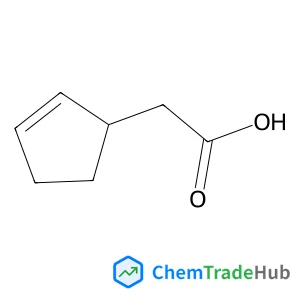
![4-[(1-Methyl-1H-pyrrol-2-yl)methylene]-1,3(2H,4H)-isoquinolinedione structure](https://cnstatic.chemtradehub.com/structs/110/1104546-89-5-a600.webp "4-[(1-Methyl-1H-pyrrol-2-yl)methylene]-1,3(2H,4H)-isoquinolinedione structure")
4-[(1-Methyl-1H-pyrrol-2-yl)methylene]-1,3(2H,4H)-isoquinolinedione
CAS号:
1104546-89-5
分子式:
C15H12N2O2
推荐供应商



免责声明
本页面提供的学术期刊信息仅供参考和研究使用。我们与任何期刊出版商均无关联,也不处理投稿事宜。如有投稿相关咨询,请直接联系相关期刊出版商。
如发现页面信息有误,请发送邮件至 support@chemtradehub.com 联系我们。我们将及时核实并处理您的问题。