










![2-Methyl-2-propanyl {3-[4-(4,4,5,5-tetramethyl-1,3,2-dioxaborolan-2-yl)phenyl]-3-oxetanyl}carbamate structure](https://cnstatic.chemtradehub.com/structs/127/1279090-25-3-1b84.webp "2-Methyl-2-propanyl {3-[4-(4,4,5,5-tetramethyl-1,3,2-dioxaborolan-2-yl)phenyl]-3-oxetanyl}carbamate structure")
The effect of defect types on the electronic and optical properties of graphene nanoflakes physisorbed by ionic liquids
文献信息
发布日期
2017-01-17
DOI
10.1039/C6CP07455C
影响因子
3.676
作者
Mehdi Shakourian-Fard, Ganesh Kamath
查看原文
摘要
Defect engineering and non-covalent interaction strategies allow for dramatically tuning the optoelectronic properties of graphene. Using ab initio density functional theory (M06-2X/cc-pVDZ), we find that the nature of defects on the graphene nanoflakes (GNFs) and the size of defective GNF (DGNF) surfaces affect the binding energy (ΔEb) of ionic liquids (ILs) and the UV-Vis absorption spectra of DGNF⋯IL complexes. Further, our results indicate that increasing the size of DGNFs affects the geometrical structure of the surfaces and increases the binding energy of ILs by about 10%. Analysis based on AIM and EDA shows that the interactions between ILs and DGNFs are non-covalent in nature (dispersion energy being dominant) and associated with charge transfer between the IL and nanoflakes. A comparison between the ΔEb values of ILs on DGNFs, GNFs, and h-BN nanoflakes (h-BNNF) shows that the presence of defects on the GNF surfaces increases the binding energy values as follows: DGNF⋯IL > pristine GNF⋯IL > h-BNNF⋯IL. Our calculations indicate that increasing the size of DGNF surfaces leads to a decrease in the HOMO–LUMO energy gap (Eg) of the DGNF surfaces. Orbital energy and density of state calculations show that the Eg of DV(SW)-GNFs decreases upon IL adsorption and their Fermi energy level is shifted depending on the type of IL, thus enabling better conductivity. Reactivity descriptors generally indicate that the chemical potential (μ) and chemical hardness (η) of nanoflakes decrease upon IL adsorption, whereas the electrophilicity index (ω) increases. The UV-Vis absorption spectrum of DV-GNF and SW-GNF shows four bands in the visible spectrum which correspond to π → π* transitions with the absorption bands of SW-GNF appearing at higher wavelengths than those of DV-GNF. The most intense absorption bands in DV-GNF (λ = 348 nm) and SW-GNF (λ = 375 nm) are associated with electronic transitions HOMO−1 → LUMO+2 and HOMO → LUMO+1, respectively. In addition, these absorption bands undergo a red-shift by both increasing the size of the DV(SW)-GNF surfaces and IL adsorption. We also observe that the energy gaps and absorption spectra can be altered by varying the defect types and the type of IL adsorbate, where the defect types affect the spectral shapes of the bands and adsorbates at the first absorption peak, thus having potential application for light-emitting devices.
相关文献
(Hollow Au–Ag nanoparticles)–TiO2 composites for improved photocatalytic activity prepared from block copolymer-stabilized bimetallic nanoparticles
Na Li, Xiaoyu Zhang, Shulong Yuan, Xiaokai Zhang, Yuzhen Yuan, Xue Li
2015-04-01
Paper
DOI: 10.1039/C4CP06093H
Investigation of thermal evolution of copper nanoclusters encapsulated in carbon nanotubes: a molecular dynamics study
Hamed Akbarzadeh, Mohsen Abbaspour, Sirous Salemi, Mousareza Abroodi
2015-04-16
Paper
DOI: 10.1039/C5CP01294E
Electrodeposition of germanium at elevated temperatures and pressures from ionic liquids
Minxian Wu, Gijs Vanhoutte, Neil R. Brooks, Koen Binnemans, Jan Fransaer
2015-04-10
Paper
DOI: 10.1039/C4CP06076H
Two-dimensional electronic-vibrational spectra: modeling correlated electronic and nuclear motion
F. Terenziani, A. Painelli
2015-04-20
Paper
DOI: 10.1039/C5CP01485A
An experimental and theoretical study of the photoisomerization and thermal reversion on 5-arylmethylene-2-thioxoimidazolidin-4-one
A. J. Pepino, M. A. Burgos Paci, W. J. Peláez, G. A. Argüello
2015-04-08
Paper
DOI: 10.1039/C4CP04748F
A class of rare antiferromagnetic metallic oxides: double perovskite AMn3V4O12 (A = Na+, Ca2+, and La3+) and the site-selective doping effect
Guangbiao Zhang, Yuanxu Wang, Yuli Yan, Chengxiao Peng, Chao Wang, Shuai Dong
2015-04-15
Paper
DOI: 10.1039/C5CP00186B
Atomic structure of biodegradable Mg-based bulk metallic glass
2015-04-15
Paper
DOI: 10.1039/C4CP03714F
Photocarrier recombination dynamics in ternary chalcogenide CuInS2 quantum dots
Michio Ikezawa, Xiuying Wang, Pengtao Jing, Haibo Li, Yasuaki Masumoto
2015-02-17
Paper
DOI: 10.1039/C5CP00034C
Electrical and thermal transport properties of Pb1−xSnxSe solid solution thermoelectric materials
Chao-Feng Wu, Tian-Ran Wei, Jing-Feng Li
2015-04-20
Paper
DOI: 10.1039/C4CP06021K
Oxygen diffusion in single crystal barium titanate
Markus Kessel, Roger A. De Souza, Manfred Martin
2015-04-14
Paper
DOI: 10.1039/C5CP01187F
您可能还喜欢
化合物问答
4-[[6-(3-苯基苯基)-7H-嘌呤-2-基]氨基]苯磺酰胺(CAS号:2079895-42-2)适用哪些法规指南?
该化合物需遵循REACH法规以确保其安全使用和管理。同时,根据其潜在的生物降解性和毒性,也需要符合GHS分类中的相应要求。此外,若用于医药或食品相关领域,则还需...
2079895-42-24-{[6-(3-Biphenylyl)...
化合物问答
反式-度骨化醇(CAS号:74007-20-8)的物理化学性质是什么?
反式-度骨化醇是一种脂溶性维生素D3的衍生物,呈无色或白色结晶性粉末,不溶于水,溶于乙醇、丙酮、氯仿等有机溶剂。其分子式为C28H44O,分子量为404.65。...
74007-20-8trans-Doxercalcifero...
化合物问答
莲花掌苷(CAS号:59282-56-3)的市场或研究趋势如何?
莲花掌苷作为一种天然产物,近年来在抗炎、抗癌等生物活性研究方面显示出一定的潜力,因此市场需求逐渐增长。市场动态方面,随着天然产物开发的深入,预计该化合物的研究会...
59282-56-3Lindleyin
化合物问答
2-溴-6-(吡咯烷-1-基)吡啶-4-硼酸频那醇酯(CAS号:1150271-64-9)应用于哪些行业?
2-溴-6-(吡咯烷-1-基)吡啶-4-硼酸频那醇酯在医药领域有着广泛的应用,它可以用作药物合成中的中间体。此外,它还可以用于有机合成,特别是在构建复杂杂环化合...
1150271-64-92-Bromo-6-(1-pyrroli...
化合物问答
什么是methyl 2-(4-bromophenyl)-3-methylbutanoate(CAS号:1061284-70-5)?
methyl 2-(4-溴苯基)-3-甲基丁酸甲酯是一种化学物质,分子式为C12H13BrO2。它是一种有机化合物,具有一定的挥发性和易燃性。
1061284-70-52-(4-Bromo-phenyl)-3...
化合物问答
CJC1-295(CAS号:863288-34-0)的物理化学性质是什么?
CJC1-295是一种具有复杂肽链结构的化合物,其分子量约为1875 Da。该化合物在水中具有一定的溶解性,但在有机溶剂中的溶解性不佳。它是一种反应活性化合物,...
863288-34-0L-tyrosyl-D-alanyl-L...
化合物问答
三正丁基锍碘(CAS号:18146-62-8)的市场或研究趋势如何?
三正丁基锍碘作为一种重要的有机硫化合物,主要用于有机合成中作为亲电试剂。近年来,由于其在合成中的广泛应用,市场对其需求持续增长。此外,随着绿色化学的发展,对其替...
18146-62-8Tributylsulfonium io...
化合物问答
雌二醇-[13C3]同位素内标(CAS号:1261254-48-1)通常如何合成?
雌二醇-[13C3]同位素内标通常通过在雌二醇分子中引入[13C3]同位素来合成。常见的方法是通过化学标记反应,如与[13C3]标记的甲基溴化物进行亲核取代反应...
1261254-48-117beta-Estradiol-2,3...
化合物问答
N1-(2-吡啶甲基)-N2-(2-甲基-1-萘基)草酰胺(CAS号:2611225-93-3)的物理化学性质是什么?
N1-(2-吡啶甲基)-N2-(2-甲基-1-萘基)草酰胺为固体化合物,具有良好的结晶形态,分子量为340.34 g/mol。该化合物在水中的溶解度较低,但在有...
2611225-93-3N-(2-Methyl-1-naphth...
化合物问答
如何处理含有十五碳烯酸甲酯(顺-10)(C15:1)标准品(CAS号:90176-52-6)的废料?
含有十五碳烯酸甲酯(顺-10)(C15:1)标准品的废料应首先进行适当收集和储存,避免与其他化学品混合。然后,可采用焚烧或交由专业废物处理公司进行处理。处理过程...
90176-52-6(Z)-10-Pentadecenoic...
来源期刊
Physical Chemistry Chemical Physics

CiteScore:
5.5
自引率:
10.3%
年发文量:
3036
Physical Chemistry Chemical Physics (PCCP) is an international journal co-owned by 19 physical chemistry and physics societies from around the world. This journal publishes original, cutting-edge research in physical chemistry, chemical physics and biophysical chemistry. To be suitable for publication in PCCP, articles must include significant innovation and/or insight into physical chemistry; this is the most important criterion that reviewers and Editors will judge against when evaluating submissions. The journal has a broad scope and welcomes contributions spanning experiment, theory, computation and data science. Topical coverage includes spectroscopy, dynamics, kinetics, statistical mechanics, thermodynamics, electrochemistry, catalysis, surface science, quantum mechanics, quantum computing and machine learning. Interdisciplinary research areas such as polymers and soft matter, materials, nanoscience, energy, surfaces/interfaces, and biophysical chemistry are welcomed if they demonstrate significant innovation and/or insight into physical chemistry. Joined experimental/theoretical studies are particularly appreciated when complementary and based on up-to-date approaches.
推荐化合物
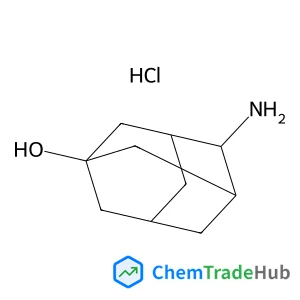
![2-Methylbenzo[h]quinoline structure](https://cnstatic.chemtradehub.com/structs/605/605-88-9-ac43.webp "2-Methylbenzo[h]quinoline structure")
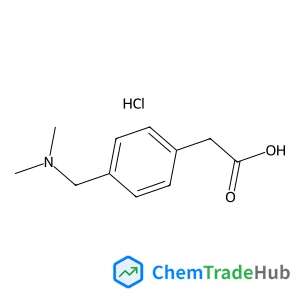
推荐供应商




免责声明
本页面提供的学术期刊信息仅供参考和研究使用。我们与任何期刊出版商均无关联,也不处理投稿事宜。如有投稿相关咨询,请直接联系相关期刊出版商。
如发现页面信息有误,请发送邮件至 support@chemtradehub.com 联系我们。我们将及时核实并处理您的问题。