


A polypeptide micelle template method to prepare polydopamine composite nanoparticles for synergistic photothermal–chemotherapy
文献信息
发布日期
2016-08-12
DOI
10.1039/C6PY01189F
影响因子
5.582
作者
Xingjie Wu, Linzhu Zhou, Yue Su
查看原文
摘要
Motivated by the wide interest in natural melanin and biomimetic polydopamine (PDA) in biomedical applications, the easy self-polymerization of dopamine (DA) under mild conditions, and the strong adhesive ability of PDA on various surfaces/interfaces, we for the first time develop a polypeptide micelle template method to fabricate PDA-coated composite nanoparticles and their anticancer drug doxorubicin (DOX)-loaded ones. After continuous-wave diode laser irradiation of the nanocomposite solution (5 min, 808 nm, 2 W cm−2), the magnitude of temperature elevation increased over the concentration of DA and the reaction time, respectively, and the nanocomposite solution was heated by 33.4 °C compared to the 4.2 °C increase for the PBS buffer. As evaluated by flow cytometry, and fluorescence microscopy, AO/EB double staining technique, and standard MTT assay, the DOX-loaded nanocomposites entered into HeLa cells and killed them efficiently. They gave a half maximal inhibitory concentration (IC50) of 30.5 μg mL−1 and a combination index of 0.59, which exhibits a good synergistic antitumor effect for the combination photothermal–chemotherapy. By utilizing the core-cross-linked polypeptide micelles as a soft template, this work provides a facile strategy for the fabrication of biocompatible PDA–polymer nanocomposites, which hold promise for the synergistic photothermal–chemotherapy of cancer.
期刊推荐
Bioorganic & Medicinal Chemistry

Journal of the Indian Institute of Science

Journal of Asian Natural Products Research

Heteroatom Chemistry

Critical Reviews in Solid State and Materials Sciences
Topics in Catalysis

Colloid Journal
Herald of the Russian Academy of Sciences

Atomization and Sprays
Polycyclic Aromatic Compounds
相关文献
A sonochemical approach to hierarchical porous titania spheres with enhanced photocatalytic activity
Lizhi Zhang, Jimmy C. Yu
2003-07-11
Communication
DOI: 10.1039/B306013F
A free radical initiated optically active vinyl polymer with memory of chirality after removal of the inducing stereogenic center
Zhenning Yu, Xinhua Wan, Hailiang Zhang, Xiaofang Chen, Qifeng Zhou
2003-03-18
Communication
DOI: 10.1039/B212916G
Solvent-dependent 44 square grid and 64.82 NbO frameworks formed by Cu(Pyac)2 (bis[3-(4-pyridyl)pentane-2,4-dionato]copper(ii))
Banglin Chen, Frank R. Fronczek, Andrew W. Maverick
2003-07-28
Communication
DOI: 10.1039/B305457H
Immobilized heterobimetallic Ru/Co nanoparticle-catalyzed Pauson–Khand-type reactions in the presence of pyridylmethyl formate
Kang Hyun Park, Seung Uk Son, Young Keun Chung
2003-06-24
Communication
DOI: 10.1039/B304325H
Regio and diastereoselective lactonisation of enolisable 1,3-dicarbonyls by reaction with mesoionic 1,3-oxazolium-5-olates
Giovanni Grassi, Francesco Risitano, Francesco Foti, Massimiliano Cordaro, Giuseppe Bruno, Francesco Nicolò
2003-06-23
Communication
DOI: 10.1039/B304560A
A novel type of phosphide: synthesis and X-ray crystal structure analysis of (tBu3Si)3P4Li3
Hans-Wolfram Lerner, Matthias Wagner, Michael Bolte
2003-03-21
Communication
DOI: 10.1039/B210984K
First generation of pentazole (HN5, pentazolic acid), the final azole, and a zinc pentazolate salt in solution: A new N-dearylation of 1-(p-methoxyphenyl) pyrazoles, a 2-(p-methoxyphenyl) tetrazole and application of the methodology to 1-(p-methoxyphenyl) pentazole
R. N. Butler, John C. Stephens, Luke A. Burke
2003-03-18
Communication
DOI: 10.1039/B301491F
Stereoselective formation of dinuclear complexes with anomalous CD spectra
Shane G. Telfer, Tomohiro Sato
2003-03-27
Communication
DOI: 10.1039/B301267K
Distortion of a cellobio-derived isofagomine highlights the potential conformational itinerary of inverting β-glucosidases
Annabelle Varrot, James Macdonald, Robert V. Stick, Gavin Pell, Harry J. Gilbert, Gideon J. Davies
2003-03-20
Communication
DOI: 10.1039/B301592K
Oligonucleosides with a nucleobase-including backbone; synthesis and self-association of novel dinucleotide analogues
Andrew J. Matthews, Punit K. Bhardwaj, Andrea Vasella
2003-03-12
Communication
DOI: 10.1039/B300932G
您可能还喜欢
化合物问答
甲基双烯双酮(CAS号:5173-46-6)通常如何合成?
甲基双烯双酮可以通过多种途径合成。一种常见的合成方法是通过甲基化和环化反应,先由4-甲基-9-烯-1,3-二酮合成,然后进行环化反应得到目标产物。具体的合成路线...
5173-46-6Estra-4,9-diene-3,17...
化合物问答
如何处理含有tert-butyl 3,5-difluorobenzoate(CAS号:467442-11-1)的废料?
处理含有tert-butyl 3,5-difluorobenzoate(CAS号:467442-11-1)的废液时,应首先收集并密封,避免泄漏。随后,建议通过焚...
467442-11-12-Methyl-2-propanyl ...
化合物问答
4-二甲氧基甲基-2-(三氟甲基)嘧啶(CAS号:878760-47-5)通常如何合成?
4-二甲氧基甲基-2-(三氟甲基)嘧啶通常通过三氟甲基化反应合成。首先,将2-氯嘧啶与三氟甲基锂在惰性溶剂中反应,然后将得到的三氟甲基化中间体与二甲氧基甲基化试...
878760-47-54-(Dimethoxymethyl)-...
化合物问答
WRW4(CAS号:878557-55-2)的主要用途是什么?
WRW4主要应用于科学研究领域,尤其是在合成化学和有机合成方面。由于其特殊的化学性质,它可能被用于特定的化学反应或合成过程。
878557-55-2WRW4
化合物问答
什么是6-O-(三异丙基硅基)-D-葡萄烯糖(CAS号:137915-37-8)?
6-O-(三异丙基硅基)-D-葡萄烯糖是一种有机化合物,化学名为1,5-Anhydro-2-deoxy-6-O-(triisopropylsilyl)-D-ar...
137915-37-81,5-Anhydro-2-deoxy-...
化合物问答
N-Benzyl-N,N-dimethyl-2-phenoxyethanaminium(CAS号:7181-73-9)的主要用途是什么?
N-Benzyl-N,N-dimethyl-2-phenoxyethanaminium在有机合成中被用作保护基团,可以用于保护氨基,提高反应的选择性和产率。此外...
7181-73-9N-Benzyl-N,N-dimethy...
化合物问答
什么是3-(Cyclohex-1-en-1-yl)acrylic acid(CAS号:56453-88-4)?
3-(Cyclohex-1-en-1-yl)acrylic acid,简称3-环己烯-1-烯丙酸,是一种含有环己烯基团的丙烯酸衍生物,用于合成其他化合物或作为有...
56453-88-43-(Cyclohex-1-en-1-y...
化合物问答
如何储存(1R)-7-fluoro-1,2,3,4-tetrahydronaphthalen-1-amine(CAS号:1055949-62-6)?
应将(1R)-7-氟-1,2,3,4-四氢萘胺储存于阴凉、干燥、通风良好的地方,远离火源和热源。避免与氧化剂、酸类接触。使用合适的容器,密封保存。
1055949-62-6(1R)-7-Fluoro-1,2,3,...
化合物问答
3-甲基苯并呋喃-2-羧酸(CAS号:24673-56-1)的主要用途是什么?
3-甲基苯并呋喃-2-羧酸主要用作合成其他化合物的中间体,如药物合成、有机合成等领域。此外,该化合物在某些领域作为化学试剂或分析试剂使用。
24673-56-13-Methyl-1-benzofura...
化合物问答
孕烷醇酮(CAS号:128-20-1)适用哪些法规指南?
孕烷醇酮(CAS号:128-20-1)需遵守GHS(全球化学品统一分类和标签制度)的相关分类和标签要求,主要涉及健康危害、环境危害和物理化学危害。此外,还需要遵...
128-20-1(3alpha,5beta)-3-Hyd...
来源期刊
Polymer Chemistry

CiteScore:
8.6
自引率:
7.3%
年发文量:
457
Polymer Chemistry welcomes submissions in all areas of polymer science that have a strong focus on macromolecular chemistry. Manuscripts may cover a broad range of fields, yet no direct application focus is required.
推荐化合物
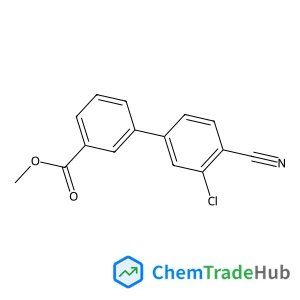
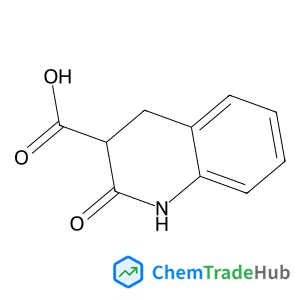
methyl]-N,2-dimethyl-2-propanesulfinamide structure](https://cnstatic.chemtradehub.com/structs/256/2565792-50-7-8a26.webp "N-[(R)-[3-(Benzyloxy)-2-(dicyclohexylphosphino)phenyl](phenyl)methyl]-N,2-dimethyl-2-propanesulfinamide structure")
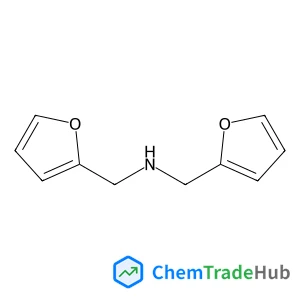
推荐供应商






免责声明
本页面提供的学术期刊信息仅供参考和研究使用。我们与任何期刊出版商均无关联,也不处理投稿事宜。如有投稿相关咨询,请直接联系相关期刊出版商。
如发现页面信息有误,请发送邮件至 support@chemtradehub.com 联系我们。我们将及时核实并处理您的问题。