


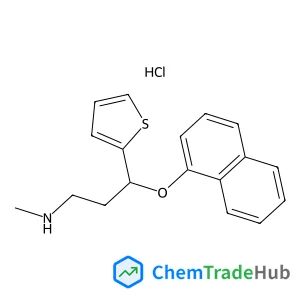
N-Methyl-3-(1-naphthyloxy)-3-(2-thienyl)-1-propanamine hydrochloride (1:1)
CAS号:
1188266-11-6
分子式:
C18H20ClNOS
Saeedeh Ansari, Saeed Masoum
A modified multiwalled carbon nanotube-based magnetic molecularly imprinted polymer (MWCNT-MMIP) was synthesized and applied for selective extraction and preconcentration of sotalol (SOT) in biological fluid samples by using ultrasonic-assisted dispersive solid-phase microextraction (UA-DSPME). The synthetic particles were characterized by scanning electron microscopy (SEM), transmission electron microscopy (TEM), Brunauer–Emmett–Teller (BET) analysis, vibrating sample magnetometry (VSM) and Fourier transform infrared spectroscopy (FTIR). The screening of UA-DSPME was preliminarily performed by Plackett–Burman design (PBD) and, subsequently, central composite design (CCD) under response surface methodology (RSM) was used individually for evaluation of the significant factors and their possible interaction effects on the adsorption process. Batch mode adsorption studies were performed to evaluate the adsorption kinetics, adsorption isotherms, and selective recognition of MWCNT-MMIPs. The adsorption equilibrium of SOT using MWCNT-MMIPs could be well-defined with the Langmuir isotherm model and the maximum adsorption capacity was calculated to be 79.36 mg g−1. Under optimized conditions, the SOT was selectively and effectively extracted in real biological samples and good linearity was obtained with correlation coefficients (R2) over 0.996 and the detection limit (S/N = 3) was 0.31 ng mL−1. The average recoveries of the spiked human urine and plasma samples at four concentration levels of SOT ranged from 94.60–102.50 and 97.40–101.60 percent, respectively, and the relative standard deviation was found to be lower than 4.50%. The results illustrated that the proposed MWCNT-MMIPs@UA-DSPME extraction method coupled with HPLC-UV determination could be applied for sensitive and selective analysis of trace SOT in biological fluid samples.

Russian Chemical Reviews

Fibre Chemistry

Proceedings of the National Academy of Sciences of the United States of America

Helvetica Chimica Acta

Israel Journal of Chemistry

Pure and Applied Chemistry

Journal of Catalysis

Journal of Physics and Chemistry of Solids

Organic Preparations and Procedures International

Nature
DOI: 10.1039/B617068D
Christian Antonio, Rowan T. Deam
DOI: 10.1039/B617358F
Frédéric Fraïsse, Jean-Marie Nedelec, Jean Pierre E. Grolier
DOI: 10.1039/B618701C
Georg Hohlneicher, Lars Packschies, Johannes Weber
DOI: 10.1039/B700914N
David Jewitt, Ralf I. Kaiser
DOI: 10.1039/B700814G
DOI: 10.1039/B700044H
Simon Penner, Bernhard Klötzer, Bernd Jenewein
DOI: 10.1039/B700650K
Tatsuo Shibata, Nobuyuki Sakai, Katsutoshi Fukuda, Yasuo Ebina, Takayoshi Sasaki
DOI: 10.1039/B618448K
DOI: 10.1039/B607837K
(5-氨基吡唑-3-基)乙酸是一种无色至白色固体,分子量为174.15 g/mol。它在水中具有较好的溶解性,在有机溶剂中的溶解度较低。该化合物具有较好的反应活...
3-氟-4,5-二氯苯胺受到多项法规指南的约束,包括但不限于GHS(全球化学品统一分类和标签制度)的危险分类标准、欧盟的REACH法规(注册、评估、授权和限制)...
这是一种有机化合物,化学名为(R)-(+)-2,2',6,6'-四甲氧基-4,4'-联(二(3,5-二甲苯基基)膦基)-3,3'-二联吡啶,CAS号为44290...
1-氨基-2-氰基萘在医药、聚合物、传感器和半导体等行业中有应用。在医药领域,它可用作中间体合成某些药物。在聚合物行业,它可以用于制备具有特定性能的聚合物。此外...
处理含1-溴-4-(异丙氧基甲基)苯的废料时,首先应确保废液收集在防渗漏的容器中,避免泄露。然后,可以考虑采用化学降解法或物理吸附法进行处理。在特定条件下,可通...
6-氯-8-三氟甲基-2,3-二氢-4H-色喃-4-酮主要用于有机合成中的中间体,也可作为研究试剂使用。
7-乙氧基-2-萘酚通常通过N-乙氧基化反应合成,首先将2-萘酚与乙醇钠在乙醇中反应生成7-乙氧基-2-萘酚钠盐,再通过酸化进一步得到7-乙氧基-2-萘酚。该合...
该化合物需遵循一系列的法规指南,包括但不限于GHS全球统一分类和标签制度,其分类可能包括易燃液体和可能危害水生环境。在欧洲,还需遵循REACH法规,确保物质和混...
4-甲氧基苄基叠氮甲酸酯是一种无色液体,具有一定的挥发性。其分子量为198.16,熔点为-69°C,沸点为105°C。该化合物在水中溶解度较低,在有机溶剂如乙醇...
含有4-氯-2-氟嘧啶的废料应按照危险废物处理。首先,应收集并分类这些废料,避免与其他废物混合。然后,可以采用焚烧处理或者交由专业机构进行处置。在处理过程中,需...

Analyst publishes analytical and bioanalytical research that reports premier fundamental discoveries and inventions, and the applications of those discoveries, unconfined by traditional discipline barriers.
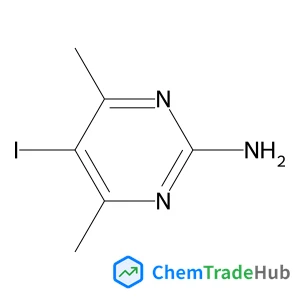
![1-oxaspiro[4.4]nonan-6-one structure](https://cnstatic.chemtradehub.com/structs/134/134179-01-4-e051.webp "1-oxaspiro[4.4]nonan-6-one structure")
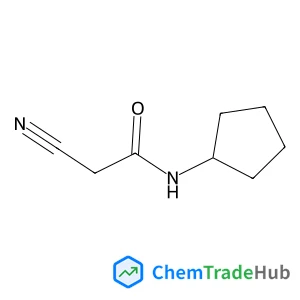
![1-(1-Benzyl-1,2,3,6-tetrahydropyridin-4-yl)-1H-benzo[d]imidazol-2(3H)-one structure](https://cnstatic.chemtradehub.com/structs/603/60373-71-9-7dfb.webp "1-(1-Benzyl-1,2,3,6-tetrahydropyridin-4-yl)-1H-benzo[d]imidazol-2(3H)-one structure")





