


Derivatization and interlaminar debonding of graphite–iron nanoparticle hybrid interfaces using Fenton chemistry
文献信息
发布日期
2017-03-31
DOI
10.1039/C7CP00357A
影响因子
3.676
作者
Neha Agarwal, Ruma Bhattacharyya, Narendra K. Tripathi, Sanjay Kanojia, Debmalya Roy, Kingsuk Mukhopadhyay, Namburi Eswara Prasad
查看原文
摘要
The interfacial debonding of graphite lattices using iron (Fe) nanoparticles and Fenton's reagent is reported, towards the scalable production of few-layer graphene flakes. Acoustic cavitation via a sonochemical route was adapted to produce iron and iron oxide nanoparticles in the graphite matrix. The oxygenated species were introduced into the graphite lattice using a physical method, and then Fenton chemistry was utilized to generate localized hydroxyl radicals at the Fe nanoparticle–graphite interfaces for zipping and self-exfoliation of the defected graphite lattices. The functional groups were found to have been introduced predominately at the periphery of the flake, confirming that the lateral dimension of graphene had not been affected, and at the same time, good dispersion in organic solvents had been achieved. Defect engineering could be modulated at the organic–inorganic hybrid interfaces, in order to control the zipping rate and regulate the degree of functionalization and the lateral dimensions of the graphene sheet.
期刊推荐
Current Opinion in Solid State & Materials Science
Acta Materialia
Russian Chemical Bulletin
Journal of Natural Medicines
Russian Journal of General Chemistry

Chemical Communications
Journal of Peptide Science
Current Opinion in Colloid & Interface Science
Russian Journal of Coordination Chemistry
Russian Journal of Bioorganic Chemistry
相关文献
Synthesis of multi-module low density lipoprotein receptor class A domains with acid labile cyanopyridiniumylides (CyPY) as aspartic acid masking groups
Kevin Neumann, Alex Vujinovic, Saidu Kamara, André Zwicky, Simon Baldauf, Jeffrey W. Bode
2023-01-24
Paper
DOI: 10.1039/D2CB00234E
Subfemtomolar electrochemical detection of target DNA by catalytic enlargement of the hybridized gold nanoparticlelabels
Murielle Rochelet-Dequaire, Benoît Limoges, Pierre Brossier
2006-06-30
Paper
DOI: 10.1039/B603963D
Photocleavable peptide hydrogel arrays for MALDI-TOF analysis of kinase activity
Laurie L. Parker, Shawn B. Brueggemeier, Won Jun Rhee, Ding Wu, Stephen B. H. Kent, Stephen J. Kron, Sean P. Palecek
2006-07-19
Paper
DOI: 10.1039/B607180E
On-chip immunomagnetic separation of allergens from myofibrillar proteins of seafoods for rapid allergy tests
Li Wang, Hongyan Bi
2022-07-30
Paper
DOI: 10.1039/D2AN00813K
Cell-electronic sensing of particle-induced cellular responses
Li Huang, Li Xie, Jessica M. Boyd
2008-02-28
Paper
DOI: 10.1039/B714384B
Picosecond Raman spectroscopy with a fast intensified CCD camera for depth analysis of diffusely scattering media
Freek Ariese, Heleen Meuzelaar, Marleen M. Kerssens, Joost B. Buijs, Cees Gooijer
2009-03-20
Paper
DOI: 10.1039/B821437A
Integrated multi-material portable 3D-printed platform for electrochemical detection of dopamine and glucose
Roger Domingo-Roca, Alexander R. Macdonald, Stuart Hannah, Damion K. Corrigan
2022-09-16
Paper
DOI: 10.1039/D2AN00862A
Extraction of chemical information from complex analytical signals by a non-negative independent component analysis
Xueguang Shao, Zhichao Liu, Wensheng Cai
2009-07-31
Paper
DOI: 10.1039/B902664A
您可能还喜欢
化合物问答
4-[4-三氟甲基苯基]恶唑(CAS号:1126636-40-5)通常如何合成?
4-[4-三氟甲基苯基]恶唑通常通过将4-三氟甲基苯酚与异硫氰酸苯酯在有机溶剂中进行酯化反应合成。该反应可在无水条件下,使用适当的催化剂,如四丁基氢氧化铵,以提...
1126636-40-54-(4-(Trifluoromethy...
59729-32-71-[3-(Dimethylamino)...
化合物问答
RockPhos Pd G3(CAS号:2009020-38-4)通常如何合成?
RockPhos Pd G3 通常通过钯催化偶联反应合成,使用配体 (2'-Amino-2-biphenylyl)(methanesulfonato-kappa...
2009020-38-4(2'-Amino-2-biphenyl...
化合物问答
1-哌啶甲酰胺(CAS号:2158-03-4)的市场或研究趋势如何?
1-哌啶甲酰胺作为有机合成中的重要中间体,其市场需求主要受医药、农药、染料等行业推动。近年来,随着新药开发和绿色化学的发展,该化合物的研究趋势集中在开发更高效、...
2158-03-41-Piperidinecarboxam...
化合物问答
2-(二苯基膦基)乙胺(CAS号:4848-43-5)适用哪些法规指南?
2-(二苯基膦基)乙胺适用于多种法规指南,包括但不限于《全球化学品统一分类和标签制度》(GHS),欧盟《化学品注册、评估、授权和限制》法规(REACH),以及美...
4848-43-52-(Diphenylphosphino...
化合物问答
如何储存间苯二甲酸二烯丙酯(CAS号:1087-21-4)?
间苯二甲酸二烯丙酯应储存在阴凉、干燥、通风良好的地方,远离火源和热源。储存容器应密封,避免光照和高温。储存温度应控制在25℃以下,相对湿度应低于80%。避免与其...
1087-21-4Diallyl isophthalate
化合物问答
什么是间甲苯异硫代异氰酸酯(CAS号:621-30-7)?
间甲苯异硫代异氰酸酯是一种有机化合物,分子式为C7H7NO2S,具有刺激性气味。它是一种重要的有机合成中间体,在合成其他化合物时广泛应用。
621-30-71-Isothiocyanato-3-m...
化合物问答
在合成中是否有N-Boc-D-苯丙氨醇(CAS号:106454-69-7)的替代品?
在合成中,可以考虑使用N-Cbz-D-苯丙氨醇或N-Fmoc-D-苯丙氨醇作为替代品。这些化合物同样具有保护氨基的功能,且在合成过程中表现出良好的反应性能。
106454-69-72-Methyl-2-propanyl ...
化合物问答
3-羟甲基-2-氧异丙基吡啶(CAS号:954240-50-7)的主要用途是什么?
3-羟甲基-2-氧异丙基吡啶主要用于有机合成领域,可以作为合成其他药物、农药或精细化学品的中间体。此外,它还可能在实验室研究中作为特定反应的前体或溶剂。
954240-50-7(2-Isopropoxy-3-pyri...
化合物问答
6-氨基-9-甲基嘌呤(CAS号:700-00-5)应用于哪些行业?
6-氨基-9-甲基嘌呤目前主要应用于医药行业,作为某些药物的中间体。此外,它还可能用于聚合物、传感器和半导体的某些领域,作为功能性单体或掺杂剂。
700-00-59-Methyl-9H-purin-6-...
来源期刊
Physical Chemistry Chemical Physics

CiteScore:
5.5
自引率:
10.3%
年发文量:
3036
Physical Chemistry Chemical Physics (PCCP) is an international journal co-owned by 19 physical chemistry and physics societies from around the world. This journal publishes original, cutting-edge research in physical chemistry, chemical physics and biophysical chemistry. To be suitable for publication in PCCP, articles must include significant innovation and/or insight into physical chemistry; this is the most important criterion that reviewers and Editors will judge against when evaluating submissions. The journal has a broad scope and welcomes contributions spanning experiment, theory, computation and data science. Topical coverage includes spectroscopy, dynamics, kinetics, statistical mechanics, thermodynamics, electrochemistry, catalysis, surface science, quantum mechanics, quantum computing and machine learning. Interdisciplinary research areas such as polymers and soft matter, materials, nanoscience, energy, surfaces/interfaces, and biophysical chemistry are welcomed if they demonstrate significant innovation and/or insight into physical chemistry. Joined experimental/theoretical studies are particularly appreciated when complementary and based on up-to-date approaches.
推荐化合物
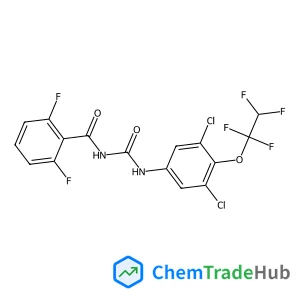
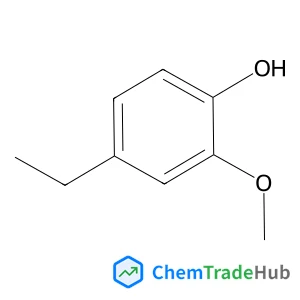
![2-Bromodibenzo[b,d]furan structure](https://cnstatic.chemtradehub.com/structs/86-/86-76-0-1814.webp "2-Bromodibenzo[b,d]furan structure")
推荐供应商





免责声明
本页面提供的学术期刊信息仅供参考和研究使用。我们与任何期刊出版商均无关联,也不处理投稿事宜。如有投稿相关咨询,请直接联系相关期刊出版商。
如发现页面信息有误,请发送邮件至 support@chemtradehub.com 联系我们。我们将及时核实并处理您的问题。