






Exploiting hydrogen bonding interactions to probe smaller linear and cyclic diamines binding to G-quadruplexes: a DFT and molecular dynamics study
文献信息
发布日期
2017-04-07
DOI
10.1039/C7CP00472A
影响因子
3.676
作者
Anik Sen
查看原文
摘要
G-quadruplexes are formed by the association of four guanine bases through Hoogsteen hydrogen bonding in guanine-rich sequences of DNA and exist in the telomere as well as in promoter regions of certain oncogenes. The sequences of G-quadruplex-DNA are targets for the design of molecules that can bind and can be developed as anti-cancer drugs. The linear and cyclic protonated diamines have been explored to bind to G-quadruplex-DNA through hydrogen bonding interactions. The quadruplex-DNA binders exploit π-stacking and hydrogen bonding interactions with the phosphate backbone of loops and grooves. In this study, linear and cyclic protonated diamines showed remarkable binding affinity for G-tetrads using hydrogen bonding interactions. The DFT M06-2X/6-31G(d)//B3LYP/6-31+G(d) level of theory showed that the cyclic ee-1,2-CHDA (equatorial–equatorial form of 1,2-disubstituted cyclohexadiamine di-cation) binds to the G-tetrads very strongly (∼70.0 kcal mol−1), with a much higher binding energy than the linear protonated diamines. The binding affinity of ligands for G-tetrads with counterions has also been examined. The binding preference of these small ligands for G-tetrads is higher than for DNA-duplex. The binding affinity of an intercalated acridine-based ligand (BRACO-19) for G-quadruplexes has been examined and the binding energy is relatively lower than that for the 1,2 disubstituted cyclohexadiamine di-cation with G-tetrads. The atoms-in-molecules (AIM) analysis reveals that the hydrogen bonding interactions between the organic systems with G-tetrads are primarily electrostatic in nature. The molecular dynamics simulations performed using a classical force field (GROMACS) also supported the phosphate backbone sites of G-quadruplex-DNA to bind to these diamines. To mimic the structural pattern of BRACO-19, the designed inhibitor N,2-bis-2(3,4-aminocyclohexyl) acetamide (9) examined possesses two 1,2-CHDA moieties linked through an acetamide group. The molecular dynamics results showed that the designed molecule 9 can efficiently bind to the base-pairs and the phosphate backbone of G quadruplex-DNA using H-bonding interactions. The binding affinity calculated for the intercalated acridine-based drug (BRACO-19) with G-quadruplexes is weaker compared to ee-1,2-CHDA. These ligands deliver a different binding motif (hydrogen bonding) compared to the reported G-quadruplex binders of π-delocalized systems and will kindle interest in examining such scaffolds to stabilize DNA.
相关文献
Double-hybrid density functionals: merging wavefunction and density approaches to get the best of both worlds
2013-06-18
Perspective
DOI: 10.1039/C3CP50907A
Transport properties of binuclear metal complexes of the VIII group using a simplified NEGF-DFT approach
Vincenzo Barone, Ivo Cacelli, Alessandro Ferretti
2013-05-10
Paper
DOI: 10.1039/C3CP50974E
Enhanced electrochemical reactions of 1,4-benzoquinone at nanoporous electrodes
Je Hyun Bae, Yang-Rae Kim, R. Soyoung Kim, Taek Dong Chung
2013-04-12
Paper
DOI: 10.1039/C3CP50175B
Temperature dependence of high field 13C dynamic nuclear polarization processes with trityl radicals below 35 Kelvin
Shamon A. Walker, Devin T. Edwards, Ting Ann Siaw, Brandon D. Armstrong
2013-07-24
Paper
DOI: 10.1039/C3CP51628H
Interactions of platinum clusters with a graphite substrate
G. Ramos-Sanchez, P. B. Balbuena
2013-05-31
Paper
DOI: 10.1039/C3CP51791H
The mechanistic exploration of porous activated graphene sheets-anchored SnO2nanocrystals for application in high-performance Li-ion battery anodes
Yingchang Yang, Xiaobo Ji, Fang Lu, Qiyuan Chen, Craig E. Banks
2013-08-07
Paper
DOI: 10.1039/C3CP52808A
A low-cost bio-inspired integrated carbon counter electrode for high conversion efficiency dye-sensitized solar cells
Chunlei Wang, Fanning Meng, Mingxing Wu, Xiao Lin, Tonghua Wang, Jieshan Qiu, Tingli Ma
2013-06-27
Communication
DOI: 10.1039/C3CP52525B
Towards systematically improvable models for actinides in condensed phase: the electronic spectrum of uranyl in Cs2UO2Cl4 as a test case
André Severo Pereira Gomes, Christoph R. Jacob, Florent Réal, Lucas Visscher, Valérie Vallet
2013-07-12
Paper
DOI: 10.1039/C3CP52090K
Grain boundaries at the surface of consolidated MgO nanocrystals and acid–base functionality
Dima Vingurt, David Fuks, Miron V. Landau, Roxana Vidruk, Moti Herskowitz
2013-07-09
Paper
DOI: 10.1039/C3CP51086G
您可能还喜欢
化合物问答
4-[[6-(3-苯基苯基)-7H-嘌呤-2-基]氨基]苯磺酰胺(CAS号:2079895-42-2)适用哪些法规指南?
该化合物需遵循REACH法规以确保其安全使用和管理。同时,根据其潜在的生物降解性和毒性,也需要符合GHS分类中的相应要求。此外,若用于医药或食品相关领域,则还需...
2079895-42-24-{[6-(3-Biphenylyl)...
化合物问答
反式-度骨化醇(CAS号:74007-20-8)的物理化学性质是什么?
反式-度骨化醇是一种脂溶性维生素D3的衍生物,呈无色或白色结晶性粉末,不溶于水,溶于乙醇、丙酮、氯仿等有机溶剂。其分子式为C28H44O,分子量为404.65。...
74007-20-8trans-Doxercalcifero...
化合物问答
莲花掌苷(CAS号:59282-56-3)的市场或研究趋势如何?
莲花掌苷作为一种天然产物,近年来在抗炎、抗癌等生物活性研究方面显示出一定的潜力,因此市场需求逐渐增长。市场动态方面,随着天然产物开发的深入,预计该化合物的研究会...
59282-56-3Lindleyin
化合物问答
2-溴-6-(吡咯烷-1-基)吡啶-4-硼酸频那醇酯(CAS号:1150271-64-9)应用于哪些行业?
2-溴-6-(吡咯烷-1-基)吡啶-4-硼酸频那醇酯在医药领域有着广泛的应用,它可以用作药物合成中的中间体。此外,它还可以用于有机合成,特别是在构建复杂杂环化合...
1150271-64-92-Bromo-6-(1-pyrroli...
化合物问答
什么是methyl 2-(4-bromophenyl)-3-methylbutanoate(CAS号:1061284-70-5)?
methyl 2-(4-溴苯基)-3-甲基丁酸甲酯是一种化学物质,分子式为C12H13BrO2。它是一种有机化合物,具有一定的挥发性和易燃性。
1061284-70-52-(4-Bromo-phenyl)-3...
化合物问答
CJC1-295(CAS号:863288-34-0)的物理化学性质是什么?
CJC1-295是一种具有复杂肽链结构的化合物,其分子量约为1875 Da。该化合物在水中具有一定的溶解性,但在有机溶剂中的溶解性不佳。它是一种反应活性化合物,...
863288-34-0L-tyrosyl-D-alanyl-L...
化合物问答
三正丁基锍碘(CAS号:18146-62-8)的市场或研究趋势如何?
三正丁基锍碘作为一种重要的有机硫化合物,主要用于有机合成中作为亲电试剂。近年来,由于其在合成中的广泛应用,市场对其需求持续增长。此外,随着绿色化学的发展,对其替...
18146-62-8Tributylsulfonium io...
化合物问答
雌二醇-[13C3]同位素内标(CAS号:1261254-48-1)通常如何合成?
雌二醇-[13C3]同位素内标通常通过在雌二醇分子中引入[13C3]同位素来合成。常见的方法是通过化学标记反应,如与[13C3]标记的甲基溴化物进行亲核取代反应...
1261254-48-117beta-Estradiol-2,3...
化合物问答
N1-(2-吡啶甲基)-N2-(2-甲基-1-萘基)草酰胺(CAS号:2611225-93-3)的物理化学性质是什么?
N1-(2-吡啶甲基)-N2-(2-甲基-1-萘基)草酰胺为固体化合物,具有良好的结晶形态,分子量为340.34 g/mol。该化合物在水中的溶解度较低,但在有...
2611225-93-3N-(2-Methyl-1-naphth...
化合物问答
如何处理含有十五碳烯酸甲酯(顺-10)(C15:1)标准品(CAS号:90176-52-6)的废料?
含有十五碳烯酸甲酯(顺-10)(C15:1)标准品的废料应首先进行适当收集和储存,避免与其他化学品混合。然后,可采用焚烧或交由专业废物处理公司进行处理。处理过程...
90176-52-6(Z)-10-Pentadecenoic...
来源期刊
Physical Chemistry Chemical Physics

CiteScore:
5.5
自引率:
10.3%
年发文量:
3036
Physical Chemistry Chemical Physics (PCCP) is an international journal co-owned by 19 physical chemistry and physics societies from around the world. This journal publishes original, cutting-edge research in physical chemistry, chemical physics and biophysical chemistry. To be suitable for publication in PCCP, articles must include significant innovation and/or insight into physical chemistry; this is the most important criterion that reviewers and Editors will judge against when evaluating submissions. The journal has a broad scope and welcomes contributions spanning experiment, theory, computation and data science. Topical coverage includes spectroscopy, dynamics, kinetics, statistical mechanics, thermodynamics, electrochemistry, catalysis, surface science, quantum mechanics, quantum computing and machine learning. Interdisciplinary research areas such as polymers and soft matter, materials, nanoscience, energy, surfaces/interfaces, and biophysical chemistry are welcomed if they demonstrate significant innovation and/or insight into physical chemistry. Joined experimental/theoretical studies are particularly appreciated when complementary and based on up-to-date approaches.
推荐化合物
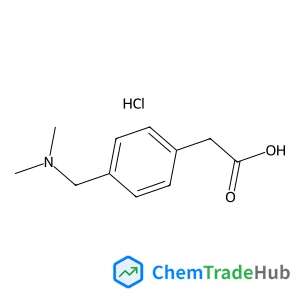
![tert-Butyl 6-chloro-4-oxospiro[chroman-2,4'-piperidine]-1'-carboxylate structure](https://cnstatic.chemtradehub.com/structs/101/1011482-37-3-88a5.webp "tert-Butyl 6-chloro-4-oxospiro[chroman-2,4'-piperidine]-1'-carboxylate structure")
tert-Butyl 6-chloro-4-oxospiro[chroman-2,4'-piperidine]-1'-carboxylate
CAS号:
1011482-37-3
分子式:
C18H22ClNO4
推荐供应商




免责声明
本页面提供的学术期刊信息仅供参考和研究使用。我们与任何期刊出版商均无关联,也不处理投稿事宜。如有投稿相关咨询,请直接联系相关期刊出版商。
如发现页面信息有误,请发送邮件至 support@chemtradehub.com 联系我们。我们将及时核实并处理您的问题。