


![Methyl 2-[5-(3-Phenoxyphenyl)-2H-tetrazol-2-yl]acetate structure](https://cnstatic.chemtradehub.com/structs/130/1305320-60-8-84b4.webp "Methyl 2-[5-(3-Phenoxyphenyl)-2H-tetrazol-2-yl]acetate structure")
Molecular dynamics of 1-ethyl-3-methylimidazolium triflate ionic liquid studied by 1H and 19F nuclear magnetic resonances
文献信息
发布日期
2017-06-02
DOI
10.1039/C7CP01045A
影响因子
3.676
作者
Magdalena Wencka, Tomaž Apih, Romana Cerc Korošec, Jacek Jenczyk, Marcin Jarek, Kosma Szutkowski, Stefan Jurga
查看原文
摘要
The molecular dynamics of an ionic liquid (IL) composed of a 1-ethyl-3-methylimidazolium cation and a triflate (trifluoromethanesulfonate) anion, abbreviated as [Emim][TfO], were studied by NMR spectroscopy. By measuring the temperature-dependent high-field 1H and 19F spin-lattice relaxation (SLR) rates, the frequency-dependent 1H and 19F SLR dispersion curves using fast-field-cycling relaxometry, and the temperature-dependent 1H and 19F diffusion constants, and by utilizing the fact that the primary NMR-active nucleus on the Emim cation is 1H, whereas on the TfO anion it is 19F, the cationic and anionic dynamics were studied separately. A single theoretical relaxation model successfully reproduced all the experimental data of both types of resonant nuclei by fitting all the data simultaneously with the same set of fit parameters. Upon cooling, [Emim][TfO] exhibited a supercooled liquid phase between TSL = 256 K and the crystallization temperature TCr ≈ 227–222 K, as confirmed by differential scanning calorimetry (DSC) experiments. Theoretical analysis revealed that within the liquid and the supercooled liquid states of [Emim][TfO], the 1H and 19F relaxation rates are affected by both the rotational and translational diffusional processes with no discontinuous change at TSL. While the rotational diffusion is well described as an Arrhenius thermally activated process, the translational diffusion undergoes strong freezing dynamics that are well described by the Vogel–Fulcher model assuming a freezing temperature of T0 = 157 K. The existence of the supercooled liquid region in the [Emim][TfO] IL should be taken into account when using this IL for a specific application.
期刊推荐

Current Opinion in Solid State & Materials Science
Organic Process Research & Development
Russian Journal of Applied Chemistry

Russian Chemical Bulletin
Russian Journal of Bioorganic Chemistry

Chemistry Education Research and Practice

Acta Materialia

Journal of Natural Medicines

Russian Journal of General Chemistry
Nature Medicine
相关文献
Super-helices self-assembled from a binary system of amphiphilic polypeptideblock copolymers and polypeptide homopolymers
Chunhua Cai, Jiaping Lin, Tao Chen, Xiao-Song Wang, Shaoliang Lin
2009-03-27
Communication
DOI: 10.1039/B823367E
Chemically-selective surface glyco-functionalization of liposomes through Staudinger ligation
Hailong Zhang, Yong Ma, Xue-Long Sun
2009-04-28
Communication
DOI: 10.1039/B822420J
Polyaniline hollow fibres for organic solventnanofiltration
Xun Xing Loh, Malladi Sairam, Joachim Hans Georg Steinke, Andrew Guy Livingston, Alexander Bismarck, Kang Li
2008-10-20
Communication
DOI: 10.1039/B815632H
Gold-catalyzed reaction of enynols by a dimerization–fragmentation process: an expeditious assembly of enyne molecular architecture
Yong-Qiang Zhang, Zhi-Hua Chen, Yong-Qiang Tu, Chun-An Fan, Fu-Min Zhang, Ai-Xia Wang, Dao-Yi Yuan
2009-03-27
Communication
DOI: 10.1039/B900378A
Controlled assembly of rodlike viruses with polymers
Tao Li, Laying Wu, Nisaraporn Suthiwangcharoen, Michael A. Bruckman, Dayton Cash, JoAn S. Hudson, Soumitra Ghoshroy, Qian Wang
2009-04-06
Communication
DOI: 10.1039/B901995B
Quintets of uracil and thymine: a novel structure of nucleobaseself-assembly studied by electrospray ionization mass spectrometry
Bo Qiu, Jia Liu, Zhen Qin, Guanbo Wang, Hai Luo
2009-03-30
Communication
DOI: 10.1039/B903857D
Copper catalyzed atom transfer radical cascade reactions in the presence of free-radical diazo initiators as reducing agents
Carolynne Ricardo, Tomislav Pintauer
2009-05-05
Communication
DOI: 10.1039/B905839G
Electrochemical assay of superoxide based on biomimetic enzyme at highly conductive TiO2 nanoneedles: from principle to applications in living cells
Yongping Luo, Yang Tian, Qi Rui
2009-04-07
Communication
DOI: 10.1039/B902150G
DNA as a supramolecular framework for the helical arrangements of chromophores: towards photoactive DNA-based nanomaterials
Reji Varghese, Hans-Achim Wagenknecht
2009-04-09
Feature Article
DOI: 10.1039/B821728A
您可能还喜欢
化合物问答
N-2,2-丙烯基-2-丙烯酰胺(CAS号:2555-13-7)通常如何合成?
N-2,2-丙烯基-2-丙烯酰胺通常通过丙烯酰胺与丙烯基卤化物的缩合反应合成。该反应通常在温和的条件下进行,使用适量的碱如吡啶作为催化剂。反应的选择性良好,产率...
2555-13-7N-Allylacrylamide
化合物问答
什么是1,2-二碘四氟代乙烷(CAS号:354-65-4)?
1,2-二碘四氟代乙烷是一种有机化合物,化学式为C2F4I2,CAS号为354-65-4。它是一种无色透明液体,具有特殊的化学性质和物理性质,包括高沸点、低挥发...
354-65-41,1,2,2-Tetrafluoro-...
化合物问答
3-溴-1H-吡咯[3,2-c]吡啶-4-碳腈(CAS号:1000341-71-8)适用哪些法规指南?
根据GHS(全球化学品统一分类和标签制度),3-溴-1H-吡咯[3,2-c]吡啶-4-碳腈被归类为第2类易燃液体。在欧盟,该化合物需要符合REACH法规的要求,...
1000341-71-83-Bromo-1H-pyrrolo[3...
化合物问答
1-氯甲基萘磺酸(CAS号:87491-79-0)安全吗?
1-氯甲基萘磺酸在使用时需要谨慎,因为它具有一定的刺激性和腐蚀性。操作时应佩戴适当的防护装备,如防化服、手套、护目镜等,避免直接接触皮肤和吸入其蒸汽。
87491-79-01-((Chloromethyl)sul...
化合物问答
二氯(二环戊二烯)铂(CAS号:12083-92-0)的主要用途是什么?
该化合物主要用于催化剂领域,特别是在有机合成中的催化氧化反应以及作为某些药物合成的中间体。此外,它还被研究用于纳米材料的制备。
12083-92-0(1S,7R)-Tricyclo[5.2...
化合物问答
3-溴-7-氯噻吩并[3,2-b]吡啶-6-甲腈(CAS号:798574-82-0)安全吗?
3-溴-7-氯噻吩并[3,2-b]吡啶-6-甲腈在处理时需要谨慎,因其含有溴和氯等强卤素,可能具有一定的刺激性和腐蚀性。使用时应佩戴适当的个人防护装备,避免皮肤...
798574-82-03-Bromo-7-chlorothie...
化合物问答
(R)-1-((R)-2-(2’-二环己基膦苯基)三戊铁基]乙基(双-3,5-三氟甲基苯基)膦(CAS号:494227-32-6)的主要用途是什么?
该化合物主要用于有机合成领域,特别是作为催化剂或配体,在有机合成反应中发挥重要作用。此外,它还可能应用于催化加氢反应、偶联反应等。
494227-32-6Walphos SL-W008-1
化合物问答
3-[6-(Diphenylphosphoryl)-2-naphthyl]-1,10-phenanthroline(CAS号:1480371-38-7)安全吗?
3-[6-(Diphenylphosphoryl)-2-naphthyl]-1,10-phenanthroline在正常使用条件下相对安全,但在操作时应穿戴适当...
1480371-38-73-[6-(Diphenylphosph...
化合物问答
在合成中是否有ETHYL 2-(4-(4,4,5,5-TETRAMETHYL-1,3,2-DIOXABOROLAN-2-YL)CYCLOHEX-3-ENYL)ACETATE(CAS号:1166829-70-4)的替代品?
可以考虑使用类似结构的化合物作为替代品,如2-(4-环戊基环己烯基)乙酸酯,这种化合物在结构上相似,可能在某些合成路径中作为替代品。
1166829-70-4Ethyl [4-(4,4,5,5-te...
化合物问答
如何处理含有3-(3-氨基丙基)丙酮缩甘油(CAS号:131606-42-3)的废料?
处理含有3-(3-氨基丙基)丙酮缩甘油的废料时,首先应确保遵守当地的环保法规。对于危险废物,应进行分类收集,然后送至专业的废物处理设施进行焚烧或安全填埋。在处理...
131606-42-33-[(2,2-Dimethyl-1,3...
来源期刊
Physical Chemistry Chemical Physics

CiteScore:
5.5
自引率:
10.3%
年发文量:
3036
Physical Chemistry Chemical Physics (PCCP) is an international journal co-owned by 19 physical chemistry and physics societies from around the world. This journal publishes original, cutting-edge research in physical chemistry, chemical physics and biophysical chemistry. To be suitable for publication in PCCP, articles must include significant innovation and/or insight into physical chemistry; this is the most important criterion that reviewers and Editors will judge against when evaluating submissions. The journal has a broad scope and welcomes contributions spanning experiment, theory, computation and data science. Topical coverage includes spectroscopy, dynamics, kinetics, statistical mechanics, thermodynamics, electrochemistry, catalysis, surface science, quantum mechanics, quantum computing and machine learning. Interdisciplinary research areas such as polymers and soft matter, materials, nanoscience, energy, surfaces/interfaces, and biophysical chemistry are welcomed if they demonstrate significant innovation and/or insight into physical chemistry. Joined experimental/theoretical studies are particularly appreciated when complementary and based on up-to-date approaches.
推荐化合物
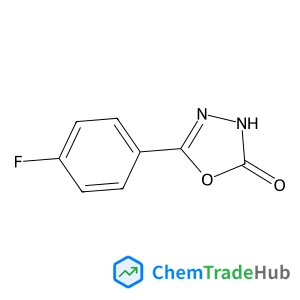
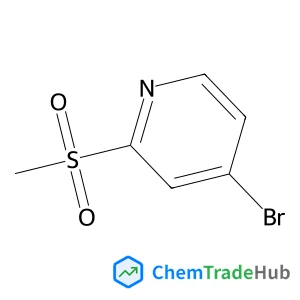
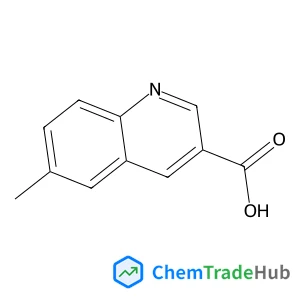
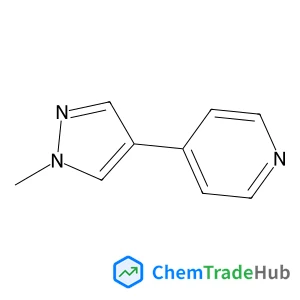
推荐供应商








免责声明
本页面提供的学术期刊信息仅供参考和研究使用。我们与任何期刊出版商均无关联,也不处理投稿事宜。如有投稿相关咨询,请直接联系相关期刊出版商。
如发现页面信息有误,请发送邮件至 support@chemtradehub.com 联系我们。我们将及时核实并处理您的问题。