


Vapour–liquid interfacial properties of square-well chains from density functional theory and Monte Carlo simulation
文献信息
发布日期
2017-04-19
DOI
10.1039/C7CP01182B
影响因子
3.676
作者
Francisco José Martínez-Ruiz, Felipe J. Blas, A. Ignacio Moreno-Ventas Bravo, José Manuel Míguez, Luis G. MacDowell
查看原文
摘要
The statistical associating fluid theory for attractive potentials of variable range (SAFT-VR) density functional theory (DFT) developed by [Gloor et al., J. Chem. Phys., 2004, 121, 12740–12759] is used to predict the interfacial behaviour of molecules modelled as fully-flexible square-well chains formed from tangentially-bonded monomers of diameter σ and potential range λ = 1.5σ. Four different model systems, comprising 4, 8, 12, and 16 monomers per molecule, are considered. In addition to that, we also compute a number of interfacial properties of molecular chains from direct simulation of the vapour–liquid interface. The simulations are performed in the canonical ensemble, and the vapour–liquid interfacial tension is evaluated using the wandering interface (WIM) method, a technique based on the thermodynamic definition of surface tension. Apart from surface tension, we also obtain density profiles, coexistence densities, vapour pressures, and critical temperature and density, paying particular attention to the effect of the chain length on these properties. According to our results, the main effect of increasing the chain length (at fixed temperature) is to sharpen the vapour–liquid interface and to increase the width of the biphasic coexistence region. As a result, the interfacial thickness decreases and the surface tension increases as the molecular chains get longer. The interfacial thickness and surface tension appear to exhibit an asymptotic limiting behaviour for long chains. A similar behaviour is also observed for the coexistence densities and critical properties. Agreement between theory and simulation results indicates that SAFT-VR DFT is only able to predict qualitatively the interfacial properties of the model. Our results are also compared with simulation data taken from the literature, including the vapour–liquid coexistence densities, vapour pressures, and surface tension.
期刊推荐
Drug Discovery Today
Current Opinion in Colloid & Interface Science
Russian Journal of Applied Chemistry
Crystallography Reports
Nature Medicine

Chemical Communications

Chemistry Education Research and Practice
Russian Journal of Organic Chemistry

Current Opinion in Solid State & Materials Science

Journal of Natural Medicines
相关文献
Temperature dependent spectral properties of type-I and quasi type-II CdSe/CdS dot-in-rod nanocrystals
Xiaoming Wen, Amit Sitt, Pyng Yu, Yon-Rui Toh, Jau Tang
2012-01-16
Paper
DOI: 10.1039/C2CP23844F
Higher-order split operator schemes for solving the Schrödinger equation in the time-dependent wave packet method: applications to triatomic reactive scattering calculations
Weitao Yang
2012-01-10
Perspective
DOI: 10.1039/C1CP22790D
Sodium–oxygen batteries with alkyl-carbonate and ether based electrolytes
Jinsoo Kim, Hee-Dae Lim, Hyeokjo Gwon, Kisuk Kang
2013-01-08
Paper
DOI: 10.1039/C3CP43225D
The intrinsic conformational features of amino acids from a protein coil library and their applications in force field development
Fan Jiang, Wei Han
2012-12-12
Perspective
DOI: 10.1039/C2CP43633G
Understanding the effect of side groups in ionic liquids on carbon-capture properties: a combined experimental and theoretical effort
Michael Lartey, Jihan Kim, Maciej Haranczyk, David R. Luebke
2013-01-08
Paper
DOI: 10.1039/C3CP43923B
Comparing reduced partial charge models with polarizable simulations of ionic liquids
Christian Schröder
2012-01-27
Paper
DOI: 10.1039/C2CP23329K
Interactions of the intact FsrC membrane histidine kinase with the tricyclic peptideinhibitor siamycin I revealed through synchrotron radiation circular dichroism
Mary K. Phillips-Jones, Shalini Edara, Jiro Nakayama, Rohanah Hussain, Giuliano Siligardi
2012-11-14
Communication
DOI: 10.1039/C2CP43722H
Dissociative electron attachment to Pt(PF3)4—a precursor for Focused Electron Beam Induced Processing (FEBIP)
2011-12-09
Communication
DOI: 10.1039/C2CP23268E
Fully relativistic coupled cluster and DFT study of electric field gradients at Hg in 199Hg compounds
Vaida Arcisauskaite, Stefan Knecht, Stephan P. A. Sauer, Lars Hemmingsen
2012-01-19
Paper
DOI: 10.1039/C2CP23080A
您可能还喜欢
化合物问答
N-2,2-丙烯基-2-丙烯酰胺(CAS号:2555-13-7)通常如何合成?
N-2,2-丙烯基-2-丙烯酰胺通常通过丙烯酰胺与丙烯基卤化物的缩合反应合成。该反应通常在温和的条件下进行,使用适量的碱如吡啶作为催化剂。反应的选择性良好,产率...
2555-13-7N-Allylacrylamide
化合物问答
什么是1,2-二碘四氟代乙烷(CAS号:354-65-4)?
1,2-二碘四氟代乙烷是一种有机化合物,化学式为C2F4I2,CAS号为354-65-4。它是一种无色透明液体,具有特殊的化学性质和物理性质,包括高沸点、低挥发...
354-65-41,1,2,2-Tetrafluoro-...
化合物问答
3-溴-1H-吡咯[3,2-c]吡啶-4-碳腈(CAS号:1000341-71-8)适用哪些法规指南?
根据GHS(全球化学品统一分类和标签制度),3-溴-1H-吡咯[3,2-c]吡啶-4-碳腈被归类为第2类易燃液体。在欧盟,该化合物需要符合REACH法规的要求,...
1000341-71-83-Bromo-1H-pyrrolo[3...
化合物问答
1-氯甲基萘磺酸(CAS号:87491-79-0)安全吗?
1-氯甲基萘磺酸在使用时需要谨慎,因为它具有一定的刺激性和腐蚀性。操作时应佩戴适当的防护装备,如防化服、手套、护目镜等,避免直接接触皮肤和吸入其蒸汽。
87491-79-01-((Chloromethyl)sul...
化合物问答
二氯(二环戊二烯)铂(CAS号:12083-92-0)的主要用途是什么?
该化合物主要用于催化剂领域,特别是在有机合成中的催化氧化反应以及作为某些药物合成的中间体。此外,它还被研究用于纳米材料的制备。
12083-92-0(1S,7R)-Tricyclo[5.2...
化合物问答
3-溴-7-氯噻吩并[3,2-b]吡啶-6-甲腈(CAS号:798574-82-0)安全吗?
3-溴-7-氯噻吩并[3,2-b]吡啶-6-甲腈在处理时需要谨慎,因其含有溴和氯等强卤素,可能具有一定的刺激性和腐蚀性。使用时应佩戴适当的个人防护装备,避免皮肤...
798574-82-03-Bromo-7-chlorothie...
化合物问答
(R)-1-((R)-2-(2’-二环己基膦苯基)三戊铁基]乙基(双-3,5-三氟甲基苯基)膦(CAS号:494227-32-6)的主要用途是什么?
该化合物主要用于有机合成领域,特别是作为催化剂或配体,在有机合成反应中发挥重要作用。此外,它还可能应用于催化加氢反应、偶联反应等。
494227-32-6Walphos SL-W008-1
化合物问答
3-[6-(Diphenylphosphoryl)-2-naphthyl]-1,10-phenanthroline(CAS号:1480371-38-7)安全吗?
3-[6-(Diphenylphosphoryl)-2-naphthyl]-1,10-phenanthroline在正常使用条件下相对安全,但在操作时应穿戴适当...
1480371-38-73-[6-(Diphenylphosph...
化合物问答
在合成中是否有ETHYL 2-(4-(4,4,5,5-TETRAMETHYL-1,3,2-DIOXABOROLAN-2-YL)CYCLOHEX-3-ENYL)ACETATE(CAS号:1166829-70-4)的替代品?
可以考虑使用类似结构的化合物作为替代品,如2-(4-环戊基环己烯基)乙酸酯,这种化合物在结构上相似,可能在某些合成路径中作为替代品。
1166829-70-4Ethyl [4-(4,4,5,5-te...
化合物问答
如何处理含有3-(3-氨基丙基)丙酮缩甘油(CAS号:131606-42-3)的废料?
处理含有3-(3-氨基丙基)丙酮缩甘油的废料时,首先应确保遵守当地的环保法规。对于危险废物,应进行分类收集,然后送至专业的废物处理设施进行焚烧或安全填埋。在处理...
131606-42-33-[(2,2-Dimethyl-1,3...
来源期刊
Physical Chemistry Chemical Physics

CiteScore:
5.5
自引率:
10.3%
年发文量:
3036
Physical Chemistry Chemical Physics (PCCP) is an international journal co-owned by 19 physical chemistry and physics societies from around the world. This journal publishes original, cutting-edge research in physical chemistry, chemical physics and biophysical chemistry. To be suitable for publication in PCCP, articles must include significant innovation and/or insight into physical chemistry; this is the most important criterion that reviewers and Editors will judge against when evaluating submissions. The journal has a broad scope and welcomes contributions spanning experiment, theory, computation and data science. Topical coverage includes spectroscopy, dynamics, kinetics, statistical mechanics, thermodynamics, electrochemistry, catalysis, surface science, quantum mechanics, quantum computing and machine learning. Interdisciplinary research areas such as polymers and soft matter, materials, nanoscience, energy, surfaces/interfaces, and biophysical chemistry are welcomed if they demonstrate significant innovation and/or insight into physical chemistry. Joined experimental/theoretical studies are particularly appreciated when complementary and based on up-to-date approaches.
推荐化合物
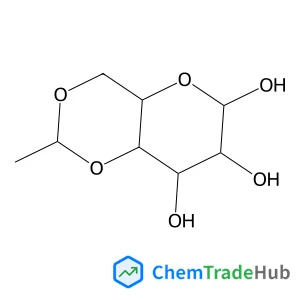
推荐供应商






免责声明
本页面提供的学术期刊信息仅供参考和研究使用。我们与任何期刊出版商均无关联,也不处理投稿事宜。如有投稿相关咨询,请直接联系相关期刊出版商。
如发现页面信息有误,请发送邮件至 support@chemtradehub.com 联系我们。我们将及时核实并处理您的问题。