












![[5-fluoro-2-(morpholine-4-carbonyl)phenyl]boronic acid structure](https://cnstatic.chemtradehub.com/structs/121/1217501-26-2-505c.webp "[5-fluoro-2-(morpholine-4-carbonyl)phenyl]boronic acid structure")
Reduced {001}-TiO2−x photocatalysts: noble-metal-free CO2 photoreduction for selective CH4 evolution
文献信息
发布日期
2017-05-03
DOI
10.1039/C7CP01212H
影响因子
3.676
作者
Lhoussain Khrouz, Yi Zhou, Bin Shen, Chunyang Dong, Mingyang Xing, Shashank Mishra, Stéphane Daniele, Jinlong Zhang
查看原文
摘要
The preparation of reduced TiO2 photocatalysts with high Ti3+ concentration is a great challenge due to their instability in air. Here we report a new approach for the synthesis of reduced TiO2 with {001} facets exposed via a hydrothermal process. By the introduction of fluoride atoms, {001} and {101} facets are formed, which act as hole and electron collectors, respectively, for charge separation. By adjusting the volume of HF added, a rutile–anatase transition is observed for the first time. EPR spectra confirm the generation of Ti3+ species in the bulk of TiO2, and Ti3+ signals are studied in the anatase and rutile phases separately. The quantified EPR shows that reduced TiO2 samples present 14 000-fold more spins compared to the pristine TiO2, and the intensity can reach as high as 24.6 × 10¹⁹ spins per g. The obtained samples also have a unique disordered layer with a thickness of 1–2 nm on their surfaces, which contributes to the stabilization of the formed Ti3+ species by preventing their oxidation in air. In addition, the synthesized reduced TiO2 samples also exhibit wide-spectrum solar light absorption, especially in the near-infrared region. Owing to their enhanced solar light absorption, improved electron–hole separation and special facet exposure, these samples exhibit enhanced photocatalytic CO2 reduction performance and high CH4 selectivity under solar light irradiation, in the absence of a noble metal Pt as a co-catalyst.
相关文献
An unprecedented mode of ligation for a bridged amido-cyclopentadienide (constrained geometry) ligand; π-olefinic interactions with gallium and indium
Jeffrey M. Pietryga, Jamie N. Jones, Lucille A. Mullins, Robert J. Wiacek, Alan H. Cowley
2003-07-10
Communication
DOI: 10.1039/B304940J
Controlled haptotropic rearrangements – towards a stereospecific molecular switch based on chiral arene chromium complexes‡
Holger C. Jahr, Martin Nieger, Karl Heinz Dötz
2003-10-23
Communication
DOI: 10.1039/B307487K
Excellent enantio-selective enclathration of (2R,3S)-3-methyl-2-pentanol in channel-like cavity of 3-epideoxycholic acid, interpreted by the four-location model for chiral recognition
Kazuaki Kato, Kazuaki Aburaya, Yasuhito Miyake, Kazuki Sada, Norimitsu Tohnai, Mikiji Miyata
2003-10-30
Communication
DOI: 10.1039/B309755B
Synthesis and reactivity of a stable crystalline diastereomerically pure trifluoromethanesulfinic acid derivative: (S)-(−)-1-trifluoromethylsulfinyl-(R)-4-phenyloxazolidin-2-one
Vadim D. Romanenko, Claire Thoumazet, Vincent Lavallo, Fook S. Tham, Guy Bertrand
2003-06-09
Communication
DOI: 10.1039/B303574C
Fast racemisation and slow epimerisation of laterally lithiated amides: stereochemical evidence for the mechanism of inversion of amide-substituted benzyllithiums
Jonathan Clayden, Christopher C. Stimson, Martine Keenan, Andrew E. H. Wheatley
2003-12-05
Communication
DOI: 10.1039/B310963A
A zeolite–enzyme combination for biphasic dynamic kinetic resolution of benzylic alcohols
Stijn Wuyts, Karolien De Temmerman, Dirk De Vos, Pierre Jacobs
2003-06-27
Communication
DOI: 10.1039/B305120J
Drug-induced stabilisation of a mismatched C-T base pair in a DNA hairpin
Cathal T. Gallagher, Mark S. Searle
2003-07-01
Communication
DOI: 10.1039/B305337G
Trapping volatile nitrosamines with copper incorporated zeolites
Yang Xu, Zhi-yu Yun, Jian Hua Zhu, Jia-hui Xu, Hua-dao Liu, Yi-lun Wei, Kang-jin Hui
2003-06-26
Communication
DOI: 10.1039/B304322C
Small molecule hydrogels based on a class of antiinflammatory agents
Zhimou Yang, Hongwei Gu, Yan Zhang, Ling Wang
2003-11-28
Communication
DOI: 10.1039/B310574A
您可能还喜欢
化合物问答
4-[[6-(3-苯基苯基)-7H-嘌呤-2-基]氨基]苯磺酰胺(CAS号:2079895-42-2)适用哪些法规指南?
该化合物需遵循REACH法规以确保其安全使用和管理。同时,根据其潜在的生物降解性和毒性,也需要符合GHS分类中的相应要求。此外,若用于医药或食品相关领域,则还需...
2079895-42-24-{[6-(3-Biphenylyl)...
化合物问答
反式-度骨化醇(CAS号:74007-20-8)的物理化学性质是什么?
反式-度骨化醇是一种脂溶性维生素D3的衍生物,呈无色或白色结晶性粉末,不溶于水,溶于乙醇、丙酮、氯仿等有机溶剂。其分子式为C28H44O,分子量为404.65。...
74007-20-8trans-Doxercalcifero...
化合物问答
莲花掌苷(CAS号:59282-56-3)的市场或研究趋势如何?
莲花掌苷作为一种天然产物,近年来在抗炎、抗癌等生物活性研究方面显示出一定的潜力,因此市场需求逐渐增长。市场动态方面,随着天然产物开发的深入,预计该化合物的研究会...
59282-56-3Lindleyin
化合物问答
2-溴-6-(吡咯烷-1-基)吡啶-4-硼酸频那醇酯(CAS号:1150271-64-9)应用于哪些行业?
2-溴-6-(吡咯烷-1-基)吡啶-4-硼酸频那醇酯在医药领域有着广泛的应用,它可以用作药物合成中的中间体。此外,它还可以用于有机合成,特别是在构建复杂杂环化合...
1150271-64-92-Bromo-6-(1-pyrroli...
化合物问答
什么是methyl 2-(4-bromophenyl)-3-methylbutanoate(CAS号:1061284-70-5)?
methyl 2-(4-溴苯基)-3-甲基丁酸甲酯是一种化学物质,分子式为C12H13BrO2。它是一种有机化合物,具有一定的挥发性和易燃性。
1061284-70-52-(4-Bromo-phenyl)-3...
化合物问答
CJC1-295(CAS号:863288-34-0)的物理化学性质是什么?
CJC1-295是一种具有复杂肽链结构的化合物,其分子量约为1875 Da。该化合物在水中具有一定的溶解性,但在有机溶剂中的溶解性不佳。它是一种反应活性化合物,...
863288-34-0L-tyrosyl-D-alanyl-L...
化合物问答
三正丁基锍碘(CAS号:18146-62-8)的市场或研究趋势如何?
三正丁基锍碘作为一种重要的有机硫化合物,主要用于有机合成中作为亲电试剂。近年来,由于其在合成中的广泛应用,市场对其需求持续增长。此外,随着绿色化学的发展,对其替...
18146-62-8Tributylsulfonium io...
化合物问答
雌二醇-[13C3]同位素内标(CAS号:1261254-48-1)通常如何合成?
雌二醇-[13C3]同位素内标通常通过在雌二醇分子中引入[13C3]同位素来合成。常见的方法是通过化学标记反应,如与[13C3]标记的甲基溴化物进行亲核取代反应...
1261254-48-117beta-Estradiol-2,3...
化合物问答
N1-(2-吡啶甲基)-N2-(2-甲基-1-萘基)草酰胺(CAS号:2611225-93-3)的物理化学性质是什么?
N1-(2-吡啶甲基)-N2-(2-甲基-1-萘基)草酰胺为固体化合物,具有良好的结晶形态,分子量为340.34 g/mol。该化合物在水中的溶解度较低,但在有...
2611225-93-3N-(2-Methyl-1-naphth...
化合物问答
如何处理含有十五碳烯酸甲酯(顺-10)(C15:1)标准品(CAS号:90176-52-6)的废料?
含有十五碳烯酸甲酯(顺-10)(C15:1)标准品的废料应首先进行适当收集和储存,避免与其他化学品混合。然后,可采用焚烧或交由专业废物处理公司进行处理。处理过程...
90176-52-6(Z)-10-Pentadecenoic...
来源期刊
Physical Chemistry Chemical Physics

CiteScore:
5.5
自引率:
10.3%
年发文量:
3036
Physical Chemistry Chemical Physics (PCCP) is an international journal co-owned by 19 physical chemistry and physics societies from around the world. This journal publishes original, cutting-edge research in physical chemistry, chemical physics and biophysical chemistry. To be suitable for publication in PCCP, articles must include significant innovation and/or insight into physical chemistry; this is the most important criterion that reviewers and Editors will judge against when evaluating submissions. The journal has a broad scope and welcomes contributions spanning experiment, theory, computation and data science. Topical coverage includes spectroscopy, dynamics, kinetics, statistical mechanics, thermodynamics, electrochemistry, catalysis, surface science, quantum mechanics, quantum computing and machine learning. Interdisciplinary research areas such as polymers and soft matter, materials, nanoscience, energy, surfaces/interfaces, and biophysical chemistry are welcomed if they demonstrate significant innovation and/or insight into physical chemistry. Joined experimental/theoretical studies are particularly appreciated when complementary and based on up-to-date approaches.
推荐化合物
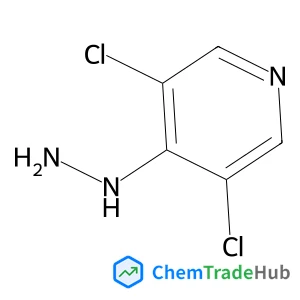
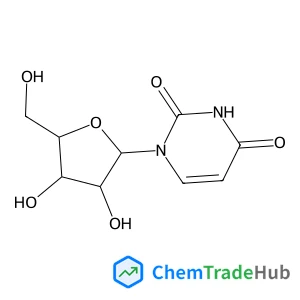
![[(5-Methyl-1,3,4-thiadiazol-2-yl)sulfanyl]acetic acid structure](https://cnstatic.chemtradehub.com/structs/509/50918-26-8-4ce8.webp "[(5-Methyl-1,3,4-thiadiazol-2-yl)sulfanyl]acetic acid structure")
推荐供应商




免责声明
本页面提供的学术期刊信息仅供参考和研究使用。我们与任何期刊出版商均无关联,也不处理投稿事宜。如有投稿相关咨询,请直接联系相关期刊出版商。
如发现页面信息有误,请发送邮件至 support@chemtradehub.com 联系我们。我们将及时核实并处理您的问题。