


![Sodium 3-[(E)-(4-anilinophenyl)diazenyl]benzenesulfonate structure](https://cnstatic.chemtradehub.com/structs/587/587-98-4-035f.webp "Sodium 3-[(E)-(4-anilinophenyl)diazenyl]benzenesulfonate structure")
Controlling adsorption and passivation properties of bovine serum albumin on silica surfaces by ionic strength modulation and cross-linking
文献信息
发布日期
2017-03-06
DOI
10.1039/C7CP01310H
影响因子
3.676
作者
查看原文
摘要
Understanding the physicochemical factors that influence protein adsorption onto solid supports holds wide relevance for fundamental insights into protein structure and function as well as for applications such as surface passivation. Ionic strength is a key parameter that influences protein adsorption, although how its modulation might be utilized to prepare well-coated protein adlayers remains to be explored. Herein, we investigated how ionic strength can be utilized to control the adsorption and passivation properties of bovine serum albumin (BSA) on silica surfaces. As protein stability in solution can influence adsorption kinetics, the size distribution and secondary structure of proteins in solution were first characterized by dynamic light scattering (DLS), nanoparticle tracking analysis (NTA), and circular dichroism (CD) spectroscopy. A non-monotonic correlation between ionic strength and protein aggregation was observed and attributed to colloidal agglomeration, while the primarily α-helical character of the protein in solution was maintained in all cases. Quartz crystal microbalance-dissipation (QCM-D) experiments were then conducted in order to track protein adsorption onto silica surfaces as a function of ionic strength, and the measurement responses indicated that total protein uptake at saturation coverage is lower with increasing ionic strength. In turn, the QCM-D data and the corresponding Voigt–Voinova model analysis support that the surface area per bound protein molecule is greater with increasing ionic strength. While higher protein uptake under lower ionic strengths by itself did not result in greater surface passivation under subsequent physiologically relevant conditions, the treatment of adsorbed protein layers with a gluteraldehyde cross-linking agent stabilized the bound protein in this case and significantly improved surface passivation. Collectively, our findings demonstrate that ionic strength modulation influences BSA adsorption uptake on account of protein spreading and can be utilized in conjunction with covalent cross-linking strategies to prepare well-coated protein adlayers for improved surface passivation.
期刊推荐
Bioorganic & Medicinal Chemistry

Journal of the Indian Institute of Science

Cellulose

Critical Reviews in Solid State and Materials Sciences

Chinese Journal of Chemistry
Main Group Chemistry
Journal of Asian Natural Products Research

Herald of the Russian Academy of Sciences

Topics in Catalysis

Heteroatom Chemistry
相关文献
A novel colorimetric and ratiometric fluorescent probe for targeted detection of hypochlorous acid based on HClO-mediated anthracene-hydrazone to anthracene-triazole transformation
Chen Jiang, Yuewei Yao, Chuilian Kong, Jiaqi Du, Jingjing Meng, Cheng Yao
2019-07-30
Paper
DOI: 10.1039/C9AY01234F
Correction: Oligonucleotide-templated lateral flow assays for amplification-free sensing of circulating microRNAs
Suraj Pavagada, Robert B. Channon, Jason Y. H. Chang, Sung Hye Kim
2019-10-24
Correction
DOI: 10.1039/C9CC90472G
A straightforward method for automated Fmoc-based synthesis of bio-inspired peptide crypto-thioesters
Victor P. Terrier, Hélène Adihou, Mathieu Arnould, Agnès F. Delmas, Vincent Aucagne
2015-09-23
Edge Article
DOI: 10.1039/C5SC02630J
Template-free synthesis and gas sensing properties of hierarchical hollow ZnO microspheres
Dawei Wang, Sisi Du, Xin Zhou, Biao Wang, Jian Ma, Peng Sun, Yanfeng Sun, Geyu Lu
2013-07-25
Communication
DOI: 10.1039/C3CE40812D
Fluorescence-quenching CdTe quantum dots applied for identification of cocaine-structure analogues
Jacqueline Q. Alves, Lilian P. Franco, Marcelo F. de Oliveira
2018-11-28
Paper
DOI: 10.1039/C8AY02243G
1H quantitative NMR and UHPLC-MS analysis of seized MDMA/NPS mixtures and tablets from night-club venues
Husain A. Naqi, Stephen M. Husbands, Ian S. Blagbrough
2019-08-20
Paper
DOI: 10.1039/C9AY01403A
Benchmarking lithium amide versus amine bonding by charge density and energy decomposition analysis arguments
Felix Engelhardt, Christian Maaß, Diego M. Andrada, Regine Herbst-Irmer, Dietmar Stalke
2018-02-08
Edge Article
DOI: 10.1039/C7SC05368A
A new HPLC method for simultaneous analysis of sterols, tocopherols, tocotrienols, and squalene in olive oil deodorizer distillates using a monolithic column with chemometric techniques
İsmail Tarhan, Hüseyin Kara
2019-09-04
Paper
DOI: 10.1039/C9AY01525F
您可能还喜欢
化合物问答
硅烷偶联剂ZQ-172(CAS号:1067-53-4)的主要用途是什么?
硅烷偶联剂ZQ-172主要用于增强无机填料与有机高分子材料之间的相容性,常见于橡胶、塑料、涂料和胶黏剂等复合体系中。其硅氧烷基团可与玻璃纤维、二氧化硅等无机物表...
1067-53-46-(2-Methoxyethoxy)-...
化合物问答
如何处理含有6-(2,4-二甲氧基苯基)-2-吡啶甲醇(CAS号:887981-31-9)的废料?
对于含有该化合物的废料,首先应收集并分类存放,避免与其它化学品混合。在处理前,需进行必要的检测,确定其含量和性质。随后,可以采用化学氧化、生物降解或物理吸附等方...
887981-31-9[6-(2,4-Dimethoxyphe...
化合物问答
甲砜霉素甘氨酸酯盐酸盐(CAS号:2611-61-2)的物理化学性质是什么?
该化合物为白色或类白色结晶性粉末,不溶于水,溶于乙醇和氯仿。分子量为403.03 g/mol。它具有手性,含有三个手性中心,分别为2S,3R构型。该化合物在酸性...
2611-61-2(2S,3R)-2-[(Dichloro...
化合物问答
如何储存反式-环丙烷-1,2-二胺双盐酸盐(CAS号:3187-76-6)?
反式-环丙烷-1,2-二胺双盐酸盐应存放在阴凉、干燥且通风良好的地方,避免阳光直射。储存容器应密封,以防挥发和受潮。同时,应远离火源和热源,确保储存环境温度不超...
3187-76-6trans-1,2-Diaminocyc...
化合物问答
什么是吩嗪硫酸甲酯(CAS号:299-11-6)?
吩嗪硫酸甲酯是一种有机化合物,化学结构由吩嗪环与甲酯基团构成,分子式为C10H9N2SO4。其为吩嗪类衍生物,具有典型的芳香环结构和酯基官能团,常作为氧化剂或染...
299-11-65-Methylphenazin-5-i...
化合物问答
N1-异丙基二乙烯三胺(CAS号:207399-20-0)的市场或研究趋势如何?
随着绿色化学和环保意识的提高,N1-异丙基二乙烯三胺的研究趋势正向低毒、环保的方向发展。市场趋势方面,由于其在功能性材料、药物合成等领域的需求,预计其市场需求将...
207399-20-0N-(2-Aminoethyl)-N'-...
化合物问答
4,4-Dimethyl-5,6-dihydro-4H-cyclopenta[d][1,3]thiazol-2-amine(CAS号:1182284-47-4)应用于哪些行业?
该化合物在医药、聚合物、传感器和半导体领域有潜在的应用。在医药领域,作为一种新型的噻唑类化合物,它可能具有抗炎、抗病毒等生物活性。在聚合物领域,该化合物可用作增...
1182284-47-44,4-Dimethyl-5,6-dih...
化合物问答
处理5-(PYRIDIN-4-YL)-OXAZOL-2-YLAMINE(CAS号:1014629-83-4)时应注意哪些实验室安全事项?
在处理5-(吡啶-4-基)-2-氧代-1-氧杂环己烷-3-胺时,应佩戴防护眼镜、手套和防护服。实验应在通风橱中进行,以避免吸入有害气体。如果发生泄露,应立即用大...
1014629-83-45-(4-Pyridinyl)-1,3-...
化合物问答
什么是伊托必利N-氧化物(CAS号:141996-98-7)?
伊托必利N-氧化物是一种化学化合物,其分子结构是伊托必利的N位进行氧化处理后的产物。它具有一定的生物活性,主要用于药物研究和开发。
141996-98-7Itopride N-Oxide
化合物问答
氟氯烟酸(CAS号:82671-06-5)安全吗?
氟氯烟酸属于有机氯化物,具有一定的毒性,需谨慎处理。在操作过程中,应佩戴防护手套、护目镜和实验服,避免吸入其粉尘或蒸汽。接触皮肤或眼睛可能导致刺激,应采取适当的...
82671-06-52,6-Dichloro-5-fluor...
来源期刊
Physical Chemistry Chemical Physics

CiteScore:
5.5
自引率:
10.3%
年发文量:
3036
Physical Chemistry Chemical Physics (PCCP) is an international journal co-owned by 19 physical chemistry and physics societies from around the world. This journal publishes original, cutting-edge research in physical chemistry, chemical physics and biophysical chemistry. To be suitable for publication in PCCP, articles must include significant innovation and/or insight into physical chemistry; this is the most important criterion that reviewers and Editors will judge against when evaluating submissions. The journal has a broad scope and welcomes contributions spanning experiment, theory, computation and data science. Topical coverage includes spectroscopy, dynamics, kinetics, statistical mechanics, thermodynamics, electrochemistry, catalysis, surface science, quantum mechanics, quantum computing and machine learning. Interdisciplinary research areas such as polymers and soft matter, materials, nanoscience, energy, surfaces/interfaces, and biophysical chemistry are welcomed if they demonstrate significant innovation and/or insight into physical chemistry. Joined experimental/theoretical studies are particularly appreciated when complementary and based on up-to-date approaches.
推荐化合物
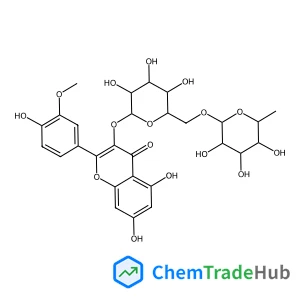
![(1S)-1,5-Anhydro-1-[3-(1-benzothiophen-2-ylmethyl)-4-fluorophenyl]-D-glucitol structure](https://cnstatic.chemtradehub.com/structs/761/761423-87-4-dbeb.webp "(1S)-1,5-Anhydro-1-[3-(1-benzothiophen-2-ylmethyl)-4-fluorophenyl]-D-glucitol structure")
推荐供应商





免责声明
本页面提供的学术期刊信息仅供参考和研究使用。我们与任何期刊出版商均无关联,也不处理投稿事宜。如有投稿相关咨询,请直接联系相关期刊出版商。
如发现页面信息有误,请发送邮件至 support@chemtradehub.com 联系我们。我们将及时核实并处理您的问题。