


![7-Bromo-5-chloro-1H-pyrazolo[4,3-b]pyridine structure](https://cnstatic.chemtradehub.com/structs/135/1351813-70-1-a716.webp "7-Bromo-5-chloro-1H-pyrazolo[4,3-b]pyridine structure")
Impulsive laser-induced alignment of OCS molecules at FERMI
文献信息
发布日期
2017-05-16
DOI
10.1039/C7CP01812F
影响因子
3.676
作者
Michele Di Fraia, Paola Finetti, Robert Richter, Joss Wiese, Michele Devetta, Matteo Negro, Caterina Vozzi, Anna G. Ciriolo, Aditya Pusala, Alexander Demidovich, Miltcho B. Danailov, Carlo Callegari
查看原文
摘要
We demonstrate the experimental realization of impulsive alignment of carbonyl sulfide (OCS) molecules at the Low Density Matter Beamline (LDM) at the free-electron laser FERMI. OCS molecules in a molecular beam were impulsively aligned using 200 fs pulses from a near-infrared laser. The alignment was probed through time-delayed ionization above the sulphur 2p edge, resulting in multiple ionization via Auger decay and subsequent Coulomb explosion of the molecules. The ionic fragments were collected using a time-of-flight mass spectrometer and the analysis of ion–ion covariance maps confirmed the correlation between fragments after Coulomb explosion. The analysis of the CO+ and S+ channels allowed us to extract the rotational dynamics, which is in agreement with our theoretical description as well as with previous experiments. This result opens the way for a new class of experiments at LDM within the field of coherent control of molecules with the possibilities that a precisely synchronized optical-pump XUV-probe laser setup like FERMI can offer.
期刊推荐

Chemistry Education Research and Practice

Russian Journal of Coordination Chemistry
Chemical Communications

Journal of Natural Medicines

Russian Journal of Bioorganic Chemistry
Russian Journal of Applied Chemistry

Journal of Peptide Science
Crystallography Reports

New Journal of Chemistry

Russian Chemical Bulletin
相关文献
Tuning the synergistic effects of MoS2 and spinel NiFe2O4 nanostructures for high performance energy storage and conversion applications
Pratik V. Shinde, Shyam Babu, Shrawan Kr Mishra, Dattatray Late, Chandra Sekhar Rout, Manoj Kumar Singh
2021-06-15
Paper
DOI: 10.1039/D1SE00378J
Methanol fuel production from solar-assisted supercritical water gasification of algae: a techno-economic annual optimisation
Alireza Rahbari, Alec Shirazi, John Pye
2021-08-16
Paper
DOI: 10.1039/D1SE00394A
A cobalt oxide–polypyrrole nanocomposite as an efficient and stable electrode material for electrocatalytic water oxidation
Catalina N. Astudillo, Baptiste Dautreppe, Bruno F. Urbano, Bernabé L. Rivas, Chantal Gondran, Dmitry Aldakov, Dominique André, Jean-Luc Putaux, Christine Lancelon-Pin, Selim Sirach, Eleonora-Mihaela Ungureanu, Marie-Noëlle Collomb, Jérôme Fortage
2021-08-05
Paper
DOI: 10.1039/D1SE00363A
Metal–organic framework (MOF) derived flower-shaped CoSe2 nanoplates as a superior bifunctional electrocatalyst for both oxygen and hydrogen evolution reactions
2021-08-25
Paper
DOI: 10.1039/D1SE01112J
Enhancing the thermoelectric efficiency in p-type Mg3Sb2via Mg site co-doping
Manjusha Battabyal, P. K. Jain, Avnee Chauhan, Dillip K. Satapathy, Raghavan Gopalan
2021-07-01
Paper
DOI: 10.1039/D1SE00656H
A closed-loop regeneration of LiNi0.6Co0.2Mn0.2O2 and graphite from spent batteries via efficient lithium supplementation and structural remodelling
Qinwen Zhou, Zixuan Huang, Yufeng Zhao, Joey Chung-Yen Jung, Jiujun Zhang, Shengming Xu
2021-08-20
Paper
DOI: 10.1039/D1SE01114F
One-step catalytic upgrading of bio-based furfural to γ-valerolactone actuated by coordination organophosphate–Hf polymers
Yixuan Liu, Mingrui Li, Hu Li, Song Yang
2021-12-03
Paper
DOI: 10.1039/D1SE01476E
Enzyme immobilization as a strategy towards efficient and sustainable lignocellulosic biomass conversion into chemicals and biofuels: current status and perspectives
Elisa Zanuso, Daniel G. Gomes, Héctor A. Ruiz, José A. Teixeira, Lucília Domingues
2021-06-28
Review Article
DOI: 10.1039/D1SE00747E
Characterization of electrocatalytic proton reduction and surface adsorption of platinum nanoparticles supported by a polymeric stabilizer on an ITO electrode
Yuta Tsubonouchi, Masashi Kajita, Taichi Hayasaka, Mohamed R. Berber, Masayuki Yagi
2021-12-21
Paper
DOI: 10.1039/D1SE01760H
Screening versatile water/adsorbent working pairs for wide operating conditions of adsorption heat pumps
Zhilu Liu, Wei Li, Shanshan Cai, Zhengkai Tu, Xiaobing Luo, Song Li
2021-11-19
Paper
DOI: 10.1039/D1SE01819A
您可能还喜欢
化合物问答
2-Bromo-4-chloro-1-(difluoromethyl)benzene(CAS号:1261476-50-9)的市场或研究趋势如何?
随着环保要求的提高和安全意识的增强,该化合物的研究和应用趋势正逐渐转向更安全、更环境友好的替代品。市场关注点主要集中在开发新型合成方法和绿色化学路径,以减少有害...
1261476-50-92-Bromo-4-chloro-1-(...
化合物问答
如何处理含有2,9 - 二苯基-1,10 - 菲罗啉(CAS号:25677-69-4)的废料?
处理含有2,9 - 二苯基 - 1,10 - 菲罗啉的废料时,应先将其收集在适当的容器中,避免与其他化学品混合。随后,可以通过水解或氧化等方法进行处理,直至达到...
25677-69-42,9-Diphenyl-1,10-ph...
化合物问答
处理(6-氯-吡嗪-3-基)-(4-乙基-哌嗪-1-基)-甲酮(CAS号:1178836-15-1)时应注意哪些实验室安全事项?
处理(6-氯-吡嗪-3-基)-(4-乙基-哌嗪-1-基)-甲酮时,应穿戴适当的个人防护装备(PPE),包括手套、护目镜和实验室外套。在通风橱中操作以确保良好的通...
1178836-15-1(6-Chloro-3-pyridazi...
化合物问答
处理(R)-2-氯-1-(2,4-二氯苯基)乙醇(CAS号:114446-57-0)时应注意哪些实验室安全事项?
在处理(R)-2-氯-1-(2,4-二氯苯基)乙醇时,应佩戴防护眼镜、实验室外套和手套,确保通风橱开启以减少接触和吸入的风险。避免直接接触皮肤和眼睛。处理过程中...
114446-57-0(1R)-2-Chloro-1-(2,4...
化合物问答
在合成中是否有3-氯-6-(3-氯哌啶-1-基)吡嗪(CAS号:1185310-37-5)的替代品?
可考虑使用类似结构的化合物作为替代品,如3-氯-6-(哌啶-1-基)吡嗪或3-氯-6-(2-氯哌啶-1-基)吡嗪,这些化合物在结构上与目标化合物相似,可能具有相...
1185310-37-53-Chloro-6-(3-chloro...
化合物问答
苯并三氮唑-5-甲酸乙酯(CAS号:73605-91-1)通常如何合成?
该化合物可以通过乙酸乙酯与5-溴-1H-苯并三氮唑的反应合成,通常在无水条件下进行。合成过程中,需要使用适当的溶剂如乙酸乙酯,并在适当的温度下反应。该反应具有较...
73605-91-1Ethyl 1H-benzotriazo...
化合物问答
什么是一水硫酸镁(CAS号:14168-73-1)?
一水硫酸镁是一种无机化合物,化学式为MgSO₄·H₂O,CAS号为14168-73-1。它由镁离子、硫酸根离子和一个结晶水分子组成,通常呈现为白色粉末或颗粒状固...
14168-73-1Magnesium sulfate hy...
化合物问答
氘代-1,3-二氯-2-丙醇(CAS号:1173020-20-6)应用于哪些行业?
氘代-1,3-二氯-2-丙醇主要应用于医药和有机合成领域,作为研究化合物的氘代替代品,用于标记和追踪反应过程。此外,在聚合物和半导体生产中也有一定的应用潜力。
1173020-20-61,3-Dichloro-2-(~2~H...
化合物问答
如何储存氰乙酸环己酯(CAS号:52688-11-6)?
氰乙酸环己酯应储存在阴凉、干燥、通风良好的环境中,远离火源和热源,防止阳光直射。储存容器应密封良好,避免与空气接触,防止发生不必要的反应。
52688-11-6Cyclohexyl cyanoacet...
化合物问答
2-碘-4-硝基苯胺(CAS号:6293-83-0)的市场或研究趋势如何?
目前,2-碘-4-硝基苯胺在医药和农药领域有一定的研究和应用,尤其是在开发新型药物和农药产品方面。然而,由于其潜在的环境和健康风险,行业正趋向于寻找更为安全和环...
6293-83-02-iodo-4-nitroanilin...
来源期刊
Physical Chemistry Chemical Physics

CiteScore:
5.5
自引率:
10.3%
年发文量:
3036
Physical Chemistry Chemical Physics (PCCP) is an international journal co-owned by 19 physical chemistry and physics societies from around the world. This journal publishes original, cutting-edge research in physical chemistry, chemical physics and biophysical chemistry. To be suitable for publication in PCCP, articles must include significant innovation and/or insight into physical chemistry; this is the most important criterion that reviewers and Editors will judge against when evaluating submissions. The journal has a broad scope and welcomes contributions spanning experiment, theory, computation and data science. Topical coverage includes spectroscopy, dynamics, kinetics, statistical mechanics, thermodynamics, electrochemistry, catalysis, surface science, quantum mechanics, quantum computing and machine learning. Interdisciplinary research areas such as polymers and soft matter, materials, nanoscience, energy, surfaces/interfaces, and biophysical chemistry are welcomed if they demonstrate significant innovation and/or insight into physical chemistry. Joined experimental/theoretical studies are particularly appreciated when complementary and based on up-to-date approaches.
推荐化合物
![(3E)-3-[4-Hydroxy-3,5-bis(2-methyl-2-propanyl)benzylidene]dihydro-2(3H)-furanone structure](https://cnstatic.chemtradehub.com/structs/102/102271-49-8-cba7.webp "(3E)-3-[4-Hydroxy-3,5-bis(2-methyl-2-propanyl)benzylidene]dihydro-2(3H)-furanone structure")
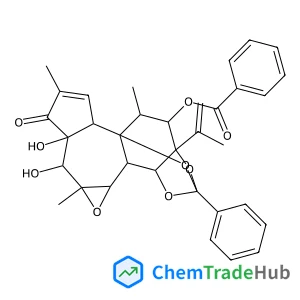

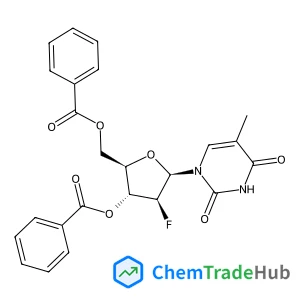
1-(3',5'-Di-O-benzoyl-2'-deoxy-2'-fluoro-b-D-arabinofuranosyl)thymine
CAS号:
97614-47-6
分子式:
C24H21FN2O7
推荐供应商






免责声明
本页面提供的学术期刊信息仅供参考和研究使用。我们与任何期刊出版商均无关联,也不处理投稿事宜。如有投稿相关咨询,请直接联系相关期刊出版商。
如发现页面信息有误,请发送邮件至 support@chemtradehub.com 联系我们。我们将及时核实并处理您的问题。