


One-step formulation of nonionic surfactant bicelles (NSBs) by a double-tailed polyglycerol-type nonionic surfactant
文献信息
发布日期
2017-05-09
DOI
10.1039/C7CP02585H
影响因子
3.676
作者
Kenji Aramaki, Chikahiro Iwata, Jitendra Mata, Tetsuya Maehara, Daisuke Aburano, Yuichi Sakanishi, Kyuhei Kitao
查看原文
摘要
Bicelles are generally formed by phospholipid-based systems and are useful for various applications, such as nanocarriers or membrane protein crystallization. The same disc-like assemblies, nonionic surfactant bicelles (NSBs), can also be formed using nonionic amphiphiles, but this has not been reported extensively. We report a novel NSB system that employs the double-tailed nonionic amphiphile, polyglyceryl dialkyl ether (C12CmGn), which has two alkyl chains and a polyglyceryl group. A symmetric-tail molecule, C12C12G13.8, formed vesicles, whereas an asymmetric-tail molecule, C12C14G15.5, formed NSBs through a simple one-step process using ultrasonication. The 1 wt% aqueous solution of C12C14G15.5 was in a two-phase equilibrium of a lamellar phase and a water phase. Transparent dispersion was obtained through ultrasonication treatment. The size distribution in the dispersion was obtained by dynamic light scattering (DLS), resulting in a narrow distribution of around 20 nm in diameter. A negatively-stained transmission electron microscopy (TEM) image showed oblong and spherical shapes, which are typically observed in bicelle-forming systems. A small angle neutron scattering (SANS) measurement well proved bicelle formation by fitting a core–shell bicelle form factor model. The disc thickness and diameter were in agreement with the values obtained by DLS and TEM, respectively. A larger shell thickness at the rim part than at the flat disc part suggested that NSB aggregates have inhomogeneous molecular distribution. Similar to phospholipid systems, the bicelle-forming C12C14G15.5 system produced a defective lamellar phase formation at high surfactant concentrations, whereas a general lamellar phase was formed in the vesicle-forming C12C12G13.8 system.
期刊推荐
Russian Journal of Applied Chemistry
Russian Journal of Bioorganic Chemistry
Organic Process Research & Development
Journal of Peptide Science

Chemistry Education Research and Practice
Crystallography Reports
Drug Discovery Today
Journal of Saudi Chemical Society

Current Opinion in Solid State & Materials Science
Russian Journal of Coordination Chemistry
相关文献
How many surface atoms in Co3O4 take part in oxygen evolution? Isotope labeling together with differential electrochemical mass spectrometry
Helmut Baltruschat
2017-08-29
Paper
DOI: 10.1039/C7CP03914J
The electronic structure of Ag1−xSn1+xSe2 (x = 0.0, 0.1, 0.2, 0.25 and 1.0)
Takanori Wakita, Eugenio Paris, Kaya Kobayashi, Kensei Terashima, Teppei Ueno, Federica Bondino, Luca Olivi, Jun Akimitsu, Yuji Muraoka, Takayoshi Yokoya, Naurang L. Saini
2017-09-22
Paper
DOI: 10.1039/C7CP05369J
Two-dimensional pattern formation in ionic liquids confined between graphene walls
Hadrián Montes-Campos, José Manuel Otero-Mato, Trinidad Méndez-Morales, Oscar Cabeza, Luis J. Gallego, Alina Ciach, Luis M. Varela
2017-09-11
Paper
DOI: 10.1039/C7CP04649A
A lipophilic ionic liquid based on formamidinium cations and TFSI: the electric response and the effect of CO2 on the conductivity mechanism
Federico Bertasi, Guinevere A. Giffin, Keti Vezzù, Yaser Abu-Lebdeh, Michel Armand
2017-09-05
Paper
DOI: 10.1039/C7CP02304A
Electrostatic interactions in concentrated colloidal dispersions
2017-07-03
Paper
DOI: 10.1039/C7CP02594G
Photo-induced proton-coupled electron transfer and dissociation of isolated flavin adenine dinucleotide mono-anions
2017-07-20
Communication
DOI: 10.1039/C7CP04068G
Ionic effects on the proton transfer mechanism in aqueous solutions
Joonyoung F. Joung, Sangin Kim, Sungnam Park
2017-08-25
Paper
DOI: 10.1039/C7CP04392A
Self-assembly of a nanotube from a black phosphorus nanoribbon on a string of fullerenes at low temperature
Jiao Shi, Ling-Nan Liu, Qing-Hua Qin
2017-08-10
Paper
DOI: 10.1039/C7CP04427E
A study on the electronic and interfacial structures of monolayer ReS2–metal contacts
Guofeng Yang, Rui Sun, Pengfei Yan, Yanan Lu, Junjun Xue, Guoqing Chen
2017-09-14
Paper
DOI: 10.1039/C7CP05386J
Probe-location dependent resonance energy transfer at lipid/water interfaces: comparison between the gel- and fluid-phase of lipid bilayer
Moirangthem Kiran Singh, Mohammad Firoz Khan, Him Shweta, Sobhan Sen
2017-07-10
Paper
DOI: 10.1039/C7CP03108D
您可能还喜欢
化合物问答
2-(甲基磺酰基)嘧啶-5-胺(CAS号:56621-92-2)适用哪些法规指南?
该化合物适用的法规指南包括GHS(全球化学品统一分类和标签制度)分类为特定目标器官毒性-单次接触类别3;根据欧盟REACH法规,该化合物需要进行注册和评估;在美...
56621-92-22-(Methylsulfonyl)py...
化合物问答
在合成中是否有4-(4-氯苯基)-1H-咪唑(CAS号:35512-29-9)的替代品?
在合成中,可以考虑使用一些类似的化合物作为4-(4-氯苯基)-1H-咪唑的替代品,如4-(4-溴苯基)-1H-咪唑或4-(4-甲氧基苯基)-1H-咪唑。这些化合...
35512-29-94-(4-Chlorophenyl)-1...
化合物问答
什么是N~2~-甲基丙氨酸酰胺(CAS号:32012-16-1)?
N~2~-甲基丙氨酸酰胺是一种有机化合物,其化学名为2-(Methylamino)propanamide。它是一种酰胺类化合物,分子式为C4H10N2O,相对分...
32012-16-12-(Methylamino)propa...
化合物问答
如何处理含有N-苄基-3-氨基氧杂环丁烷草酸盐(CAS号:1956341-96-0)的废料?
处理含有N-苄基-3-氨基氧杂环丁烷草酸盐(CAS号:1956341-96-0)的废料时,应首先确保遵循相关法规要求,如GHS和REACH等。通常,废液应先进行...
1956341-96-0N-Benzyloxetan-3-ami...
化合物问答
4-bromo-2-chloro-6-methylbenzoic acid(CAS号:877149-07-0)的物理化学性质是什么?
4-溴-2-氯-6-甲基苯甲酸是一种固体化合物,具有较高的熔点和较低的沸点。它的分子量为261.03 g/mol。该化合物在水中几乎不溶,在有机溶剂中溶解度适中...
877149-07-04-Bromo-2-chloro-6-m...
化合物问答
2-[(2,5-二氯-4-嘧啶)氨基]-N-甲基苯甲酰胺(CAS号:761440-08-8)通常如何合成?
该化合物通常通过缩合反应合成,典型的方法是将2,5-二氯嘧啶与N-甲基苯甲酰胺在碱性条件下进行偶联反应。常用的碱包括NaH、LDA等强碱。该合成路线具有较高的选...
761440-08-82-[(2,5-dichloropyri...
4752-10-71,4-Dichlorophthalaz...
化合物问答
在合成中是否有3,5-二溴-4-甲基苯胺(CAS号:13194-73-5)的替代品?
3,5-二溴-4-甲基苯胺在某些合成路线中可能没有直接替代品。然而,在某些应用场景下,可以考虑使用其他类似结构的化合物如3,5-二溴-4-硝基苯胺或3,5-二碘...
13194-73-53,5-Dibromo-4-methyl...
化合物问答
2-氯喹啉-4-羧酸甲酯(CAS号:62482-26-2)的主要用途是什么?
2-氯喹啉-4-羧酸甲酯主要用于有机合成和药物合成领域,作为中间体或原料。它在合成某些药物和染料时具有重要作用。此外,该化合物还可能用于某些特定的化学研究中。
62482-26-2Methyl 2-chloro-4-qu...
化合物问答
i>]吡啶(CAS号:474708-88-8)安全吗?
6-溴-8-氯咪唑[1,2-a]吡啶在操作过程中需要谨慎以确保安全。该化合物具有一定的毒性,吸入其蒸气或粉尘可能导致呼吸道刺激。处理时应佩戴适当的防护装备,如手...
474708-88-86-Bromo-8-chloroimid...
来源期刊
Physical Chemistry Chemical Physics

CiteScore:
5.5
自引率:
10.3%
年发文量:
3036
Physical Chemistry Chemical Physics (PCCP) is an international journal co-owned by 19 physical chemistry and physics societies from around the world. This journal publishes original, cutting-edge research in physical chemistry, chemical physics and biophysical chemistry. To be suitable for publication in PCCP, articles must include significant innovation and/or insight into physical chemistry; this is the most important criterion that reviewers and Editors will judge against when evaluating submissions. The journal has a broad scope and welcomes contributions spanning experiment, theory, computation and data science. Topical coverage includes spectroscopy, dynamics, kinetics, statistical mechanics, thermodynamics, electrochemistry, catalysis, surface science, quantum mechanics, quantum computing and machine learning. Interdisciplinary research areas such as polymers and soft matter, materials, nanoscience, energy, surfaces/interfaces, and biophysical chemistry are welcomed if they demonstrate significant innovation and/or insight into physical chemistry. Joined experimental/theoretical studies are particularly appreciated when complementary and based on up-to-date approaches.
推荐化合物
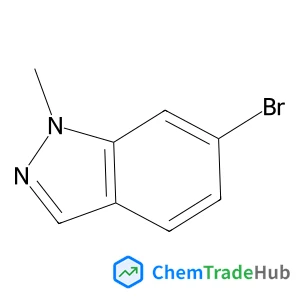
推荐供应商






免责声明
本页面提供的学术期刊信息仅供参考和研究使用。我们与任何期刊出版商均无关联,也不处理投稿事宜。如有投稿相关咨询,请直接联系相关期刊出版商。
如发现页面信息有误,请发送邮件至 support@chemtradehub.com 联系我们。我们将及时核实并处理您的问题。