


Surface cleaning of artworks: structure and dynamics of nanostructured fluids confined in polymeric hydrogel networks
文献信息
发布日期
2017-06-05
DOI
10.1039/C7CP02662E
影响因子
3.676
作者
Rosangela Mastrangelo, Costanza Montis, Nicole Bonelli, Paolo Tempesti, Piero Baglioni
查看原文
摘要
Nanosystems and confinement tools for the controlled release of a cleaning agent, e.g., hydrogels and microemulsions, have been used for several years for the treatment of delicate surfaces in art restoration interventions. However, notwithstanding the unprecedented achievements from an application point of view, a fundamental comprehension of their interaction mechanism is still lacking. In this study PVA hydrogels, obtained via freeze–thaw processes, are prepared as scaffolds for water-based nanostructured fluids for application in the cleaning of artworks: rheological, thermal, microscopic and scattering techniques showed that, depending on the number of freeze–thaw cycles, the hydrogels exhibit different physicochemical and viscoelastic properties, making them suitable for application in a broad range of cleaning issues. The gels have been loaded with an oil-in-water microemulsion and the diffusion of the microemulsion droplets inside the polymeric network has been investigated through Fluorescence Correlation Spectroscopy (FCS), demonstrating that the microemulsion is permanently kept inside the matrix and can freely diffuse in the network. In addition, we show that when the gel-microemulsion system is put in contact with a layer of hydrophobic grime, a dynamic interaction between the microemulsion droplets and the underlying layer is established, leading to the solubilization of the hydrophobic molecules inside the droplets in the gel matrix. Thus, for the first time, through FCS, insights into the removal mechanism of hydrophobic grime upon interaction with a cleaning agent embedded in the polymeric matrix are obtained.
期刊推荐
Nature Medicine
Russian Journal of General Chemistry
Russian Chemical Bulletin
Russian Journal of Coordination Chemistry
Saudi Pharmaceutical Journal
Journal of Natural Medicines
Chemistry Education Research and Practice
Russian Journal of Organic Chemistry
Crystallography Reports
Russian Journal of Applied Chemistry
相关文献
The influence of polyanion molecular weight on polyelectrolyte multilayers at surfaces: protein adsorption and protein–polysaccharide complexation/stripping on natural polysaccharide films on solid supports
Sam Karpiniec, James K. Ferri
2017-06-30
Paper
DOI: 10.1039/C7CP02599H
Self-assembly of a nanotube from a black phosphorus nanoribbon on a string of fullerenes at low temperature
Jiao Shi, Ling-Nan Liu, Qing-Hua Qin
2017-08-10
Paper
DOI: 10.1039/C7CP04427E
A new insight for ohmic contacts to MoS2: by tuning MoS2 affinity energies but not metal work-functions
Bei Deng, Xingqiang Shi
2017-09-05
Paper
DOI: 10.1039/C7CP05109C
Theoretical study on the reaction mechanism of hydrogenation of furfural to furfuryl alcohol on Lewis acidic BEA zeolites: effects of defect structure and tetravalent metals substitution
Piti Treesukul, Jakkapan Sirijaraensre, Jumras Limtrakul
2017-08-11
Paper
DOI: 10.1039/C7CP04229A
Using a chitosan nanolayer as an efficient pH buffer to protect pH-sensitive supramolecular assemblies
D. V. Andreeva, A. Kollath, D. V. Sviridov, B. J. Cafferty, H. Möhwald
2017-07-04
Paper
DOI: 10.1039/C7CP02618H
Self-assembled mesoscopic surface domains of fluorocarbon–hydrocarbon diblocks can form at zero surface pressure: tilting of solid-like hydrocarbon moieties compensates for cross-section mismatch with fluorocarbon moieties
Christian Schwieger, Xianhe Liu, Marie Pierre Krafft
2017-05-30
Paper
DOI: 10.1039/C7CP02432K
Covalent-reaction-induced interfacial assembly to transform doxorubicin into nanophotomedicine with highly enhanced anticancer efficiency
Jinbo Fei, Ganglong Cui, Xiangyang Liu, Weihai Fang
2017-05-24
Paper
DOI: 10.1039/C7CP02543B
Langmuir–Blodgett films of perylene bisimide derivatives and fluorescent recognition of diamines
Congdi Shang, Li Wang, Yanqin An, Ping Chen, Xingmao Chang, Yanyu Qi, Rui Kang, Yu Fang
2017-08-14
Paper
DOI: 10.1039/C7CP04235C
Pattern transitions in a compressible floating elastic sheet
Haim Diamant
2017-06-14
Paper
DOI: 10.1039/C7CP03239K
First-principles investigation of H2S adsorption and dissociation on titanium carbide surfaces
Shiyan Wang, Xilin Zhang, Yanxing Zhang, Jianjun Mao
2017-09-25
Paper
DOI: 10.1039/C7CP05756C
您可能还喜欢
化合物问答
2-(甲基磺酰基)嘧啶-5-胺(CAS号:56621-92-2)适用哪些法规指南?
该化合物适用的法规指南包括GHS(全球化学品统一分类和标签制度)分类为特定目标器官毒性-单次接触类别3;根据欧盟REACH法规,该化合物需要进行注册和评估;在美...
56621-92-22-(Methylsulfonyl)py...
化合物问答
在合成中是否有4-(4-氯苯基)-1H-咪唑(CAS号:35512-29-9)的替代品?
在合成中,可以考虑使用一些类似的化合物作为4-(4-氯苯基)-1H-咪唑的替代品,如4-(4-溴苯基)-1H-咪唑或4-(4-甲氧基苯基)-1H-咪唑。这些化合...
35512-29-94-(4-Chlorophenyl)-1...
化合物问答
什么是N~2~-甲基丙氨酸酰胺(CAS号:32012-16-1)?
N~2~-甲基丙氨酸酰胺是一种有机化合物,其化学名为2-(Methylamino)propanamide。它是一种酰胺类化合物,分子式为C4H10N2O,相对分...
32012-16-12-(Methylamino)propa...
化合物问答
如何处理含有N-苄基-3-氨基氧杂环丁烷草酸盐(CAS号:1956341-96-0)的废料?
处理含有N-苄基-3-氨基氧杂环丁烷草酸盐(CAS号:1956341-96-0)的废料时,应首先确保遵循相关法规要求,如GHS和REACH等。通常,废液应先进行...
1956341-96-0N-Benzyloxetan-3-ami...
化合物问答
4-bromo-2-chloro-6-methylbenzoic acid(CAS号:877149-07-0)的物理化学性质是什么?
4-溴-2-氯-6-甲基苯甲酸是一种固体化合物,具有较高的熔点和较低的沸点。它的分子量为261.03 g/mol。该化合物在水中几乎不溶,在有机溶剂中溶解度适中...
877149-07-04-Bromo-2-chloro-6-m...
化合物问答
2-[(2,5-二氯-4-嘧啶)氨基]-N-甲基苯甲酰胺(CAS号:761440-08-8)通常如何合成?
该化合物通常通过缩合反应合成,典型的方法是将2,5-二氯嘧啶与N-甲基苯甲酰胺在碱性条件下进行偶联反应。常用的碱包括NaH、LDA等强碱。该合成路线具有较高的选...
761440-08-82-[(2,5-dichloropyri...
4752-10-71,4-Dichlorophthalaz...
化合物问答
在合成中是否有3,5-二溴-4-甲基苯胺(CAS号:13194-73-5)的替代品?
3,5-二溴-4-甲基苯胺在某些合成路线中可能没有直接替代品。然而,在某些应用场景下,可以考虑使用其他类似结构的化合物如3,5-二溴-4-硝基苯胺或3,5-二碘...
13194-73-53,5-Dibromo-4-methyl...
化合物问答
2-氯喹啉-4-羧酸甲酯(CAS号:62482-26-2)的主要用途是什么?
2-氯喹啉-4-羧酸甲酯主要用于有机合成和药物合成领域,作为中间体或原料。它在合成某些药物和染料时具有重要作用。此外,该化合物还可能用于某些特定的化学研究中。
62482-26-2Methyl 2-chloro-4-qu...
化合物问答
i>]吡啶(CAS号:474708-88-8)安全吗?
6-溴-8-氯咪唑[1,2-a]吡啶在操作过程中需要谨慎以确保安全。该化合物具有一定的毒性,吸入其蒸气或粉尘可能导致呼吸道刺激。处理时应佩戴适当的防护装备,如手...
474708-88-86-Bromo-8-chloroimid...
来源期刊
Physical Chemistry Chemical Physics

CiteScore:
5.5
自引率:
10.3%
年发文量:
3036
Physical Chemistry Chemical Physics (PCCP) is an international journal co-owned by 19 physical chemistry and physics societies from around the world. This journal publishes original, cutting-edge research in physical chemistry, chemical physics and biophysical chemistry. To be suitable for publication in PCCP, articles must include significant innovation and/or insight into physical chemistry; this is the most important criterion that reviewers and Editors will judge against when evaluating submissions. The journal has a broad scope and welcomes contributions spanning experiment, theory, computation and data science. Topical coverage includes spectroscopy, dynamics, kinetics, statistical mechanics, thermodynamics, electrochemistry, catalysis, surface science, quantum mechanics, quantum computing and machine learning. Interdisciplinary research areas such as polymers and soft matter, materials, nanoscience, energy, surfaces/interfaces, and biophysical chemistry are welcomed if they demonstrate significant innovation and/or insight into physical chemistry. Joined experimental/theoretical studies are particularly appreciated when complementary and based on up-to-date approaches.
推荐化合物
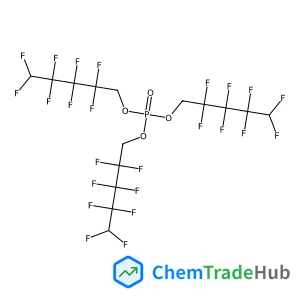
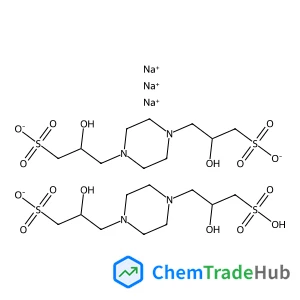
3,3'-(Piperazine-1,4-diyl)bis(2-hydroxypropane-1-sulfonic acid) Sodium Salt
CAS号:
108321-08-0
分子式:
C20H41N4Na3O16S4
推荐供应商





免责声明
本页面提供的学术期刊信息仅供参考和研究使用。我们与任何期刊出版商均无关联,也不处理投稿事宜。如有投稿相关咨询,请直接联系相关期刊出版商。
如发现页面信息有误,请发送邮件至 support@chemtradehub.com 联系我们。我们将及时核实并处理您的问题。