


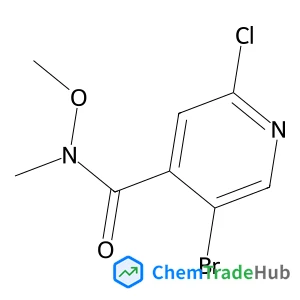
Coulomb couplings in solubilised light harvesting complex II (LHCII): challenging the ideal dipole approximation from TDDFT calculations
文献信息
发布日期
2017-06-27
DOI
10.1039/C7CP03284F
影响因子
3.676
作者
P. López-Tarifa, Nicoletta Liguori, Naudin van den Heuvel, Roberta Croce, Lucas Visscher
查看原文
摘要
The light harvesting complex II (LHCII), is a pigment–protein complex responsible for most of the light harvesting in plants. LHCII harvests sunlight and transfers excitation energy to the reaction centre of the photo-system, where the water oxidation process takes place. The energetics of LHCII can be modulated by means of conformational changes allowing a switch from a harvesting to a quenched state. In this state, the excitation energy is no longer transferred but converted into thermal energy to prevent photooxidation. Based on molecular dynamics simulations at the microsecond time scale, we have recently proposed that the switch between different fluorescent states can be probed by correlating shifts in the chromophore–chromophore Coulomb interactions to particular protein movements. However, these findings are based upon calculations in the ideal point dipole approximation (IDA) where the Coulomb couplings are simplified as first order dipole–dipole interactions, also assuming that the chromophore transition dipole moments lay in particular directions of space with constant moduli (FIX-IDA). In this work, we challenge this approximation using the time-dependent density functional theory (TDDFT) combined with the frozen density embedding (FDE) approach. Our aim is to establish up to which limit FIX-IDA can be applied and which chromophore types are better described under this approximation. For that purpose, we use the classical trajectories of solubilised light harvesting complex II (LHCII) we have recently reported [Liguori et al., Sci. Rep., 2015, 5, 15661] and selected three pairs of chromophores containing chlorophyll and carotenoids (Chl and Car): Chla611–Chla612, Chlb606–Chlb607 and Chla612–Lut620. Using the FDE in the Tamm–Dancoff approximation (FDEc-TDA), we show that IDA is accurate enough for predicting Chl–Chl Coulomb couplings. However, the FIX-IDA largely overestimates Chl–Car interactions mainly because the transition dipole for the Cars is not trivially oriented on the polyene chain.
期刊推荐
Current Opinion in Colloid & Interface Science

New Journal of Chemistry
Russian Journal of Bioorganic Chemistry
Journal of Natural Medicines
Crystallography Reports

Journal of Saudi Chemical Society
Russian Journal of Coordination Chemistry
Russian Chemical Bulletin
Russian Journal of General Chemistry
Nature Medicine
相关文献
Boundaries of charge–discharge curves of batteries
Amir Haghipour, Maryam Tahertalari, Mohammad Mahdi Kalantarian
2021-12-21
Paper
DOI: 10.1039/D1SE01595H
Few-layered ultra-small MoS2 nanosheet cathode for high-performance rechargeable aluminum-ion battery
Qiang Zhang, Qianfeng Liu, Erdong Wang
2021-08-03
Communication
DOI: 10.1039/D1SE00959A
A closed-loop regeneration of LiNi0.6Co0.2Mn0.2O2 and graphite from spent batteries via efficient lithium supplementation and structural remodelling
Qinwen Zhou, Zixuan Huang, Yufeng Zhao, Joey Chung-Yen Jung, Jiujun Zhang, Shengming Xu
2021-08-20
Paper
DOI: 10.1039/D1SE01114F
A new allotrope of carbon-graphdiyne, synthesis and application in photocatalytic hydrogen evolution with surface plasmon resonance enhancement
Zhiliang Jin, Yue Cao
2021-07-19
Paper
DOI: 10.1039/D1SE00668A
Boosting the water splitting activity of cobalt nitride through morphological design: a comparison of the influence of structure on the hydrogen and oxygen evolution reactions
Tingting Liu, Sheng Cai, Zhiyuan Mei, Genfu Zhao, Lufu Xu, Qi An, Yao Fu, Han Wang, Mian Li, Hong Guo
2021-06-03
Paper
DOI: 10.1039/D1SE00616A
One-pot transformation of furfural into γ-valerolactone catalyzed by a hierarchical Hf-Al-USY zeolite with balanced Lewis and Brønsted acid sites
Bo Tang, Shuang Li, Wei-Chao Song, Yan Li, En-Cui Yang
2021-08-12
Paper
DOI: 10.1039/D1SE00942G
Photochemistry and photoinhibition of the H-cluster of FeFe hydrogenases
Carole Baffert, Vincent Fourmond, Luca de Gioia, Luca Bertini, Christophe Léger
2021-07-20
Review Article
DOI: 10.1039/D1SE00756D
Cobaloxime tethered pyridine-functionalized ethylene-bridged periodic mesoporous organosilica as an efficient HER catalyst
M. Ángeles Navarro, Daniel Cosano, Asamanjoy Bhunia, Laura Simonelli, Vlad Martin-Diaconescu, Francisco J. Romero-Salguero, Dolores Esquivel
2021-11-26
Paper
DOI: 10.1039/D1SE01437D
Electrolyte engineering on a porphyrin-based electrode for lithium–organic charge storage
Bo Ren, Ye Sun, Xin Feng, Jinfeng Peng, Rui Ding, Xiujuan Sun, Enhui Liu
2021-11-23
Paper
DOI: 10.1039/D1SE01649K
Microstructured nitrogen-doped graphene-Sn composites as a negative electrode for high performance lithium-ion hybrid supercapacitors
Miguel Granados-Moreno, Gelines Moreno-Fernández, Rosalía Cid
2022-01-07
Paper
DOI: 10.1039/D1SE01779A
您可能还喜欢
化合物问答
2-Bromo-4-chloro-1-(difluoromethyl)benzene(CAS号:1261476-50-9)的市场或研究趋势如何?
随着环保要求的提高和安全意识的增强,该化合物的研究和应用趋势正逐渐转向更安全、更环境友好的替代品。市场关注点主要集中在开发新型合成方法和绿色化学路径,以减少有害...
1261476-50-92-Bromo-4-chloro-1-(...
化合物问答
如何处理含有2,9 - 二苯基-1,10 - 菲罗啉(CAS号:25677-69-4)的废料?
处理含有2,9 - 二苯基 - 1,10 - 菲罗啉的废料时,应先将其收集在适当的容器中,避免与其他化学品混合。随后,可以通过水解或氧化等方法进行处理,直至达到...
25677-69-42,9-Diphenyl-1,10-ph...
化合物问答
处理(6-氯-吡嗪-3-基)-(4-乙基-哌嗪-1-基)-甲酮(CAS号:1178836-15-1)时应注意哪些实验室安全事项?
处理(6-氯-吡嗪-3-基)-(4-乙基-哌嗪-1-基)-甲酮时,应穿戴适当的个人防护装备(PPE),包括手套、护目镜和实验室外套。在通风橱中操作以确保良好的通...
1178836-15-1(6-Chloro-3-pyridazi...
化合物问答
处理(R)-2-氯-1-(2,4-二氯苯基)乙醇(CAS号:114446-57-0)时应注意哪些实验室安全事项?
在处理(R)-2-氯-1-(2,4-二氯苯基)乙醇时,应佩戴防护眼镜、实验室外套和手套,确保通风橱开启以减少接触和吸入的风险。避免直接接触皮肤和眼睛。处理过程中...
114446-57-0(1R)-2-Chloro-1-(2,4...
化合物问答
在合成中是否有3-氯-6-(3-氯哌啶-1-基)吡嗪(CAS号:1185310-37-5)的替代品?
可考虑使用类似结构的化合物作为替代品,如3-氯-6-(哌啶-1-基)吡嗪或3-氯-6-(2-氯哌啶-1-基)吡嗪,这些化合物在结构上与目标化合物相似,可能具有相...
1185310-37-53-Chloro-6-(3-chloro...
化合物问答
苯并三氮唑-5-甲酸乙酯(CAS号:73605-91-1)通常如何合成?
该化合物可以通过乙酸乙酯与5-溴-1H-苯并三氮唑的反应合成,通常在无水条件下进行。合成过程中,需要使用适当的溶剂如乙酸乙酯,并在适当的温度下反应。该反应具有较...
73605-91-1Ethyl 1H-benzotriazo...
化合物问答
什么是一水硫酸镁(CAS号:14168-73-1)?
一水硫酸镁是一种无机化合物,化学式为MgSO₄·H₂O,CAS号为14168-73-1。它由镁离子、硫酸根离子和一个结晶水分子组成,通常呈现为白色粉末或颗粒状固...
14168-73-1Magnesium sulfate hy...
化合物问答
氘代-1,3-二氯-2-丙醇(CAS号:1173020-20-6)应用于哪些行业?
氘代-1,3-二氯-2-丙醇主要应用于医药和有机合成领域,作为研究化合物的氘代替代品,用于标记和追踪反应过程。此外,在聚合物和半导体生产中也有一定的应用潜力。
1173020-20-61,3-Dichloro-2-(~2~H...
化合物问答
如何储存氰乙酸环己酯(CAS号:52688-11-6)?
氰乙酸环己酯应储存在阴凉、干燥、通风良好的环境中,远离火源和热源,防止阳光直射。储存容器应密封良好,避免与空气接触,防止发生不必要的反应。
52688-11-6Cyclohexyl cyanoacet...
化合物问答
2-碘-4-硝基苯胺(CAS号:6293-83-0)的市场或研究趋势如何?
目前,2-碘-4-硝基苯胺在医药和农药领域有一定的研究和应用,尤其是在开发新型药物和农药产品方面。然而,由于其潜在的环境和健康风险,行业正趋向于寻找更为安全和环...
6293-83-02-iodo-4-nitroanilin...
来源期刊
Physical Chemistry Chemical Physics

CiteScore:
5.5
自引率:
10.3%
年发文量:
3036
Physical Chemistry Chemical Physics (PCCP) is an international journal co-owned by 19 physical chemistry and physics societies from around the world. This journal publishes original, cutting-edge research in physical chemistry, chemical physics and biophysical chemistry. To be suitable for publication in PCCP, articles must include significant innovation and/or insight into physical chemistry; this is the most important criterion that reviewers and Editors will judge against when evaluating submissions. The journal has a broad scope and welcomes contributions spanning experiment, theory, computation and data science. Topical coverage includes spectroscopy, dynamics, kinetics, statistical mechanics, thermodynamics, electrochemistry, catalysis, surface science, quantum mechanics, quantum computing and machine learning. Interdisciplinary research areas such as polymers and soft matter, materials, nanoscience, energy, surfaces/interfaces, and biophysical chemistry are welcomed if they demonstrate significant innovation and/or insight into physical chemistry. Joined experimental/theoretical studies are particularly appreciated when complementary and based on up-to-date approaches.
推荐化合物
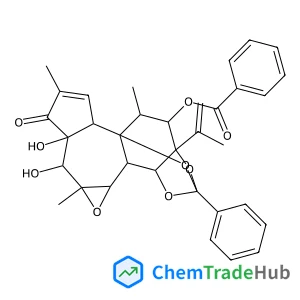
![N-[4-(Cyanoethynyl)phenyl]-16-oxo-4,7,10,13-tetraoxa-17-azahenicos-1-yn-21-amide structure](https://cnstatic.chemtradehub.com/structs/218/2183440-36-8-68cb.webp "N-[4-(Cyanoethynyl)phenyl]-16-oxo-4,7,10,13-tetraoxa-17-azahenicos-1-yn-21-amide structure")
推荐供应商




免责声明
本页面提供的学术期刊信息仅供参考和研究使用。我们与任何期刊出版商均无关联,也不处理投稿事宜。如有投稿相关咨询,请直接联系相关期刊出版商。
如发现页面信息有误,请发送邮件至 support@chemtradehub.com 联系我们。我们将及时核实并处理您的问题。