


The role of non-covalent interactions in the self-healing mechanism of disulfide-based polymers
文献信息
发布日期
2017-06-22
DOI
10.1039/C7CP03570E
影响因子
3.676
作者
José M. Asua, Fernando Ruipérez
查看原文
摘要
In this work, a theoretical protocol based on classical molecular dynamics has been defined, in order to study weak non-covalent interactions in diphenyl disulfide based compounds. This protocol is then used to study the influence of hydrogen bonds and π–π stacking in four selected cases, namely, monosubstituted and amine ortho trisubstituted urea and urethane-based diphenyl disulfides. In all cases, it has been observed that hydrogen bonds are much more relevant than π–π stacking, which has little influence. In addition, hydrogen bonds are the responsible to maintain the polymeric chains close, so that the disulfides may reach the reacting region, even in urethane-based materials, where the lower amount of hydrogen bonds formed make the chains more flexible and mobile. Combining the results obtained by classical molecular dynamics with those obtained earlier by means of quantum mechanics, we conclude that there are two main factors that are relevant to the self-healing properties of disulfide-based materials: firstly, the capacity to generate sulfenyl radicals by breaking the disulfide S–S bond and, secondly, the ability of these radicals to attack neighboring disulfides. The former is dominated by the bond dissociation energy of the S–S bond, while the latter is strongly influenced by two other factors. On the one hand, the hydrogen bonding interactions established between chains, and on the other, the energy barriers for the attack of sulfur radicals to neighbor disulfides. We have defined three new parameters to estimate the influence of these features, with the aim of predicting the self-healing capacity of disulfides and related materials, which will help experimentalists in the development of improved materials.
期刊推荐
Russian Chemical Bulletin
Russian Journal of General Chemistry

Chemical Communications
Drug Discovery Today
New Journal of Chemistry
Saudi Pharmaceutical Journal
Russian Journal of Bioorganic Chemistry
Chemistry Education Research and Practice
Current Opinion in Solid State & Materials Science
Russian Journal of Coordination Chemistry
相关文献
Improvement of the electrochemical detection of catechol by the use of a carbon nanotube based biosensor
2008-10-18
Paper
DOI: 10.1039/B808387H
Novel β-cyclodextrin modified organic polymeric monolithic substrate for solid phase extraction-room temperature phosphorescence
Zhu Ruohua, Xu Wenting
2008-09-03
Paper
DOI: 10.1039/B804123G
Analytical and physical optimization of nanohole-array sensors prepared by modified nanosphere lithography
Marie-Pier Murray-Methot, Nicola Menegazzo, Jean-Francois Masson
2008-09-04
Paper
DOI: 10.1039/B808820A
Molecular design of near-infrared (NIR) fluorescent probes targeting exopeptidase and application for detection of dipeptidyl peptidase 4 (DPP-4) activity
Yuki Hoshino, Kenjiro Hanaoka, Kei Sakamoto, Masahiro Yasunaga, Takashi Kojima, Daisuke Kotani, Ayumu Nomoto, Eita Sasaki, Toru Komatsu, Tasuku Ueno, Hiroyuki Takamaru, Yutaka Saito, Yasuyuki Seto
2022-03-24
Paper
DOI: 10.1039/D1CB00253H
Picosecond Raman spectroscopy with a fast intensified CCD camera for depth analysis of diffusely scattering media
Freek Ariese, Heleen Meuzelaar, Marleen M. Kerssens, Joost B. Buijs, Cees Gooijer
2009-03-20
Paper
DOI: 10.1039/B821437A
Carbon nanotube/polysulfone composite screen-printed electrochemical enzyme biosensors
Samuel Sánchez, Martin Pumera, Enric Cabruja, Esteve Fàbregas
2006-11-09
Paper
DOI: 10.1039/B609137G
Isoform-specific optical activation of kinase function reveals p38-ERK signaling crosstalk
Wenyuan Zhou, Amy Ryan, Chasity P. Janosko, Jason M. Haugh
2023-08-25
Paper
DOI: 10.1039/D2CB00157H
Conservation of the insert-2 motif confers Rev1 from different species with an ability to disrupt G-quadruplexes and stimulate translesion DNA synthesis
Amit Ketkar, Reham S. Sewilam, Mason J. McCrury, Jaycelyn S. Hall, Ashtyn Bell, Bethany C. Paxton, Shreyam Tripathi, Julie E.C. Gunderson, Robert L. Eoff
2023-05-11
Paper
DOI: 10.1039/D3CB00027C
Water-compatible molecularly imprinted polymers for efficient direct injection on-line solid-phase extraction of ropivacaine and bupivacaine from human plasma
Zoe Cobb, Börje Sellergren, Lars I. Andersson
2007-09-04
Paper
DOI: 10.1039/B711116A
Importance of two-dimensional cation clusters induced by protein folding in intrinsic intracellular membrane permeability
Shigeru Negi, Mami Hamori, Yuka Kawahara-Nakagawa, Miki Imanishi, Miku Kurehara, Chieri Kitada, Yuri Kawahito, Kanae Kishi, Takayuki Manabe, Nobuyuki Kawamura, Hiroaki Kitagishi, Masato Mashimo, Nobuhito Shibata, Yukio Sugiura
2022-07-13
Paper
DOI: 10.1039/D2CB00098A
您可能还喜欢
化合物问答
4-[4-三氟甲基苯基]恶唑(CAS号:1126636-40-5)通常如何合成?
4-[4-三氟甲基苯基]恶唑通常通过将4-三氟甲基苯酚与异硫氰酸苯酯在有机溶剂中进行酯化反应合成。该反应可在无水条件下,使用适当的催化剂,如四丁基氢氧化铵,以提...
1126636-40-54-(4-(Trifluoromethy...
59729-32-71-[3-(Dimethylamino)...
化合物问答
RockPhos Pd G3(CAS号:2009020-38-4)通常如何合成?
RockPhos Pd G3 通常通过钯催化偶联反应合成,使用配体 (2'-Amino-2-biphenylyl)(methanesulfonato-kappa...
2009020-38-4(2'-Amino-2-biphenyl...
化合物问答
1-哌啶甲酰胺(CAS号:2158-03-4)的市场或研究趋势如何?
1-哌啶甲酰胺作为有机合成中的重要中间体,其市场需求主要受医药、农药、染料等行业推动。近年来,随着新药开发和绿色化学的发展,该化合物的研究趋势集中在开发更高效、...
2158-03-41-Piperidinecarboxam...
化合物问答
2-(二苯基膦基)乙胺(CAS号:4848-43-5)适用哪些法规指南?
2-(二苯基膦基)乙胺适用于多种法规指南,包括但不限于《全球化学品统一分类和标签制度》(GHS),欧盟《化学品注册、评估、授权和限制》法规(REACH),以及美...
4848-43-52-(Diphenylphosphino...
化合物问答
如何储存间苯二甲酸二烯丙酯(CAS号:1087-21-4)?
间苯二甲酸二烯丙酯应储存在阴凉、干燥、通风良好的地方,远离火源和热源。储存容器应密封,避免光照和高温。储存温度应控制在25℃以下,相对湿度应低于80%。避免与其...
1087-21-4Diallyl isophthalate
化合物问答
什么是间甲苯异硫代异氰酸酯(CAS号:621-30-7)?
间甲苯异硫代异氰酸酯是一种有机化合物,分子式为C7H7NO2S,具有刺激性气味。它是一种重要的有机合成中间体,在合成其他化合物时广泛应用。
621-30-71-Isothiocyanato-3-m...
化合物问答
在合成中是否有N-Boc-D-苯丙氨醇(CAS号:106454-69-7)的替代品?
在合成中,可以考虑使用N-Cbz-D-苯丙氨醇或N-Fmoc-D-苯丙氨醇作为替代品。这些化合物同样具有保护氨基的功能,且在合成过程中表现出良好的反应性能。
106454-69-72-Methyl-2-propanyl ...
化合物问答
3-羟甲基-2-氧异丙基吡啶(CAS号:954240-50-7)的主要用途是什么?
3-羟甲基-2-氧异丙基吡啶主要用于有机合成领域,可以作为合成其他药物、农药或精细化学品的中间体。此外,它还可能在实验室研究中作为特定反应的前体或溶剂。
954240-50-7(2-Isopropoxy-3-pyri...
化合物问答
6-氨基-9-甲基嘌呤(CAS号:700-00-5)应用于哪些行业?
6-氨基-9-甲基嘌呤目前主要应用于医药行业,作为某些药物的中间体。此外,它还可能用于聚合物、传感器和半导体的某些领域,作为功能性单体或掺杂剂。
700-00-59-Methyl-9H-purin-6-...
来源期刊
Physical Chemistry Chemical Physics

CiteScore:
5.5
自引率:
10.3%
年发文量:
3036
Physical Chemistry Chemical Physics (PCCP) is an international journal co-owned by 19 physical chemistry and physics societies from around the world. This journal publishes original, cutting-edge research in physical chemistry, chemical physics and biophysical chemistry. To be suitable for publication in PCCP, articles must include significant innovation and/or insight into physical chemistry; this is the most important criterion that reviewers and Editors will judge against when evaluating submissions. The journal has a broad scope and welcomes contributions spanning experiment, theory, computation and data science. Topical coverage includes spectroscopy, dynamics, kinetics, statistical mechanics, thermodynamics, electrochemistry, catalysis, surface science, quantum mechanics, quantum computing and machine learning. Interdisciplinary research areas such as polymers and soft matter, materials, nanoscience, energy, surfaces/interfaces, and biophysical chemistry are welcomed if they demonstrate significant innovation and/or insight into physical chemistry. Joined experimental/theoretical studies are particularly appreciated when complementary and based on up-to-date approaches.
推荐化合物
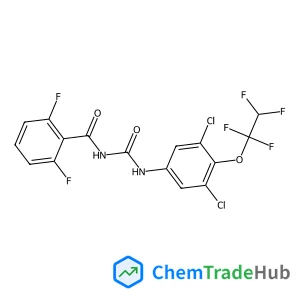
![2-Bromodibenzo[b,d]furan structure](https://cnstatic.chemtradehub.com/structs/86-/86-76-0-1814.webp "2-Bromodibenzo[b,d]furan structure")
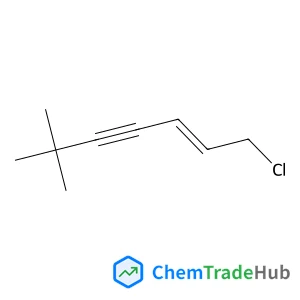
![1-(Hexopyranosyloxy)-4a,5-dihydroxy-7-methyl-1,4a,5,6,7,7a-hexahydrocyclopenta[c]pyran-7-yl 3-phenylacrylate structure](https://cnstatic.chemtradehub.com/structs/192/19210-12-9-ecae.webp "1-(Hexopyranosyloxy)-4a,5-dihydroxy-7-methyl-1,4a,5,6,7,7a-hexahydrocyclopenta[c]pyran-7-yl 3-phenylacrylate structure")
推荐供应商






免责声明
本页面提供的学术期刊信息仅供参考和研究使用。我们与任何期刊出版商均无关联,也不处理投稿事宜。如有投稿相关咨询,请直接联系相关期刊出版商。
如发现页面信息有误,请发送邮件至 support@chemtradehub.com 联系我们。我们将及时核实并处理您的问题。